The government is preparing a comprehensive global trade action plan aimed at removing tariff and non-tariff barriers and expanding Bangladesh’s footprint in international markets.
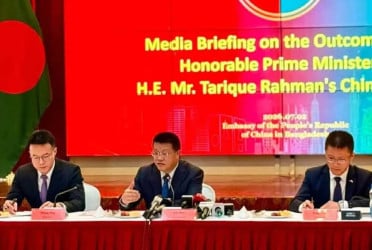
Under instructions from Prime Minister Tarique Rahman, the Ministry of Commerce has been tasked with formulating the strategy. Bangladeshi embassies and trade missions abroad are being mobilized to support continuous negotiations with the United States, the United Kingdom and the European Union (EU).
Commerce Secretary Mahbubur Rahman said initiatives have been taken on a priority basis to ease trade barriers and explore new export markets. The government also plans to review trade agreements concluded with Washington during the previous interim administration and hold ongoing discussions with the US Department of Commerce and the Office of the US Trade Representative (USTR). The issues are expected to be raised at the next conference of the World Trade Organization (WTO).
Officials say particular emphasis will be placed on ensuring smoother access for Bangladeshi products to the UK, US and EU markets.
Bangladesh, an export-dependent economy, is focusing on diversifying markets in the ready-made garment, leather and IT sectors. The government is also prioritizing port infrastructure development, customs reforms and the signing of free trade agreements (FTAs), preferential trade agreements (PTAs) and economic partnership agreements (EPAs).
The interim government had concluded its first economic partnership agreement with Japan. Building on that, the current administration aims to finalize additional FTAs and PTAs to reduce global trade barriers.
According to Commerce Ministry sources, the government plans to conclude FTAs with at least four countries—South Korea, Singapore, Malaysia and the United Arab Emirates—by November this year. In the next phase, potential partners include the United States, European Union, Canada, China, Indonesia, Nepal, Sri Lanka, Brazil, Thailand, Argentina, Australia and Saudi Arabia.
Officials note that while FTAs and EPAs are similar, EPAs are generally broader, more development-oriented and more liberal in scope.
Keeping in mind economic realities, the government has applied to the United Nations to defer Bangladesh’s graduation from the least developed country (LDC) category by at least three years. The move is intended to allow more time to prepare for the loss of preferential trade benefits.
Economists say that while global trade barriers cannot be eliminated entirely, coordinated policy reforms, regional cooperation and technology-driven trade facilitation can significantly reduce risks.
Vietnam remains a key competitor in garment exports, having secured FTAs with around 40 countries, including the 27 EU member states, the United States, the United Kingdom, Japan, India and China.
Observers say the effectiveness of Bangladesh’s new trade strategy will depend on how swiftly agreements are concluded and whether the measures restore confidence among global trade partners.
Bd-pratidin English/ Jisan