At the start of the holy month of Ramadan, the Trading Corporation of Bangladesh (TCB) has launched its “Truck Sales” program, offering daily necessities at significantly lower prices. Items such as sugar, pulses, oil, chickpeas, and dates are available at rates well below market value, attracting large crowds of buyers across the country.
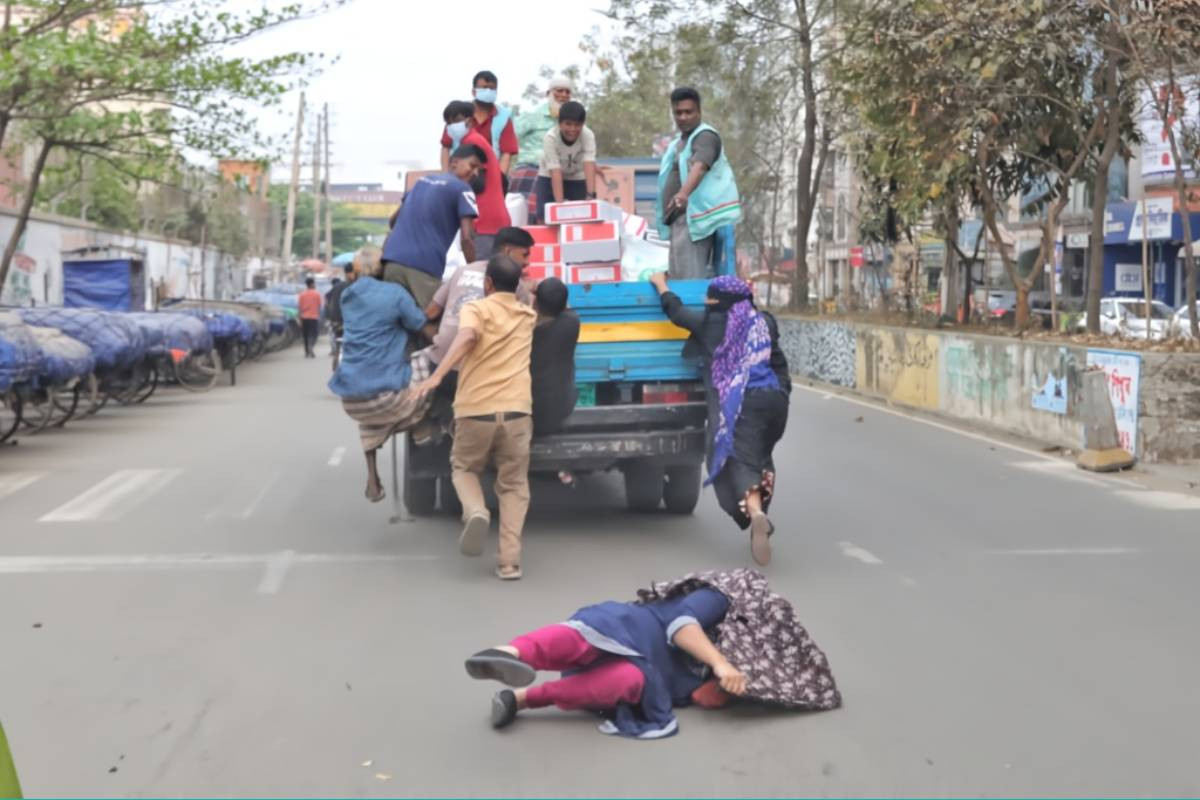
However, the popularity of the initiative has also led to overcrowding and occasional incidents. Yesterday, in the Khalpar area of Sector 12, Uttara, two women fell on the road amid the rush to buy goods from a TCB truck. The incident went viral on social media.
Eyewitnesses said chaos erupted as buyers formed long lines in front of the truck. During a brief moment when the truck moved, some people became trapped behind it, causing the two women to fall. Many others waiting were unable to purchase products before the truck moved on.
TCB distributor Rezaul Karim explained that the number of buyers far exceeds the products allocated to each truck, which contributes to the daily rush and confusion.
The truck sale program, which began on February 17, will continue until March 12. Buyers who purchase goods from the trucks can save approximately Tk350, an important benefit for low-income families. However, many people, particularly women, face hardships standing in the sun for hours to obtain these items.
During the Awami League administration, a family card system was introduced to reduce crowding and ensure fair distribution. Although plans were made to distribute one crore cards, corruption and nepotism allegations led to a review, and the number of active cards was reduced to 6.6 million. In addition to family card distribution, TCB holds occasional open-market truck sales for disadvantaged buyers, including this Ramadan initiative.
Economists note that the rush for low-priced goods has intensified due to persistent high inflation and shrinking household incomes. Reports from the World Bank and other research institutions have highlighted rising poverty and income inequality in the country.
According to TCB, 450 mobile trucks are operating nationwide, with each truck allocated products for about 400 people. In many locations, however, twice that number of buyers show up, resulting in frequent overcrowding and chaos.
Bd-pratidin English/ Jisan