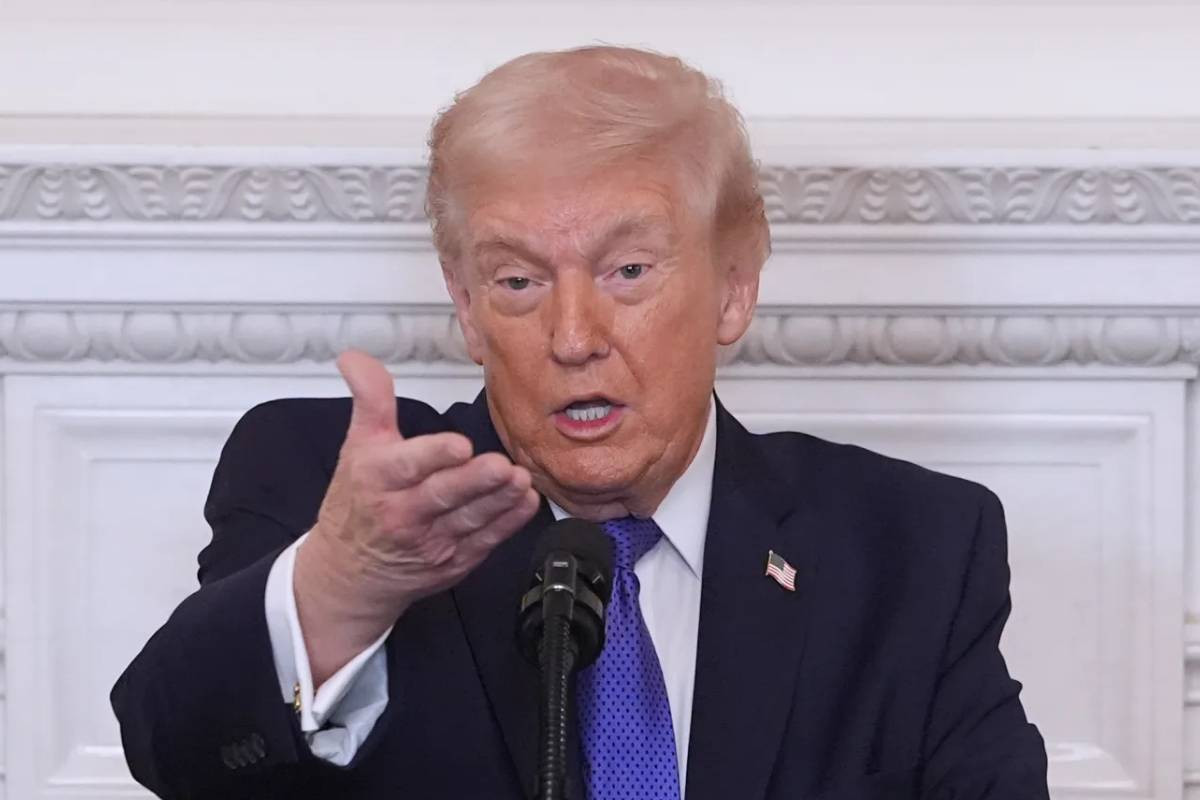
US President Donald Trump announced plans to impose a 10 percent tariff on all imports into the United States after the Supreme Court of the United States ruled his use of emergency powers under the 1977 International Emergency Economic Powers Act (IEEPA) illegal.
In a 6-3 decision, the conservative-majority court found that IEEPA does not authorize the president to levy tariffs. Chief Justice John Roberts wrote in the opinion, “IEEPA contains no reference to tariffs or duties.”
Trump criticized the ruling sharply, saying he was “ashamed of certain members of the court…for not having the courage to do what's right for our country,” and vowed that foreign countries “won’t be dancing for long.”
To circumvent the ruling, Trump announced he would sign an executive order later Friday imposing a 10 percent tariff “over and above our normal tariffs already being charged” on global imports. He also said additional trade investigations would be conducted under Section 301 of the Trade Act of 1974, which allows tariffs on countries engaging in “unjustifiable,” “unreasonable or discriminatory” trade practices.
“Their decision is incorrect, but it doesn’t matter, because we have very powerful alternatives,” Trump said.
The Supreme Court ruling does not affect sector-specific duties on steel, aluminum, and other goods, nor ongoing investigations that could result in additional tariffs. The court noted that if Congress had intended to grant the president such “distinct and extraordinary power” under IEEPA, it would have done so explicitly.
The decision represents Trump’s most significant Supreme Court setback since returning to office last year. During his second term, he relied on emergency economic powers to impose reciprocal tariffs and duties on Mexico, Canada, and China over trade, immigration, and illicit drug concerns.
Democratic leaders welcomed the ruling. Senate Minority Leader Chuck Schumer called it a “win for the wallets” of consumers, while Senator Elizabeth Warren warned that there is “no legal mechanism” for businesses to recover payments already made.
According to the Budget Lab at Yale University, the average effective US tariff rate now stands at 9.1 percent, down from 16.9 percent prior to the ruling.
Source: TRT World and Agencies
Bd-pratidin English/ Jisan