Containing inflation has emerged as the most immediate and formidable challenge for the new government as it assumes office amid rising food prices, fragile purchasing power and the onset of Ramadan.
Senior officials said the administration is drafting a 180-day roadmap that places price stability at its centre, underscoring the urgency of easing pressure on households.
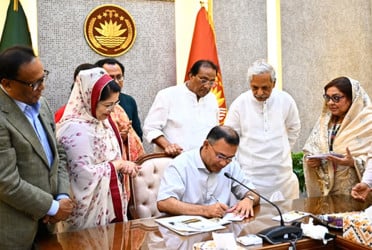
State Minister for Finance and Planning Zonayed Saki told reporters on Wednesday that the plan will soon be unveiled by Prime Minister Tarique Rahman, outlining swift measures to stabilise markets and restore confidence.
With Ramadan under way, the cabinet has directed all ministries to ensure adequate supplies of essential commodities, intensify market monitoring and maintain law and order.
The government has also warned against price manipulation and profiteering during the fasting month.
In his first address to the nation, the prime minister urged traders not to treat Ramadan as an opportunity for excessive profit-taking, saying the government would take necessary steps to protect both consumers and businesses.
He also instructed authorities to ensure uninterrupted electricity supply during peak hours throughout the month.
The renewed focus comes as markets report higher prices for several items commonly consumed during Ramadan.
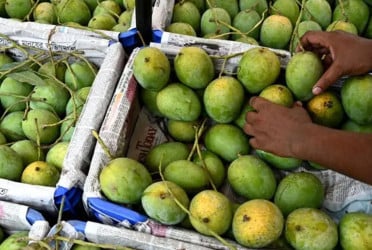
Retail surveys in Dhaka observed by this correspondent show sharp increases in the prices of lemons, onions, vegetables, poultry and fish. Broiler chicken has crossed Tk200 per kilogram, while several vegetables have risen by Tk20–30 per kilogram in recent weeks.
Although overall inflation has eased slightly from last year’s peak, pressure on household budgets remains intense.
Data from the Bangladesh Bureau of Statistics show inflation has outpaced wage growth in recent years, eroding real incomes and leaving many families struggling to cover basic expenses.
Economists say food price inflation remains the most pressing concern, as it directly affects daily spending by low- and middle-income households.
“True stability will only come when food price inflation is sustainably controlled and wage growth surpasses overall inflation,” said Dr Mustafa K Mujeri, former chief economist of Bangladesh Bank.
In recent years, inflation has consistently exceeded wage growth, placing sustained strain on real incomes.
In 2021, inflation stood at 5.54%, while wages rose by 6.08%, resulting in a modest gain in real income, according to official data.
The trend reversed in 2022, when inflation climbed to 7.67%, surpassing wage growth of 6.53% and creating a gap of 1.14 percentage points.
By 2023, the pressure intensified, with inflation reaching 9.55% against wage growth of 7.43%, widening the gap to 2.12 points.
The year 2024 proved the most challenging: inflation rose to 10.33%, while wages increased by only 7.94%, expanding the gap to 2.39 points.
In 2025, there were tentative signs of improvement as inflation fell to 8.79% and wages rose to 8.12%, narrowing the gap to 0.66 points.
The latest data for January 2026 show inflation at 8.58%, compared with wage growth of 8.08%.
Despite the narrowing gap, many households have yet to recover lost purchasing power.
Economists warn that the risk of price spikes often rises during periods of political transition, when policy delays and market speculation can disrupt supply chains.
“Inflation has eased slightly in recent months, but real stability will come only when food price inflation is sustainably controlled and wages grow faster than overall inflation,” Dr Mujeri said.
He cautioned that uncertainty during government transitions can fuel market instability, making early import planning, transparency in stock disclosures and stronger market supervision essential.
Analysts cite both global and domestic factors behind the inflationary trend, including currency depreciation, supply disruptions and weaknesses in the banking sector.
Rising defaulted loans and limited competition in wholesale markets have also added to price pressures.
With an estimated 20 to 22 lakh people entering the labour market each year, economists warn that stagnant investment and persistent inflation could weigh heavily on employment and growth prospects.
Officials say the coming months will be critical as the government seeks to stabilise markets during Ramadan while laying the groundwork for longer-term reforms aimed at restoring purchasing power and economic stability.
Bd-pratidin English/ Jisan