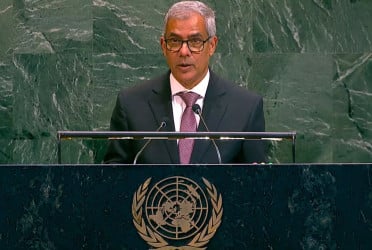
When the interim government led by Dr. Muhammad Yunus assumed office following the July uprising, Bangladesh’s economy was widely described as fragile. The country faced double-digit inflation, a persistent dollar crisis, banking sector instability, and stagnant investment.
Eighteen months later, business leaders and economists say the administration has managed to prevent economic collapse but has failed to restore growth momentum.
Rizwan Rahman, former president of the Dhaka Chamber of Commerce and Industry (DCCI), said the government’s immediate priority was stabilisation. “The government succeeded in containing the post-transition economic shock,” he said. “But it could not revive the economy.”
When the Yunus government took charge, inflation stood at 11.66 percent. To curb price pressures, it adopted a contractionary monetary policy, halted fresh money printing, and raised lending rates. Yet inflation remains elevated. According to the Bangladesh Bureau of Statistics (BBS), overall inflation was 8.49 percent in December—still considered high by economists.
Professor Mustafizur Rahman, Honorary Fellow at the Centre for Policy Dialogue (CPD), noted that inflation has eased somewhat but not sufficiently despite prolonged tight monetary policy. Mahfuz Kabir, Research Director at the Bangladesh Institute of International and Strategic Studies (BIISS), said Bangladesh has lagged behind many countries in containing inflation swiftly.
Prices of essential commodities—including potatoes, onions, and edible oil—have risen in phases, intensifying pressure on households. Analysts argue that weak market oversight and persistent syndicate practices remain unresolved.
High inflation has eroded real incomes and contributed to rising poverty. The World Bank estimates that poverty has increased from 18.7 percent in 2022 to over 21 percent, while private research organisation PPRC places the rate even higher at nearly 28 percent.
Investment has slowed sharply over the past year and a half. Elevated interest rates and policy uncertainty have discouraged domestic entrepreneurs from launching new ventures. Foreign investment has also remained subdued amid political transition and concerns over law and order.
Business leaders say the government has failed to create an investment-friendly climate. As a result, private-sector job creation has stalled, contributing to higher unemployment and youth frustration.
The banking sector remains under strain. By the end of 2025, defaulted loans had reportedly exceeded Tk 6 lakh crore, accounting for more than one-third of total outstanding loans. Economists warn that mounting non-performing loans have limited banks’ capacity to extend fresh credit, dampening investment and employment.
One positive development has been the rise in foreign exchange reserves—from around $15 billion to more than $32 billion—largely driven by stronger remittance inflows.
Overall, analysts conclude that while macroeconomic stabilisation has prevented further deterioration, the broader goal of economic revival remains unmet. The economy has stabilised, but sustained growth and renewed investor confidence have yet to return.
Bd-pratidin English/ Jisan