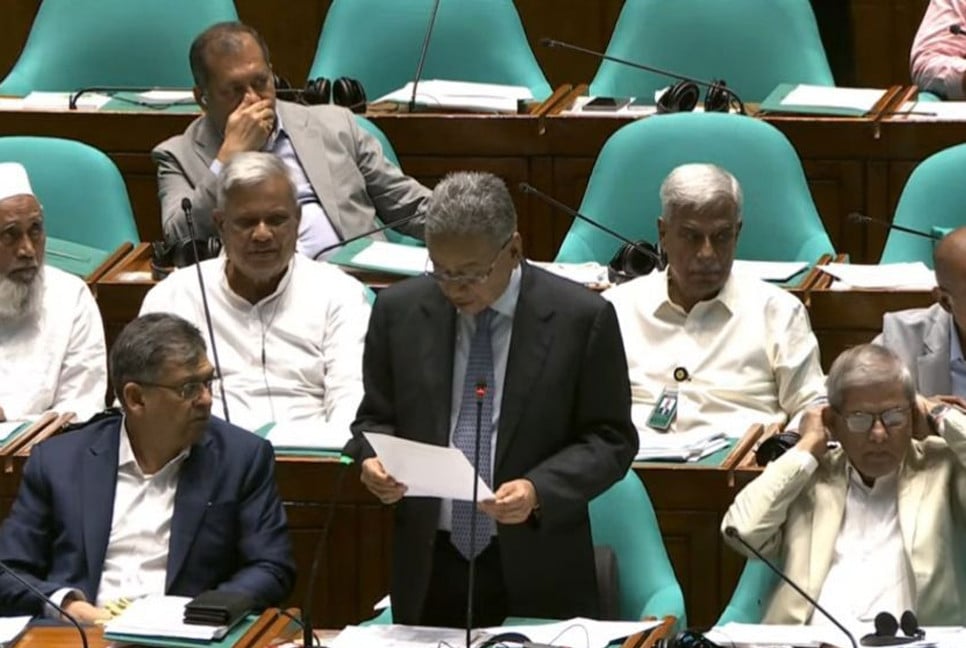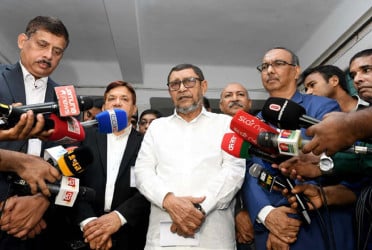
With just three days remaining before the national election, signs of departure are evident within the interim government, with many advisers seemingly preparing to leave office. Yet, at this final stage, there has been a surge in major procurement deals and contract signings—prompting growing criticism and controversy.
Once an election schedule is announced, governments are generally expected to limit themselves to routine administration. Instead, a flurry of high-value contracts and costly project approvals has marked the closing days of the interim administration. Agreements typically reserved for an elected political government are being rushed through, including vessel purchases from China and the United Kingdom, plans to buy 14 Boeing aircraft at an estimated cost of Tk37,000 crore, a US trade deal under a non-disclosure agreement, and the approval of several new large-scale projects.
These decisions add to mounting pressures already facing the next government: implementation of the proposed Ninth Pay Scale at a cost exceeding Tk100,000 crore, substantial domestic and foreign debt, high inflation and a growing burden of non-performing loans. Economists warn that assuming office amid such fragile economic conditions will subject the incoming administration to an immediate and severe test.
Post-schedule surge in projects and contracts
Following the announcement of the election schedule, the interim government was expected to focus solely on day-to-day governance and maintaining a conducive electoral environment. However, over the past 25 days—from 1 December to 25 January—it approved 64 projects worth Tk106,993 crore. Of these, 40 entirely new projects account for Tk79,356 crore. Over its 18-month tenure, the interim government has taken up 135 new projects with a combined cost of Tk203,000 crore.
Traditionally, meetings of the Executive Committee of the National Economic Council (ECNEC) would halt once an election schedule was announced. This time, however, multiple megaprojects were approved even after the schedule, fuelling criticism.
Analysts allege that some of the last-minute approvals—particularly for roads and rural infrastructure—may have been aimed at benefiting specific parties or candidates. The government has rejected the allegations, insisting the projects are essential for national development.
Economists warn of ‘tying the hands’ of the elected government
Economists and researchers say the interim government’s actions were ill-advised. Towfiq-ul-Islam Khan, additional research director at the Centre for Policy Dialogue (CPD), said non-urgent, long-term contracts should have been avoided and that major economic and policy decisions ought to have been discussed with political parties. “These could have been completed by the elected government after assuming office,” he said.
Controversial deals under scrutiny
US Trade Agreement:
A significant trade agreement with the United States is set to be signed in Washington on Monday. While it could pave the way for tariff concessions on Bangladeshi garment exports, the terms remain undisclosed due to a prior non-disclosure agreement.
Bangladeshi exports to the US currently face tariffs of up to 35 per cent. Under the proposed deal, substantial concessions are expected for garments made using US raw materials such as cotton. Commerce Adviser Sheikh Bashir Uddin said a five-member delegation led by an additional secretary would attend the signing but confirmed that details could not yet be made public.
Bangladesh has also pledged to import 25 Boeing aircraft, along with wheat, soybeans, cotton and LNG from the US, and has signed a deal to import 3.5 million tonnes of wheat over five years—moves intended to reduce the bilateral trade deficit and secure relief from a proposed 20 per cent reciprocal tariff.
Boeing Aircraft Purchase:
As part of the US agreement, Bangladesh has taken a final decision to purchase new aircraft from Boeing. For now, it plans to buy 14 aircraft at an estimated cost of Tk30,000–35,000 crore.
Aviation and senior government sources acknowledge the need to modernise the national fleet but question the timing and lack of accountability ahead of an election. Deliveries are scheduled between 2031 and 2035, meaning no immediate benefit for the current government, while Bangladesh Biman may face long-term financial risks due to inflation and exchange-rate fluctuations.
Vessel Purchases from China and the UK:
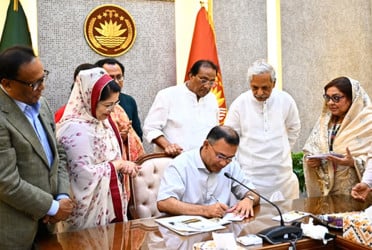
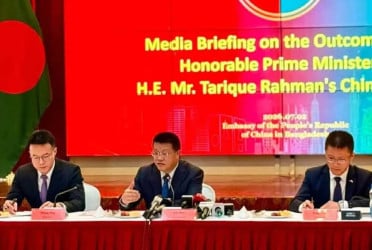
Bangladesh has signed a framework agreement with China to purchase four vessels—two crude oil mother tankers and two mother bulk carriers—at a total cost of US$241.92 million. The agreement was signed on Sunday by Chinese Ambassador Yao Wen and Economic Relations Division Secretary Md Shahriar Kader Siddiky.
On the same day, a separate agreement was signed with the UK on a government-to-government basis to procure an “off-the-shelf” hydrographic survey vessel.
The interim government has also been discussing—and in some cases finalising—defence procurement deals with several countries. National Security Adviser Khalilur Rahman described these as part of ongoing processes.
Ninth Pay Scale: An Added Tk100,000-Crore Burden
Perhaps the most consequential decision is the proposed Ninth Pay Scale, which would require an additional annual expenditure of Tk106,000 crore from the treasury. Analysts warn that, amid high inflation, financing this would force the next government either to print money or to borrow heavily, adding pressure to an already strained economy.
‘Wrong Decisions at the Wrong Time’
Mustafa K Mujeri, former director general of the Bangladesh Institute of Development Studies (BIDS) and former chief economist of Bangladesh Bank, said it was unreasonable for an interim government with only days left in office to take such decisions. “It is narrowing the room for economic decision-making for the post-election government,” he said, adding that current economic policies reflect a pattern of “wrong decisions at the wrong time”.
Rising External Debt and Future Risks
To address revenue shortfalls and finance major projects, the interim government has followed a path similar to its predecessor by increasing reliance on foreign borrowing. By the end of FY2024-25, public-sector external debt is estimated at US$77 billion—an increase of nearly 46 per cent in just five years. Including IMF and government-guaranteed loans could push the real figure even higher.
Masrur Riaz, chairman of Policy Exchange Bangladesh, warned that future debt-servicing pressure could rise by as much as 65 per cent.
Government’s Defence
Responding to criticism, Commerce Adviser Sheikh Bashir Uddin said the interim government was finalising these deals to “relieve pressure on the next elected government”.
However, a former finance secretary disagreed, saying it was against administrative norms to create liabilities exceeding Tk100,000 crore in the final week of an interim administration. “Issues like pay scales or mega aircraft purchases require an electoral mandate,” he said, cautioning that the next government could begin its term facing a severe budget deficit and stringent IMF conditions.
Courtesy: Kaler Kantho