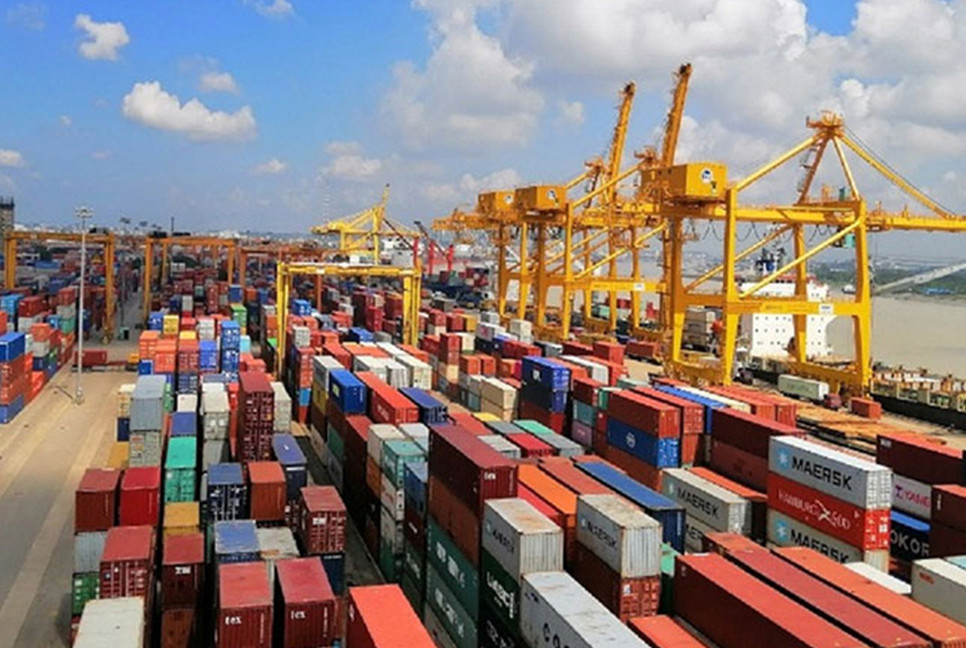
An unprecedented nonstop strike at the country’s premier seaport, which handles about 92% of Bangladesh’s seaborne cargo, has brought export-import activities to a complete halt.
No vessels are entering or leaving the jetties, while containers remain stranded at port yards and inland container depots (ICDs) as port employees and workers have been on an indefinite strike continuing since Tuesday morning.
The agitation began with eight-hour work stoppages from 8am to 4pm for three consecutive days until Monday, protesting the government’s move to lease out the New Mooring Container Terminal (NCT) to Dubai-based operator DP World.
As their demands went unmet, workers escalated the protest to a 24-hour strike on Monday and an indefinite shutdown from 8am on Tuesday.
Although limited operations continued during the initial stoppages, port activities came to a complete standstill from Tuesday. Transportation of containers to and from Chattogram Port, ICDs and factories has remained suspended.
Industry insiders warned that the disruption is already hampering factory production due to shortages of imported raw materials.
Export containers are also expected to miss mother vessels at transshipment hubs such as Singapore, Malaysia and Colombo, delaying deliveries to buyers.
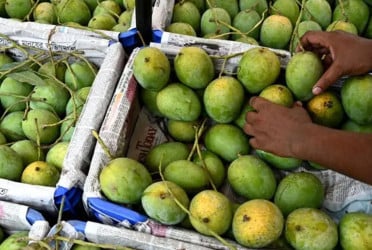
Imports of essential commodities, including rice, wheat, dates and fruits, have also been affected as containerised cargo cannot be moved to importers’ warehouses ahead of Ramadan, raising concerns of price hikes.
They urged an immediate resolution to the stalemate, warning that the strike has effectively paralysed the country’s international trade.
Fazle Ekram Chowdhury, president of the Chattogram Port Berth Operators, Ship Handling Operators and Terminal Operators Owners Association, said seven vessels – four container ships and three general cargo vessels – have remained idle at the General Cargo Berth since Tuesday.
“No vessel is entering or leaving the port as loading, unloading and container transportation have been fully suspended,” he said, adding that feeder vessels will miss mother vessels, disrupting the export chain.
“We may even face difficulties paying workers’ salaries and Eid bonuses if the situation continues.”
Ruhul Amin Sikder, secretary general of the Bangladesh Inland Container Depots Association (BICDA), said container movement between the port and ICDs has completely stopped, causing congestion at ICDs.
He said 10,817 TEUs of export containers, 7,945 TEUs of import containers and 51,976 TEUs of empty containers are currently lying at 21 ICDs in Chattogram.
While storage capacity, at 106,000 TEUs, is not yet under pressure, he warned that export cargo is likely to miss scheduled vessels.
Chattogram Port Authority (CPA) Director (Administration) and spokesperson Md Omar Faruk said no work took place inside the port on Wednesday, despite typically reduced activity during holidays.
According to port sources, the number of containers at port yards rose to 37,312 TEUs on Wednesday, up from 32,873 on Sunday.
BGMEA Director Rakibul Alam Chowdhury said garment factories are facing production disruptions due to shortages of raw materials.
“If we fail to produce and ship goods on time, the losses will be irreparable,” he said.
Coordinator of the Chattogram Bandar Rakkha Sangram Parishad, Hymayun Kabir, said the strike was being observed spontaneously and would continue until demands are met, alleging that the government had not initiated dialogue as of Wednesday.
Meanwhile, leaders of BGMEA, BKMEA and the Chattogram Customs Agents Association were holding talks with strike leaders at a city hotel on Wednesday evening.
The agitation was initially announced by Jatiyatabadi Sramik Dal as a two-day programme and later extended.
The Sramik Karmachari Oikya Parishad (SKOP) and the Communist Party of Bangladesh have also expressed solidarity with the strike.
Courtesy: Daily Sun.
Bd-pratidin English/TR