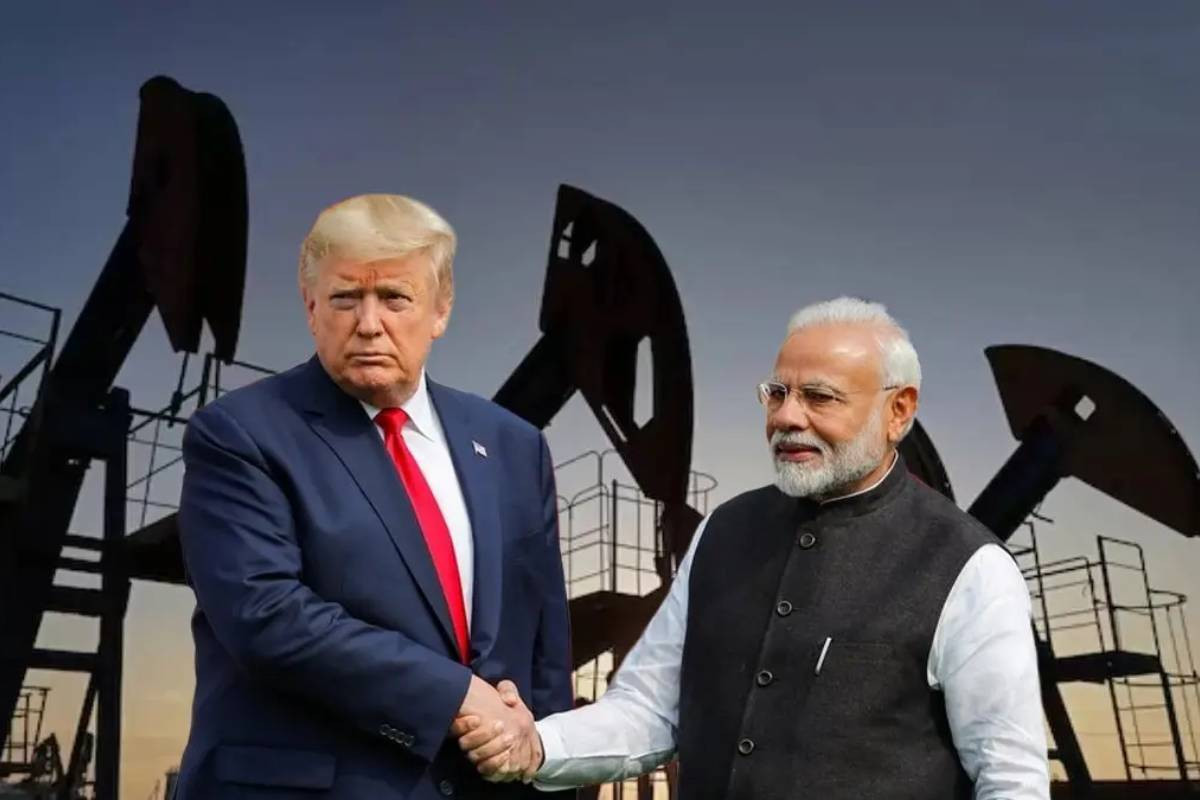
U.S. President Donald Trump on Monday announced a trade agreement with India that will reduce U.S. tariffs on Indian goods to 18% from 50%, in exchange for New Delhi ending its purchases of Russian oil and easing trade barriers for American products, reports Reuters.
Trump said the deal followed a call with Indian Prime Minister Narendra Modi and was finalized after months of tense negotiations between the world’s two largest democracies. Under the agreement, India will begin purchasing more oil from the United States and could also turn to Venezuela as an alternative supplier.
A White House official told Reuters the United States would rescind a punitive 25% duty imposed last year over India’s continued imports of Russian oil. That penalty had been layered on top of a 25% “reciprocal” tariff, driving total duties on Indian goods to 50%.
The announcement sparked a rally in U.S.-listed Indian stocks. Infosys rose 4.3%, Wipro gained 6.8%, HDFC Bank advanced 4.4%, and the iShares MSCI India exchange-traded fund climbed 3%. The news also supported broader U.S. markets, adding to gains in semiconductor and artificial intelligence shares.
Trump said Modi committed India to “BUY AMERICAN at a much higher level,” including more than $500 billion in U.S. energy purchases such as oil and coal, as well as technology, agricultural and other products. He also said India would reduce tariffs and non-tariff barriers on U.S. goods, potentially to zero.
Before Trump returned to office and raised tariffs last year, India had some of the world’s highest trade barriers, with a simple applied tariff rate of 15.6% and an effective applied rate of 8.2%, according to World Trade Organization data.
Details of the agreement remain limited. The White House has not issued a presidential proclamation or a Federal Register notice outlining when the lower tariff rate will take effect, the timeline for ending Russian oil purchases, or the scope of India’s market-opening commitments.
India’s commerce and foreign ministries did not immediately comment, and Russia’s embassy in Washington also did not respond to requests for comment.
Economists said the deal would bring India broadly in line with Asian peers that face U.S. tariff rates between 15% and 19%. Indian markets had been under pressure since the tariffs were imposed, making the country the worst-performing major emerging market in 2025 amid heavy foreign investor outflows.
U.S. business groups offered mixed reactions. The U.S. Chamber of Commerce welcomed the announcement as a step toward a comprehensive trade agreement, while a coalition of small businesses warned the deal still represents a sharp increase in tariffs compared with pre-2024 levels.
Modi welcomed the announcement, thanking Trump for reducing tariffs on “Made in India” products. Trade Minister Piyush Goyal said the deal would deepen economic ties, boost exports and help India gain greater access to U.S. technology.
The agreement comes as India begins scaling back its reliance on Russian oil. Imports from Russia averaged about 1.2 million barrels per day in January and are expected to fall further in coming months, according to Reuters data, as India seeks alternative suppliers to meet roughly 90% of its oil needs through imports.
Bd-pratidin English/ Jisan