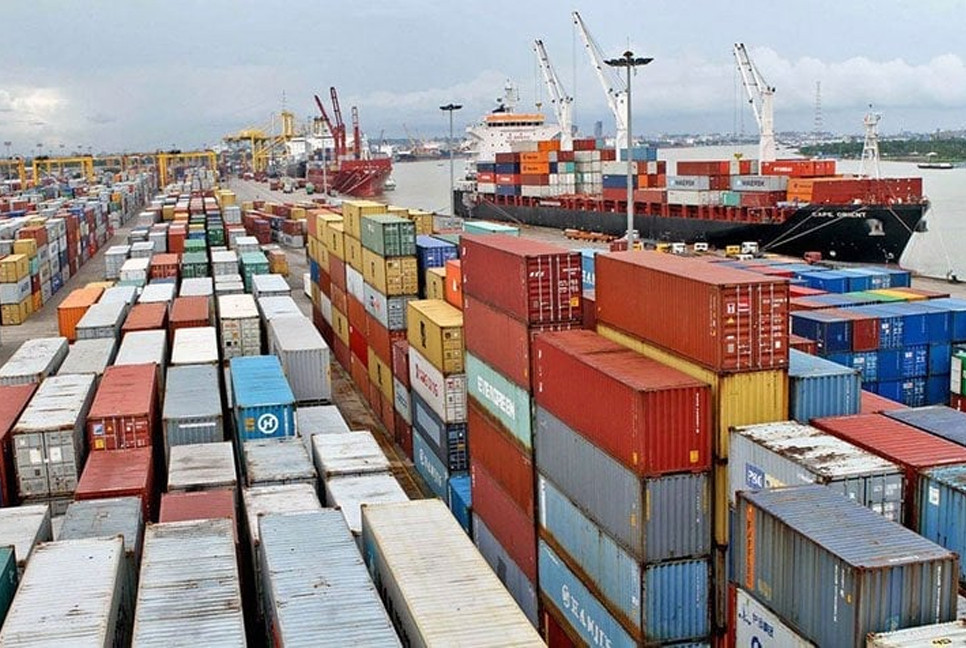
Chattogram Port is grappling with severe congestion as a shortage of lighterage vessels, combined with slow unloading and capacity constraints, has disrupted cargo handling, prompting the Ministry of Shipping to issue a five-day ultimatum to major importers to clear stranded cargo or face legal action.
According to port and shipping officials, a record 176 mother vessels are currently anchored at the port’s outer anchorage, far exceeding the system’s handling capacity. Of these, 61 vessels are carrying essential commodities—up sharply from 41 during the same pre-Ramadan period last year.
Officials said that a combination of stockpiling by large importers, uncontrolled imports and a slow, largely manual unloading system has pushed port operations and the lightering capacity to breaking point.
Sources at the shipping ministry said some of the big importing groups are using lighter vessels as floating warehouses instead of unloading cargo within the stipulated time. As a result, more than 200 lighter vessels remain stuck, worsening the shortage and tightening supply in the domestic market despite ample imports.
Confirming the congestion, Parvez Ahmed, a member of the convener committee of the Bangladesh Water Transport Coordination Cell (BWTCC), told the media that only 84 lighter vessels could be allocated over the past two days, despite demand being more than double.
"Most of the ships anchored at the port are unable to unload their cargo," he said, adding that he had not witnessed such a situation in more than 30 years in the shipping business.
In response to the crisis, senior shipping ministry officials held a meeting with sector stakeholders on Tuesday, including representatives of major importing groups.
The importers were instructed to unload their goods and release the stranded lighter vessels within five days.
Officials warned that failure to comply would lead to stern action, including criminal cases.
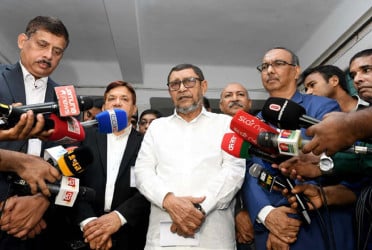
Confirming the decisions, Commodore Md Shafiul Bari, director general of shipping, told the media that multiple task forces have already been formed to enforce discipline across the supply chain.
He said, "The shipping ministry has formed multiple task forces to take action against irregularities in unloading, storage and transportation," he said. "Three task forces are already operating – one in Khulna and two in Dhaka, covering Narayanganj and Munshiganj – and they have been instructed to conduct daily drives."
He added that the task forces, led by executive magistrates, have been directed to file regular criminal cases against importers deliberately slowing unloading and using lighter vessels as floating warehouses to hoard goods and raise prices ahead of Ramadan.
Explaining the scale of the problem, the DG said the number of anchored vessels is far beyond the system's handling capacity.
"Of the record 176 mother vessels now anchored at Chattogram Port, 61 are carrying essential commodities. This sharp increase from last year is a major factor behind the disruption," he said.
According to him, the BWTCC can effectively manage around 50 mother vessels at a time. "With more than three times that number waiting, pressure on port operations has intensified," he added.
Officials said the outdated and largely manual unloading system is at the heart of the delays.
Once cargo is discharged from mother vessels, it usually reaches river ports or depots within one to one-and-a-half days. The real bottleneck begins during unloading, particularly for bulk commodities such as wheat.
"These are not containerised cargoes. Wheat arrives in bulk and must be bagged, stitched, carried manually, loaded onto trucks and then sent to markets or warehouses," an official said.
In many cases, there are no dedicated warehouses, forcing goods to move directly into already congested markets.
Even with around 60 labourers working continuously, unloading a single lighter vessel can take 10 to 12 days. "With cranes or mechanical systems, the same work could be completed in four days," the official added.
Courtesy: The Business Standard.
Bd-pratidin English/TR