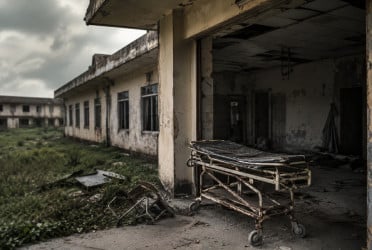
Bangladesh Bank has decided to liquidate nine non-bank financial institutions, triggering acute anxiety among investors and depositors. Since the recent decision to wipe out the shares of five banks, investors have been seething with anger. The announcement of the liquidation of nine more financial institutions has now left all stakeholders deeply unsettled.
As a result of the liquidation, shares worth Tk1,008 crore held by small investors will be wiped out at a stroke. According to available data, total deposits—both individual and institutional—held by these nine institutions amount to around Tk15,370 crore. However, with non-performing loans exceeding 90 per cent, the institutions have effectively reached a state of bankruptcy.
The nine financial institutions set to be closed, as announced by Bangladesh Bank, are: FAS Finance, Bangladesh Industrial Finance Company (BIFC), Premier Leasing, Fareast Finance, GSP Finance, Prime Finance and Investment, Aviva Finance, People’s Leasing and Financial Services, and International Leasing and Financial Services.
Bangladesh Bank said meetings and hearings with the concerned institutions would be held this week to review their financial condition, asset positions and the realistic prospects of repaying depositors. Final decisions will be taken following these hearings. Investors say the country’s overall situation is currently very bleak.
Coupled with this, the capital market remains fragile. News of the liquidation of nine more financial institutions is unlikely to bring any positive signal to the economy.
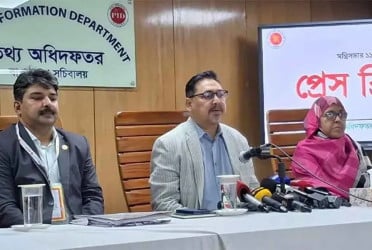
Meanwhile, Bangladesh Bank Executive Director and spokesperson Arif Hossain Khan told the media that no depositor would lose their money even if the institutions were liquidated. “All depositors will get their money back. Both savings and fixed deposit holders will be repaid,” he said.
He added that small depositors would be given priority, followed by medium-sized and then large depositors. “Regardless of the amount, depositors will receive their full principal,” he assured.
Due to irregularities and corruption during the tenure of the ousted Awami League government, most non-bank financial institutions (NBFIs) have been unable to return customers’ money. These institutions have long been in distress, which is why they cannot repay deposits. Four of them are linked to the widely discussed Prashanta Kumar (PK) Halder, while another is associated with Chattogram-based Saiful Alam, or S Alam, known to be close to the former prime minister. Overall, Bangladesh Bank has initiated steps to cancel the licences of these nine NBFIs. The collateral against their loans is minimal, leading the central bank to conclude that there is little chance of recovery.
Central bank sources said an initial plan has been taken to return the principal amounts of individual depositors. To facilitate this, the government has decided to provide Tk1,500 crore so that ordinary people can quickly recover at least part of their deposited funds. However, uncertainty remains over the repayment of institutional investors and large depositors.
Analysts argue that returning only the principal without paying interest would amount to a breach of deposit contracts, further eroding public confidence in the financial sector. Without a fair and transparent resolution, they warn, such crises could worsen in the future.
Even before recovering from losses in the banking sector, thousands of capital market investors now fear losing everything in the financial institutions sector as well. Following a recent Bangladesh Bank circular announcing the closure of nine financial institutions under the Bank Regulation framework, widespread concern and anger have spread among individual and institutional investors.
Under the Bank Regulation Ordinance, five Islamic banks were merged in 2025 to form a new entity named United Islamic Bank, effectively rendering the shareholdings of those five banks worthless. As a result, individual and institutional investors lost shares worth around Tk4,500 crore overnight. Before investors could recover from that blow, similar fears have now emerged in the NBFI sector.
If eight listed NBFIs are liquidated, 100.87 million shares held by investors will be wiped out, with a face value of Tk1,008 crore. Of the nine institutions, only Aviva Finance is not listed on the stock market. The remaining eight are listed on the Dhaka Stock Exchange, where a large number of individual and institutional investors—including sponsor shareholders—have stakes. Based on face value alone, capital at risk stands at around Tk1,500 crore, while actual losses based on market prices would be even higher.
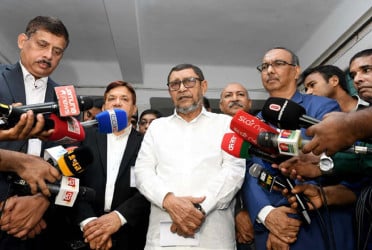
Commenting on the issue, Agrani Bank Chairman Syed Abu Naser Bukhtear Ahmed said that corruption and looting were the main reasons behind the collapse of these institutions. “If the assets of the directors involved were seized and auctioned, the institutions would not have fallen into such trouble,” he said. Disagreeing with the idea of repaying only the principal, he added, “Returning only the principal would breach the contract. If contracts are violated, it puts the entire legal framework of the country into question. If the contract stipulates a fixed interest rate, depositors must be paid accordingly.”
While Bangladesh Bank has assured individual depositors about the return of their funds, it has yet to announce any clear policy regarding shareholders’ investments or corporate deposits. A responsible central bank source mentioned the possibility of merging the nine institutions into a single entity, though no final decision has been made.
According to Bangladesh Bank’s latest data, these nine institutions account for 52 per cent of total non-performing loans in the NBFI sector. By the end of the last financial year, their defaulted loans stood at Tk25,089 crore, reflecting deep structural weaknesses in the sector. Meanwhile, Tk15,370 crore in deposits remain stuck, including Tk3,525 crore from individual depositors and Tk11,845 crore from banks and corporate clients. The highest amount of individual deposits is stuck in People’s Leasing at Tk1,405 crore, followed by Aviva Finance (Tk809 crore), International Leasing (Tk645 crore), Prime Finance (Tk328 crore) and FAS Finance (Tk105 crore).
People’s Leasing depositor Samia Binte Mahbub said: “We have been running from pillar to post for our money for a long time. I urgently need the money for surgery to remove a tumour. Now I hear that People’s Leasing and eight other institutions will be liquidated and the government will take responsibility for depositors. I want to believe that all depositors will get their money back through this process.”
Another investor in International Leasing, Abu Saleh, said: “I deposited my father’s pension money here in 2018 and have fallen into serious trouble. Now I cannot get it back. We are paying the price for others’ corruption. We want our money back at any cost.”
Mohammad Mohsin, organising secretary of the Capital Market Investors’ Unity Council, said: “After wiping out the shares of five banks, if nine more financial institutions are targeted, it will be a death blow. Millions of investors will be ruined. If companies are shut down one after another, we will be reduced to beggars. That is why we do not want any liquidation before a political government comes to power.”
Courtesy: Kaler Kantho.
Bd-pratidin English/TR