Bangladesh’s banking sector is facing a growing paradox as record excess liquidity alongside a sharp slowdown in lending. Political uncertainty ahead of the 13th parliamentary election, weak private investment and elevated risks from non-performing loans (NPLs) have dampened credit demand, leaving banks struggling to deploy funds productively and exposing deep structural imbalances.
According to the latest Bangladesh Bank (BB) data as of 30 September 2025, excess liquidity in the sector rose to around Tk3.16 lakh crore, including investments in securities, underscoring the slowdown in credit growth.
Banks were required to maintain around Tk3.11 lakh crore in liquidity but held nearly Tk6.18 lakh crore, leaving a sizeable surplus even after meeting Cash Reserve Ratio (CRR) and Statutory Liquidity Ratio (SLR) requirements.
State-owned banks held nearly Tk1.83 lakh crore in excess funds, private banks Tk3.44 lakh crore, Islamic banks Tk40,694 crore and foreign banks Tk48,471 crore. Under CRR and SLR rules, banks must keep 4% of deposits as cash with Bangladesh Bank and 13% in government treasury bills and bonds.
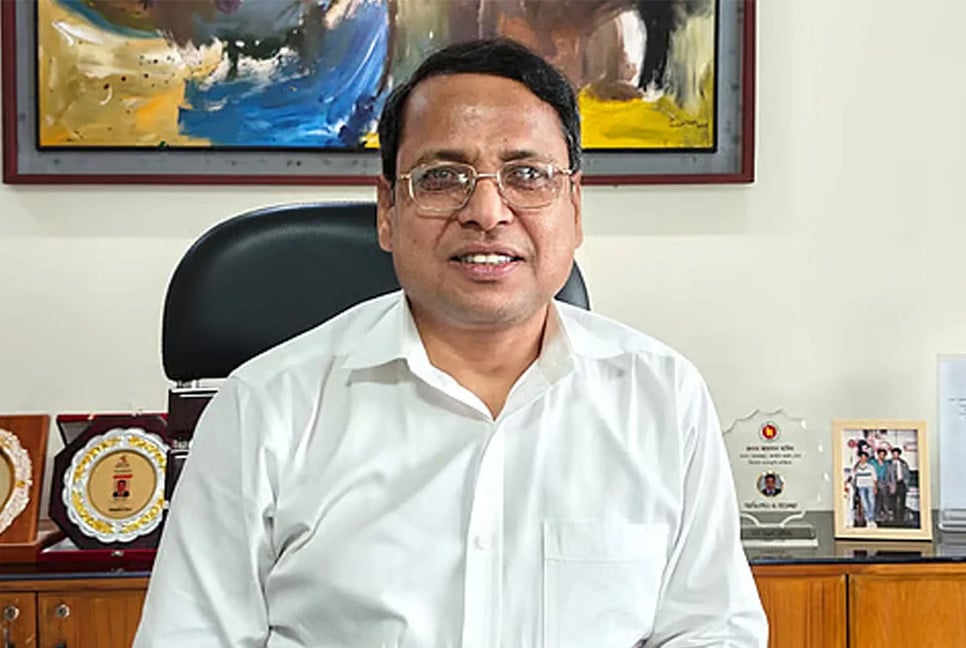
BB spokesperson and Executive Director Arief Hossain Khan said banks earn profits by investing deposits and charging interest on loans, while idle funds create financial pressure. “Focusing only on collecting deposits without proper investment can lead to losses,” he said, noting that surplus liquidity increases both costs and risks.
With private-sector loan demand weak, banks are increasingly parking excess funds in government treasury bills and bonds, particularly as the government targets Tk1.04 lakh crore in borrowing through these instruments in the current fiscal year. As a result, government borrowing from the banking system surged to nearly Tk60,000 crore in the first half of FY2025–26, raising concerns that lending to businesses could be crowded out.
The central Bank's data show net government borrowing from banks stood at Tk59,756 crore between 1 July and 4 January—more than 57% of the full-year target—well before the fiscal year’s midpoint.
Private-sector credit growth fell to 6.58% by November and has remained below 7% for six consecutive months. With lending opportunities shrinking, more than 70% of excess liquidity is now being placed in treasury bills and bonds, which banks view as safer amid uncertainty.
Speaking at a programme on Tuesday, Mashrur Arefin, chairman of the Association of Bankers, Bangladesh (ABB) and managing director of City Bank PLC, said excess liquidity has crossed Tk3 lakh crore as investment activity stalled ahead of the election. “What will we do with this money? Customers are not coming to take loans. There is no demand,” he said, citing political instability and high inflation as key factors. “Both are gradually easing. Inflation has come down from 12.5% to close to 8%.”
He described investments in treasury bills and bonds as a “natural outcome” of weak credit growth. “When credit growth is very low, funds have to be placed somewhere. There was no demand for loans, while the government needed funds,” he said, expressing optimism that conditions would improve after the election.
Former Bank Asia managing director Arfan Ali said reform measures following the political transition have yet to restore investor confidence. “High interest rates and economic uncertainty are discouraging borrowers. Banks are stuck with idle funds that have no productive use, yet they must pay interest on them,” he said, adding that business sentiment may improve in the coming months after the election.
Despite the overall surplus, liquidity conditions vary widely. Sonali Bank recorded the highest surplus, followed by BRAC Bank, Pubali, Agrani, Bank Asia, Dutch-Bangla, Jamuna, Rupali, City and Standard Chartered Bank.
By contrast, several banks face acute shortfalls. National Bank posted the largest deficit, followed by AB Bank, Premier Bank, Social Islami, BASIC Bank, Union Bank, Bangladesh Commerce, Padma, First Security Islami and Global Islami Bank.
Economists said that the root problem is a confidence crisis driven by political uncertainty.
Former World Bank lead economist Dr Zahid Hussain said investors are holding back due to a lack of clarity about the country’s political future.
“We are in a transitional phase. The previous political framework has collapsed, and the current interim setup is clearly temporary. That ambiguity alone is enough to keep investors on the sidelines,” he said.
He stressed that interest rates are not the primary constraint. “Even if banks offer cheaper loans, entrepreneurs are unlikely to invest without political stability.”
Mustafa K Mujeri, executive director of the Institute for Inclusive Finance and Development (InM), agreed that weak private-sector investment is fuelling the liquidity glut, though its impact is uneven, with several vulnerable banks still under severe stress.
He said that 2026 would be a testing year for the banking sector. Strong policy action, decisive reforms and political stability could help restore confidence; without them, rising defaults and prolonged uncertainty could deepen the crisis and threaten financial stability.
Courtesy: Daily Sun.
Bd-pratidin English/TR