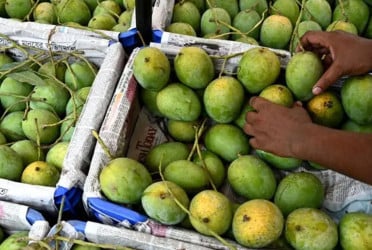
Rickshaw puller Nasir Uddin went to buy rice at the capital’s Karwan Bazar hoping for relief after hearing repeated reports of falling prices. Instead, he found no change. “I have been hearing for a long time that prices are decreasing,” he said. “But when I go to the market, everything is the same as before.”
His experience reflects a broader reality. While official data show fluctuations in inflation, market prices for essential goods have remained persistently high. A recent market survey by the Centre for Policy Dialogue (CPD) found that prices of staples such as rice, pulses and edible oil have stayed elevated for a prolonged period.
Analysts cite weaknesses in the supply chain and ineffective market supervision as key factors. An abnormal gap has emerged between wholesale and retail prices, meaning price stability or slight reductions at the wholesale level often fail to reach consumers. This has once again highlighted the role of middlemen and the lack of effective monitoring.
CPD Executive Director Dr Fahmida Khatun said current policies aimed at controlling inflation and managing food supplies are failing to deliver meaningful relief. “Although the government has intervened in the market at different times, these measures have not produced long-term or structural solutions,” she said. With an election year approaching, she warned that persistently high inflation will pose a major challenge for the next government.
According to the Bangladesh Bureau of Statistics (BBS), overall inflation rose to 8.49 percent in December from 8.29 percent in November, marking two consecutive months of increase. Over the past year, inflation has fluctuated but remained stuck at around 8 percent.
More concerning is the rise in food inflation, which has increased for three consecutive months. Food inflation reached 7.71 percent in December, while non-food inflation stood at 9.13 percent. High inflation has prevailed for nearly three years, with average inflation in 2025 recorded at 8.77 percent.
“The biggest pressure of inflation is on daily necessities,” Dr Khatun said. “Inflation is not just a statistical indicator; it directly affects people’s cost of living. Without transparency, accountability and effective market supervision, inflationary pressure will not ease.”
A CPD report also found that government food distribution and open market sales programmes have failed to exert significant influence on prices, due largely to weak stock management and supply planning.
CPD analysts identified several factors continuing to drive food prices higher, including gas shortages affecting fertiliser production, rising transportation costs, higher global prices for imported food items, pressure from the dollar exchange rate, and the lack of data-driven analysis in policymaking.
Bd-pratidin English/ Jisan