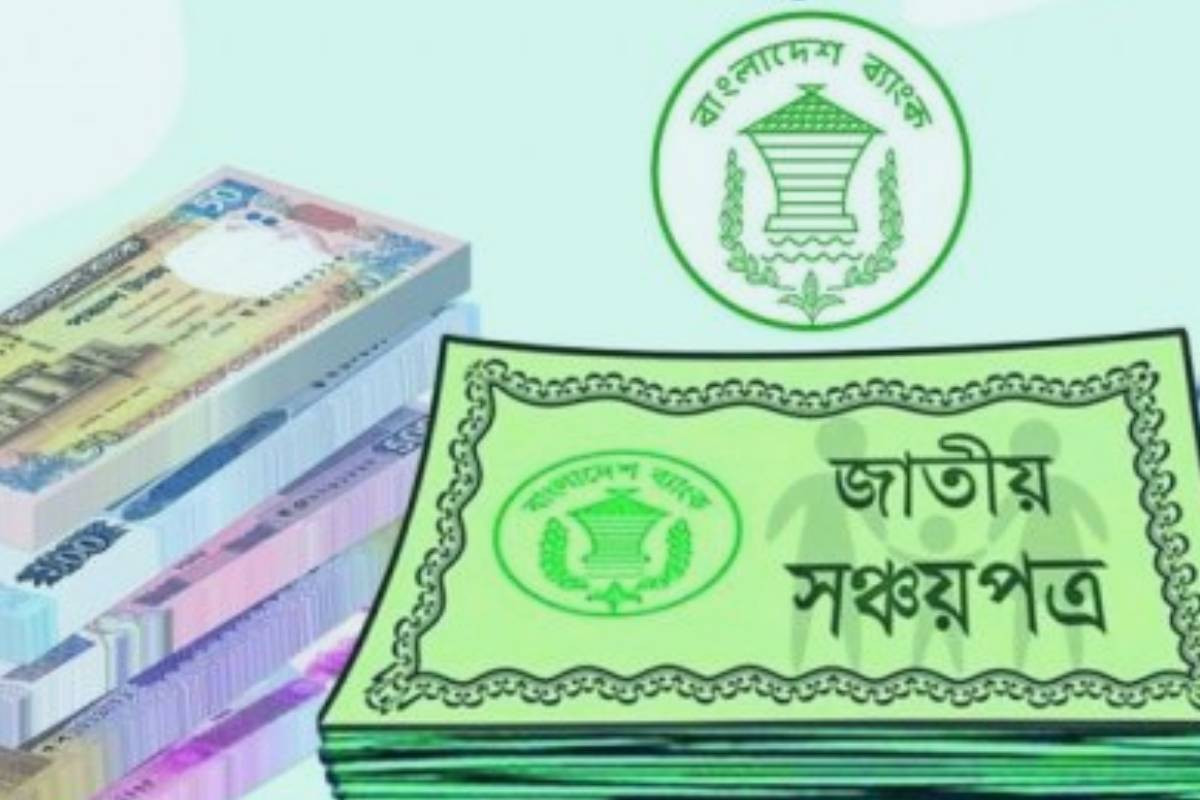
Although net sales of national savings certificates (Sanchayapatra) rose slightly in the first five months of the 2025–26 fiscal year, overall indicators suggest that the government’s dependence on this financing instrument is gradually declining. High interest costs, persistently elevated inflation and weakening household demand are driving the trend.
Bangladesh Bank data show that net sales of savings certificates during July–November of FY2025–26 increased by 23.86 percent to Tk 2,760 crore, compared with Tk 1,676 crore in the same period a year earlier. Despite this growth, demand remains subdued as repayments continue to exceed new sales.
In November 2025, net sales stood at negative Tk 293 crore, meaning the government paid out more in redemptions than it raised through fresh sales. Although this was an improvement from negative Tk 3,430 crore in November 2024, it still highlights the shrinking role of savings certificates in budget financing.
As reliance on savings certificates weakens, the government has increasingly turned to the banking system to meet its funding needs. Net borrowing from banks jumped to Tk 54,774 crore during July–December of FY2025–26, up sharply from Tk 6,231 crore in the same period of the previous fiscal year, according to Bangladesh Bank. For the current fiscal year, the government has set a net borrowing target of Tk 1,040 crore from banks, while the target for non-bank borrowing, including savings certificates, stands at Tk 21,000 crore.
Net sales of savings certificates have remained negative on an annual basis for the past three fiscal years. In FY2024–25, net sales amounted to negative Tk 6,630 crore, following a record negative Tk 21,124 crore in FY2023–24 and negative Tk 3,295 crore in FY2022–23.
Economists say prolonged high inflation has significantly reduced the appeal of savings certificates by eroding real returns. With inflation staying above 8 percent for nearly three years, many households have been redeeming maturing certificates to meet daily expenses rather than reinvesting. Although inflation eased slightly to 8.49 percent in December, analysts believe it remains too high to revive fresh demand.
From the government’s perspective, savings certificates have also become an expensive source of financing. Interest rates on these instruments exceed those on treasury bills and government bonds, raising borrowing costs. Meanwhile, higher bank deposit rates have further reduced their attractiveness, with several private banks now offering fixed deposits at interest rates ranging from 8 to 11 percent.
Since 2021, interest rates on savings certificates have been cut by up to two percentage points, while stricter eligibility conditions have narrowed investment options. Economists expect these factors to further reduce the government’s dependence on savings certificates in the years ahead.
Bd-pratidin English/ Jisan