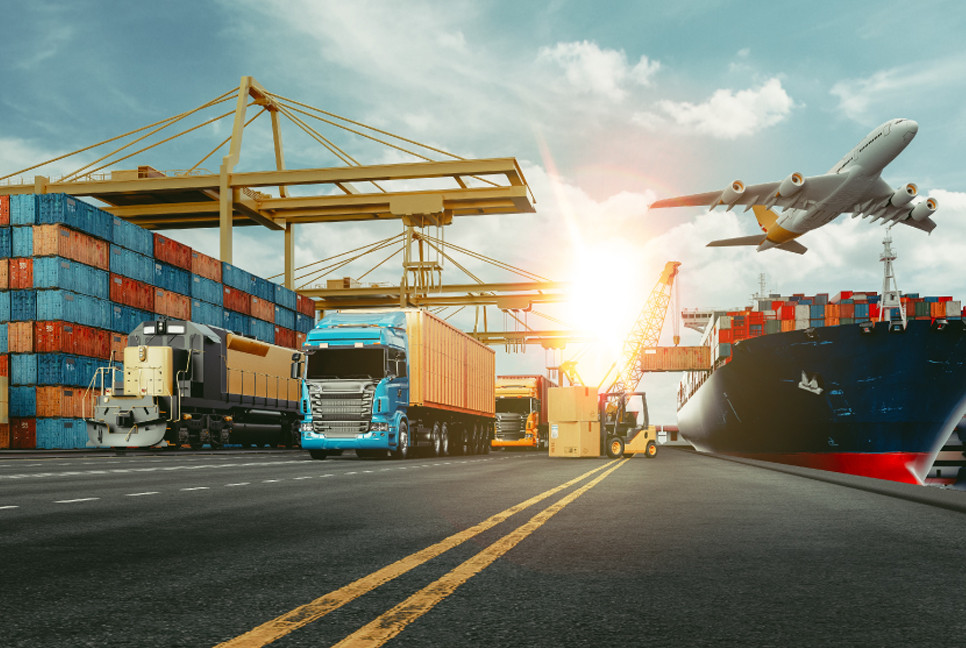
Amid political tensions, election-related turmoil, mob violence and multiple other issues, the country’s export sector—the backbone of the economy—is quietly sliding into a deep slump. Export earnings have declined for five consecutive months, while work orders are down by 30 to 40 per cent compared with the same period last year, entrepreneurs have said. They see little prospect of a turnaround before June.
The downturn is being attributed to shrinking global demand, domestic instability and a lack of policy support. Exporters fear that if the situation persists, the sector could face a much bigger crisis on the eve of Bangladesh’s graduation from LDC status. The prolonged slowdown has heightened concerns for the overall economy, as exports—alongside remittances and domestic demand—remain one of its main driving forces.
With export earnings falling steadily, pressure is expected to mount on foreign exchange reserves, import capacity and employment. According to the Export Promotion Bureau (EPB), export earnings in December fell 14.25 per cent year-on-year to $3.96 billion. In the first six months of the current fiscal year (July–December), total exports stood at $23.9968 billion, down 2.19 per cent, or about $540 million, from the same period last year.
Although the numerical decline may appear modest, the reality is more worrying as there has been no sign of recovery during this period. Exports fell by 7.43 per cent in October, 5.54 per cent in November, with the rate of decline accelerating further in December. Economists say such a sustained downturn is a clear warning signal for future economic stability.
Exports are directly linked to foreign exchange reserves, which in turn determine import capacity, industrial production and market supply. Bangladesh is heavily dependent on imports for food grains, energy and industrial raw materials. A weak reserve position disrupts imports, complicates the opening of letters of credit and drives up the dollar rate, raising business costs and hampering production—conditions businesses experienced between late 2023 and mid-2024.
Remittances and exports are the two main sources for maintaining strong reserves. A major shock to either can affect the entire economy, particularly at a time when pressure is rising to service external debt. Ensuring adequate dollar inflows and stable reserves is therefore becoming a growing challenge for the government.
A prolonged export slowdown also threatens employment. The garment sector alone employs around four million workers, with several million more dependent on it directly or indirectly. Any sustained slump poses serious risks to jobs across the economy.
Work Orders Reduced by 30–40 Percent
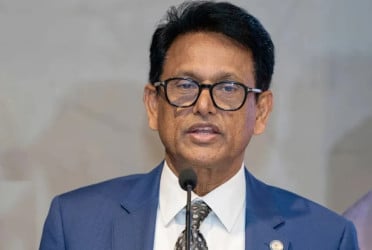
BKMEA President Mohammad Hatem said export earnings are unlikely to recover before June, noting that work orders have fallen by 30–40 per cent year-on-year. He blamed uncertainty over gas and electricity supply, weaknesses in the banking sector and insufficient policy support, warning that while competitor countries are sustaining exports through cash incentives, tax breaks and easy credit, Bangladesh is falling behind.
Former BKMEA President and Plummy Fashions Managing Director Fazlul Hoque said both domestic and global factors were driving the decline, which could persist for another four to five months. He pointed to weaker global demand, US reciprocal tariffs, deteriorating law and order, uncertainty over banking reforms, and buyers delaying orders while waiting for a new government.
Former BGMEA Director Mohiuddin Rubel said the ongoing recession in Europe, declining demand in the US apparel market and reduced consumer purchasing power have kept Bangladesh’s export growth in negative territory for five months. He added that faster, cheaper and more efficient export processes, stronger logistics and business-friendly policies in countries such as China, Vietnam and Cambodia are drawing global buyers away from Bangladesh.
As Bangladesh prepares to graduate from LDC status this year, preferential trade benefits will gradually be withdrawn. Analysts warn that without adequate preparation, the impact could be severe. Political and policy uncertainty is already hindering readiness in both the public and private sectors, delaying investments and stalling capacity expansion.
Taken together, the prolonged slump in exports just ahead of LDC graduation is a clear warning sign for the economy. Without immediate steps to ensure uninterrupted energy supply, reform the banking sector, strengthen business-friendly policies and restore political stability, an even bigger shock may lie ahead.
Source: Kalerkantho
Bd-pratidin English/ ANI