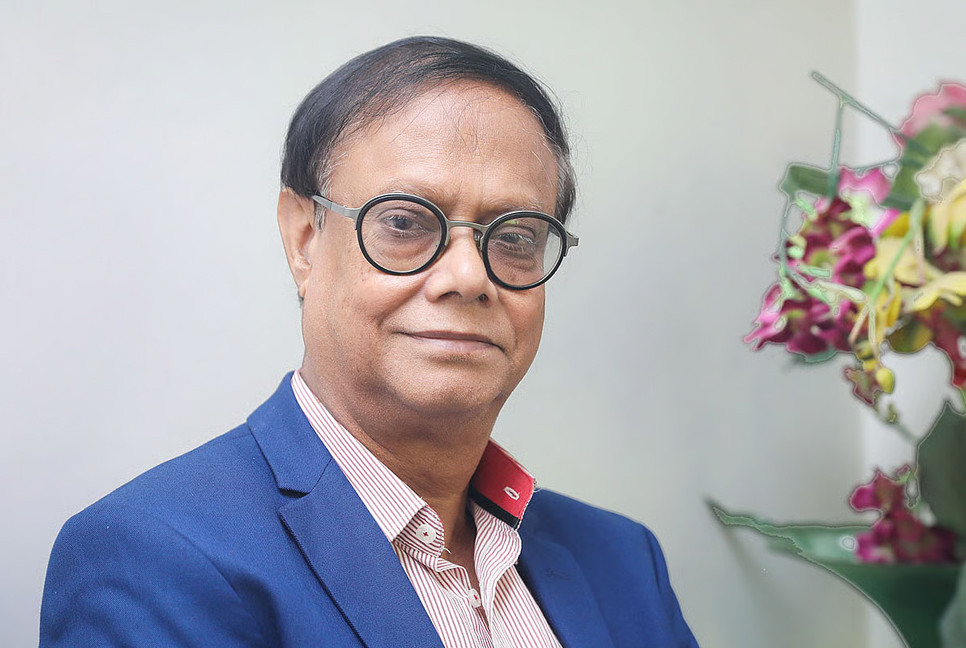
After the fall of the Awami League government, the condition of Bangladesh’s financial sector was dire. Rampant money laundering and plunder by willful loan defaulters had devastated the banking sector. A state of near anarchy prevailed across the financial system.
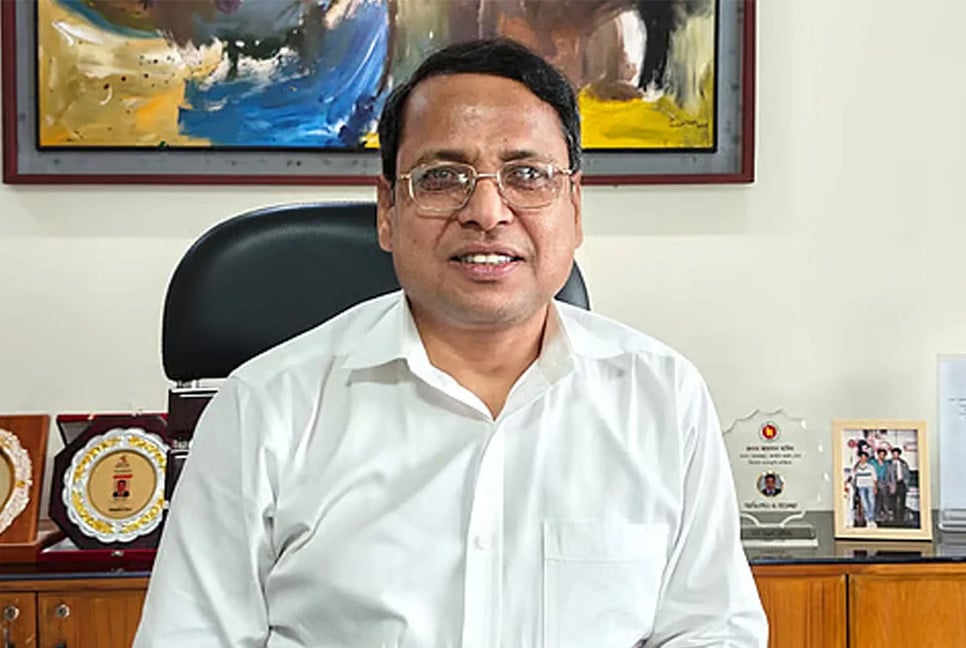
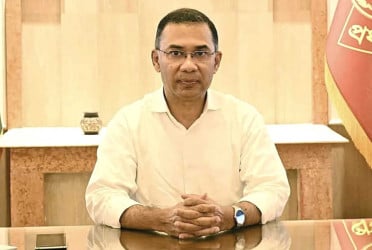
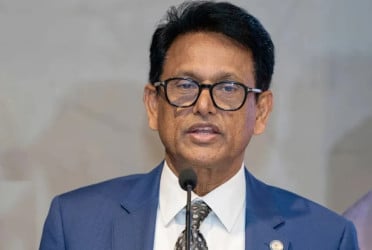
It was in this critical situation that Dr Ahsan H Mansur assumed office as Governor of Bangladesh Bank. Over the past 16 months, he has achieved visible success in restoring discipline to the financial sector.
While it is true that full discipline will take more time to return, Ahsan H Mansur has clearly shown the way forward.
When he took charge as Governor, the country’s economic situation was fragile. The dollar crisis had reached an acute level, and foreign exchange reserves had declined to a historic low.
There was a rush to withdraw money from banks, and liquidity shortages in the banking sector became severe and difficult to control.
After assuming office, Dr Ahsan H Mansur introduced several changes and measures in the banking sector.
To address the liquidity crisis, he provided support to weak and troubled banks by injecting newly printed money.
Since taking office, he has undertaken a range of initiatives to manage the dollar crisis, foreign exchange stability, and loan discipline.
As a result of these measures under Dr Mansur’s leadership, the decline in foreign exchange reserves has been halted and stability has been maintained. Bangaladesh has already repaid nearly US$1.75 billion in foreign loans without drawing down its reserves.
In addition, the government has paid around $1.25 billion in loan repayments and interest for various projects.
Overall, under Ahsan H Mansur’s leadership, Bangladesh Bank has taken multiple steps to tackle the liquidity crisis, enhance transparency and accountability, and protect the interests of depositors.
For a long time, due to a crisis of confidence and financial irregularities in the banking sector, many customers were withdrawing their deposits. However, recent data indicate that this trend has begun to reverse. In December 2025, Tk10.85 billion was redeposited into banks, which is a positive signal for the economy. By the end of December, cash held outside the banking system stood at Tk2.76 trillion, compared to Tk2.77 trillion in November. Although this figure was Tk2.55 trillion in December 2024, recent months show a gradual reversal of the earlier trend.
Under Dr Mansur’s leadership, Bangladesh Bank has undertaken various initiatives to establish good governance in the banking sector. Notable measures include the reconstitution of the boards of at least 12 banks, recovering banks from the control of vested interests, and the decision not to rely excessively on printing currency notes to address liquidity shortages. These steps have strengthened efforts to restore sound governance in the banking sector.
One of the Governor’s most significant initiatives was the merger of weak banks. Shariah-based private banks that were severely affected by financial crises and mismanagement – Exim Bank, First Security Islami Bank, Global Islami Bank, Union Bank, and Social Islami Bank – have been merged to form United Islami Bank PLC. Signboards at many branches have already been replaced.
On 1 December last year, the regulator Bangladesh Bank granted the final license to the new bank. Of its total paid-up capital of Tk350 billion, the government contributed Tk200 billion. The Shariah-based private bank formed through the merger of five banks began normal operations on the first day of the new year.
Depositors can now both deposit and withdraw money from branches of these banks. As a result, public confidence in the banking sector has started to return.
Another important decision by Bangladesh Bank was the rescheduling of defaulted loans. This decision is considered extremely positive not only for genuine entrepreneurs who became loan defaulters due to various adverse circumstances, but also for the national economy as a whole. Bangladesh Bank initiated measures to revive and energize business enterprises that suffered during the tenure of the ousted Awami League government or were adversely affected by the rise in the US dollar exchange rate.
The regulator has allowed affected businesses to regularize defaulted loans by depositing 2% of the outstanding amount. The maximum loan tenure will be 10 years, and once regularized, borrowers will enjoy a two-year grace period at the beginning of repayment. As a result of this decision, no genuine entrepreneur is expected to remain a loan defaulter.
Bangladesh Bank’s Banking Regulation and Policy Department issued a circular granting the facility to reschedule defaulted loans for affected businesses. According to the circular, banks must settle rescheduling applications within six months of receiving them. The final decision on rescheduling will rest with the respective bank’s board of directors. Similarly, borrowers will be allowed to repay loans through a one-time settlement, with a one-year time frame. No prior approval from Bangladesh Bank will be required in such cases. These measures are expected to provide relief to entrepreneurs who were under financial pressure.
However, those who still fail to repay loans at the newly determined rates should be presumed to have ulterior motives.
While these two measures are undoubtedly essential to keep Bangladesh’s economy moving, they are not sufficient on their own.
Bd-pratidin English/ ANI