The government has added 135 new items to the National Essential Medicines List, raising the total number to 295 drugs, reports the Business Standard.
Additionally, the government will fix the prices of these 295 drugs to ensure affordability.
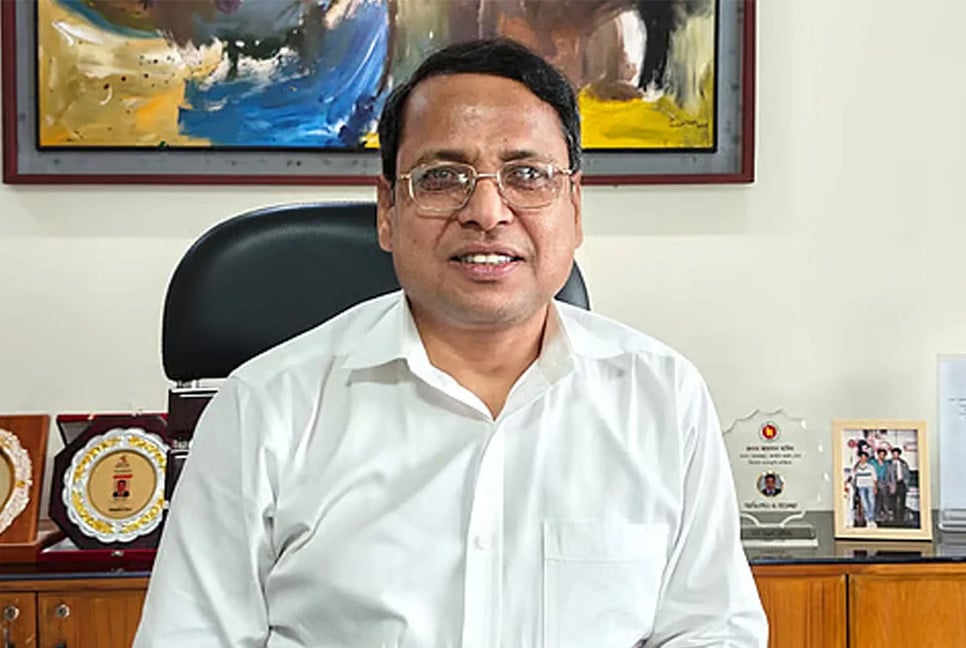
Special Assistant to the Chief Adviser for the Ministry of Health and Family Welfare, Professor Dr Md Sayedur Rahman, disclosed the decision at a briefing held at the Foreign Service Academy auditorium on Thursday afternoon following a meeting of the Advisory Council.
Chief Adviser’s Press Secretary Shafiqul Alam, Deputy Press Secretary Abul Kalam Azad, and others were present at the briefing.
Sayedur Rahman said the Advisory Council approved, in principle, both the updated National Essential Medicines List and the guidelines for medicine pricing.
Under the decision, prices of all medicines included in the essential list will be set by the government, he added.
He said Bangladesh’s drug policy, first formulated in 1982, played a crucial role in making the pharmaceutical sector self-sufficient and improving access to medicines.
“At the time, there were around 350 medicines in the market, of which prices of 117 were regulated. However, the system remained largely unchanged for the past three decades, leading to a sharp rise in the number of medicines beyond the regulated list,” he said.
At present, about 1,300 medicines remain outside the price-controlled framework, Sayedur Rahman noted.
“As part of the new policy, the government will also set price ceilings for around 1,100 non-essential medicines. Pharmaceutical companies will be allowed to sell these products at up to 15 percent above the government-fixed price,” he said.
The pricing framework for these drugs will remain valid for four years.
If companies fail to comply with the price adjustments, the government will not consider their applications for approval of new medicines, Sayedur Rahman warned, adding that the policy will also apply to newly developed drugs.
Noting that nearly two-thirds of out-of-pocket healthcare expenditure in Bangladesh goes toward medicines, he said many countries reduce this burden through pharmaceutical benefit schemes, national health services, or insurance-based systems such as Medicaid and Medicare.
“In the absence of such mechanisms in Bangladesh, state intervention in medicine pricing has become essential to keep drugs affordable for the people,” he added.
Bd-Pratidin English / AM