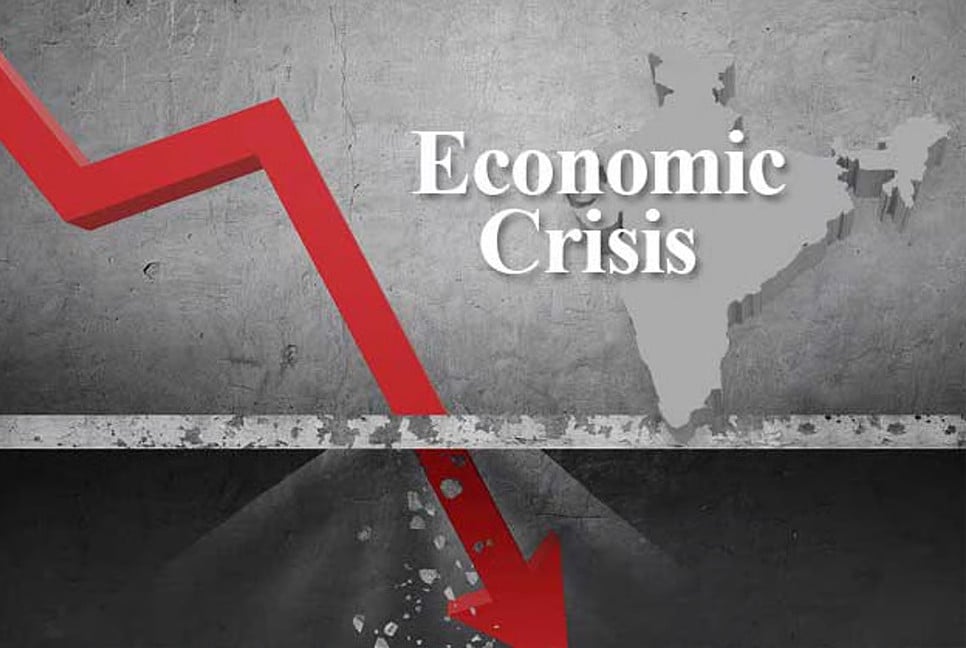
High interest rates and limited credit are now the biggest challenges facing Bangladesh’s economy. These twin pressures are slowing investment and hindering the recovery of production, employment, and investment cycles, according to the General Economics Division (GED) of the government’s Planning Commission.
The November Economic Update from GED, presented on Monday (1 December) at the Executive Committee of the National Economic Council (ECNEC) meeting, highlights this situation.
The report shows that as of September 2025, private sector credit growth fell to 6.29%, down from 6.35% the previous month. This is the lowest level in four years and far below Bangladesh Bank’s 2025 fiscal year target of 7.2%. Economists describe this declining flow as placing investment effectively in a “dead zone.”
The report also identifies high interest rates as a structural barrier. Data from the past six months of 2025 shows that foreign banks have the highest spreads, reaching 9.22% in August and 8.98% in September. State-owned banks’ spreads have fallen slightly, from 5.95% in April to 5.74% in September, but remain high. Private banks continue to operate in an uncomfortable range of 5.55–5.68% over six months, while specialized banks, though having lower spreads, have limited capacity.
The causes of these high spreads include mismanaged non-performing loans (NPLs), rising operating costs, and market congestion. Lack of effective competition prevents interest rates from falling, prompting businesses to delay investment and halt production expansion plans.
Excessive caution is now evident in bank behavior. Many banks, wary of high NPL risks, are shifting toward low-risk government loans. As a result, government lending reached 24.45% in September, creating an imbalance compared to the private sector. Economists describe this as a “crowding out” effect, where heavy government borrowing limits financing for private businesses.
This banking crisis also disrupts monetary policy targets. Amid high interest rates, restricted credit, and uncertainty, businesses have reduced imports of capital machinery. In the first three months of FY2025-26, capital machinery imports fell sharply from $455.93 million in July to $267.1 million. Although August and September showed slight stabilization, the crisis shows no sign of abating.
The slowdown in credit is stalling new projects, reducing employment, and halting production expansion. This stagnation comes at a time when government development spending has decreased and local revenue collection is 22.63% behind target.
Economists argue that urgent attention is needed to reduce interest spreads, manage NPLs, and restore private sector credit flow. Without these measures, even if inflation remains low, stagnation in production and investment could pose long-term risks to the overall economy.
Dr Mustafa K Mujeri, former chief economist of Bangladesh Bank, said, “The economy is limping. There is a sense of disappointment everywhere. Credit is not reaching the private sector, and large industrial groups are losing interest in investment. No one wants to invest amid such uncertainty. As interest rates rise, investment appetite declines, putting pressure on the entire economy. Providing low-interest loans in agriculture, SMEs, and health sectors could help revive growth.”