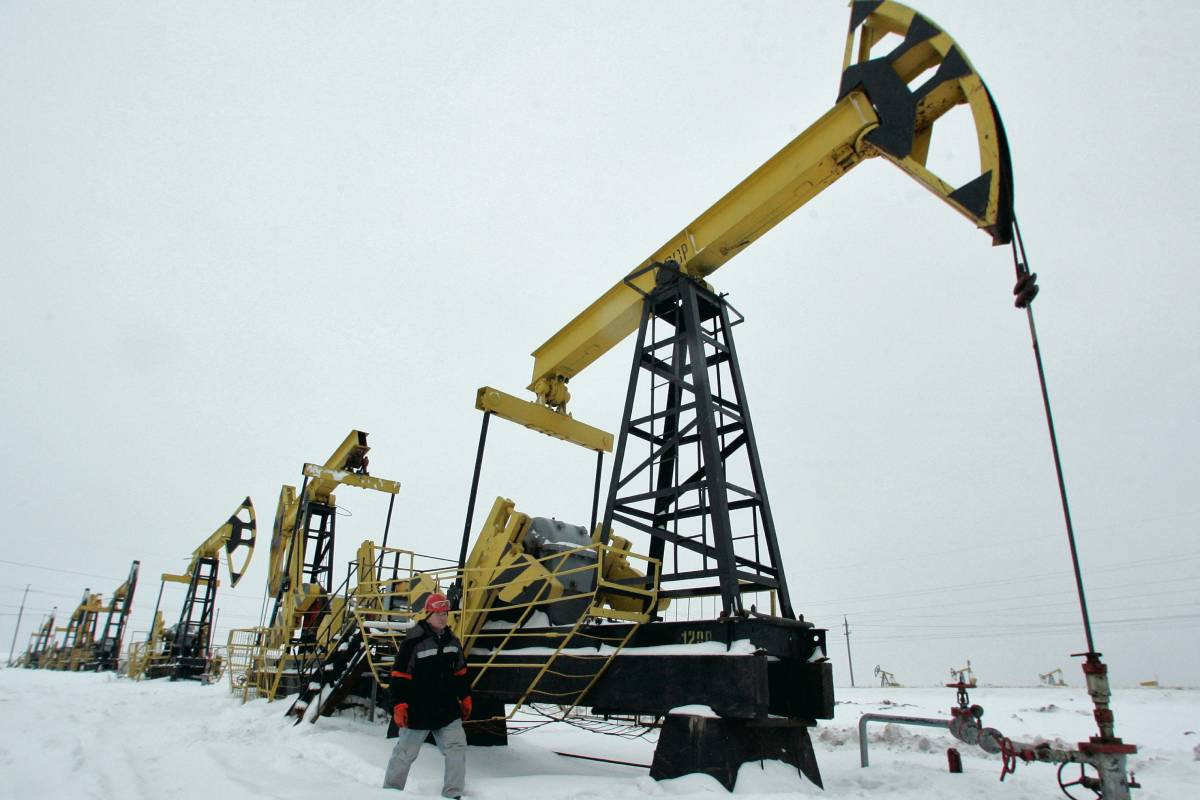
Russia’s Urals crude price discount to global benchmark Brent widened by six percentage points this month to 23%, the Russian central bank said on Thursday in its monthly review, reports Reuters.
Although the gap remains smaller than the levels seen after the first wave of Western sanctions in 2022, the widening discount underscores growing pressure on Russia’s oil revenues — a crucial source of funding for Moscow’s budget.
The United States last month imposed new restrictions on Russian oil giants Lukoil and Rosneft, adding to the challenges facing the industry.
According to the central bank, the Urals discount hovered around 15% in the second and third quarters and rose to 17% in October.
“We assume that the widening discount on Russian oil prices is a temporary phenomenon, as it was in 2023,” Deputy Governor Alexei Zabotkin said on Wednesday during a university lecture. He noted that exporters had successfully diversified supply routes and adapted to the “new reality” by mid-2023, when the discount began to narrow.
Reuters calculations suggest Russia’s oil and gas revenue may drop by about 35% in November, driven by lower crude prices and a stronger rouble.
The central bank also reported that Russian oil output averaged 8.995 million barrels per day in the second quarter, rising to 9.38 million bpd by October as OPEC+ members began unwinding voluntary production cuts.
Despite sanctions, Russia’s oil exports from western ports continue to hover near peak levels, supported by the OPEC+ production framework and domestic refinery outages caused by Ukrainian drone strikes.
Bd-pratidin English/ Jisan