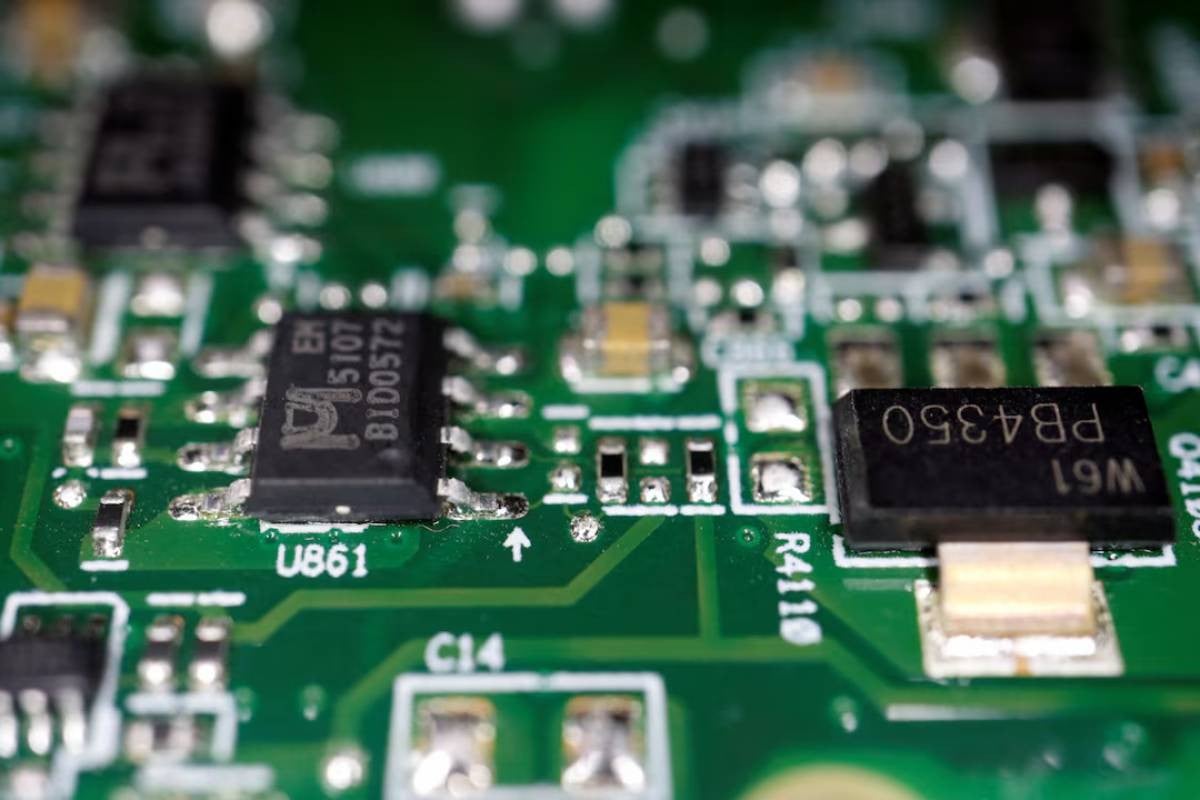
China has ordered that all new state-funded data centres use only domestically produced artificial intelligence chips, in one of Beijing’s most sweeping moves yet to eliminate foreign technology from critical infrastructure, according to two sources familiar with the directive.
Regulators recently instructed that data centre projects less than 30% complete must remove installed foreign chips or cancel procurement plans, while more advanced projects will be reviewed individually, the sources told Reuters.
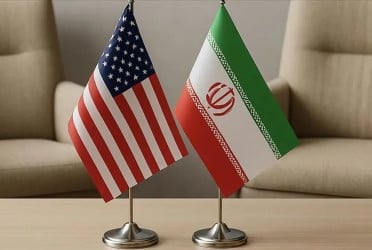
The guidance, which has not been made public, underscores China’s accelerating push for AI chip self-sufficiency amid a fragile pause in trade tensions with Washington. The decision could further shut out U.S. chipmakers such as Nvidia, AMD, and Intel from lucrative government-backed projects.
AI data centre construction in China has attracted over $100 billion in state funding since 2021, according to a Reuters review of government tenders. Most projects have received some level of public investment, though it remains unclear how many are directly affected by the new order.
One source said a planned data centre in northwestern China—developed by a private firm with state funding—was suspended before breaking ground due to its use of Nvidia chips.
The Cyberspace Administration of China and the National Development and Reform Commission, two of Beijing’s most powerful regulators, did not respond to requests for comment. Nvidia and AMD also did not respond, while Intel declined to comment.
The move comes as U.S. export controls continue to limit China’s access to advanced chips on national security grounds. Washington argues such semiconductors could enhance China’s military capabilities.
In an interview aired Sunday, U.S. President Donald Trump said Washington would “let them deal with Nvidia, but not in terms of the most advanced chips,” following talks with Chinese President Xi Jinping last week.
For Nvidia, the latest directive is a major setback. The company’s share of China’s AI chip market has plunged from 95% in 2022 to nearly zero this year, after multiple rounds of U.S. export restrictions. The guidance reportedly applies to Nvidia’s H20 chip, the most advanced AI processor the company can legally sell to China, as well as to the B200 and H200 models, which are barred under U.S. controls but still available through grey-market channels.
While the decision could hand a significant advantage to domestic players like Huawei Technologies, Cambricon, MetaX, Moore Threads, and Enflame, analysts warn it may also widen the performance gap between China and the U.S. in high-end AI computing power.
China’s local AI chips are improving rapidly, with Huawei’s Ascend series seen as a credible rival to some Nvidia products. Yet many developers remain reliant on Nvidia’s mature software ecosystem and training frameworks.
Meanwhile, U.S. tech giants such as Microsoft, Meta, and OpenAI continue to spend hundreds of billions of dollars on data centres powered by Nvidia’s most advanced processors, deepening the divide.
China’s push to reduce its dependence on foreign chips began after Washington’s first wave of export bans in 2019. Last year, Beijing barred Micron’s memory products from critical infrastructure, prompting the U.S. firm to withdraw from the Chinese server market.
Nvidia CEO Jensen Huang has repeatedly lobbied the Trump administration to relax restrictions, arguing that maintaining China’s dependence on U.S. hardware ultimately serves American strategic interests.
Still, by enforcing a domestic-only chip mandate across state-funded projects, Beijing has made clear that technological sovereignty now outweighs short-term performance trade-offs.
Bd-pratidin English/ Jisan