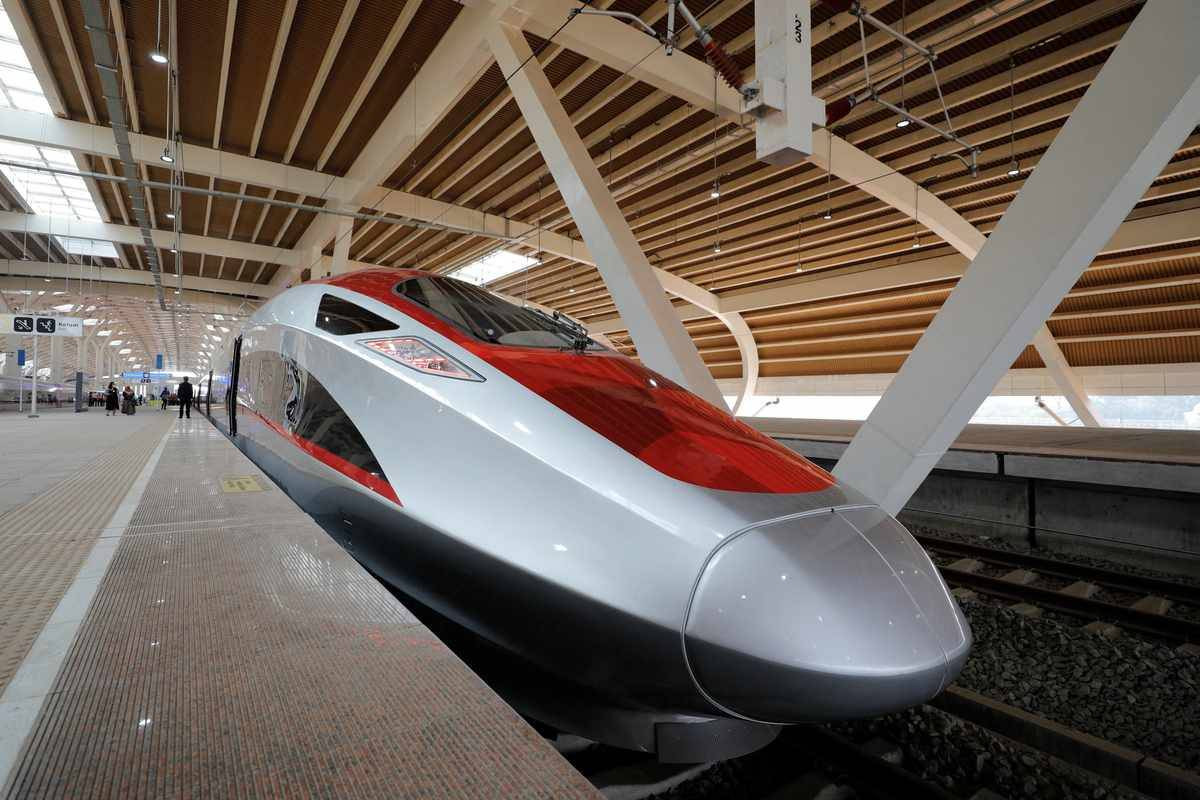
Indonesia's China-led high-speed rail project is grappling with financial difficulties just a year after its October 2023 launch. The ambitious rail line, part of China's Belt and Road Initiative, has failed to meet ridership projections and has seen project costs balloon, raising concerns about its profitability and long-term sustainability, reads a Japan News (YS) post.
Initially, the high-speed rail was envisioned as a flagship infrastructure project, connecting Indonesia’s capital, Jakarta, to Bandung. The project was expected to revolutionize transportation in Southeast Asia by offering the region’s first high-speed rail service. Despite high hopes, the line has struggled with low passenger numbers, with only about 10.7 million passengers riding the line as of July 2025—far below the expected figures. This has led to questions about the decision to move forward with China’s proposal over Japan’s Shinkansen system, which had originally been favored by Indonesia.
The rail line covers about 140 kilometers in roughly 45 minutes. While the speed and efficiency have been praised, the short operating distance and the stations’ distant locations from city centers have created significant bottlenecks. As a result, ridership has remained stagnant, with daily passenger numbers hovering between one-third and one-fourth of the initial projections.
Delays in land acquisition and changes in construction methods led to a four-year delay in the project’s completion, pushing the opening back from the original 2019 target. Additionally, the project’s overall cost surged to $7.2 billion (roughly ¥1 trillion), exceeding initial estimates by 30%.
The operating company, KCIC—a joint venture between Indonesia's state-owned enterprises and a Chinese consortium—has been running up large deficits. In 2024, the Indonesian consortium posted a 4.195 trillion rupiah deficit, a massive increase compared to the previous year. KCIC’s financial problems appear to be mounting, with a deficit of 1.6 trillion rupiah recorded in the first half of 2025. The financial outcomes from the Chinese side of the venture have not been made public, but the Indonesian government is now concerned about the long-term implications of these financial challenges.
In an effort to increase passenger numbers, the Indonesian government had planned to extend the rail network by over 500 kilometers, expanding the service across Java Island to reach Surabaya. However, this expansion plan is now on hold due to the growing debt and mounting financial pressures.
The decision to go with China’s proposal over Japan's Shinkansen system was made after a 2015 bidding war between the two countries. The Indonesian government, under then-President Joko Widodo, chose China’s offer partly because it promised to finance 75% of the project costs through a loan from the China Development Bank, alleviating the financial burden on Indonesia. The offer also promised a quicker completion, a key factor in the decision.
However, recent media reports have highlighted concerns from the Indonesian railway company, KAI, which has warned that the growing debt could soon become an unmanageable “time bomb.” By mid-September 2025, the government signaled its intention to renegotiate the debt terms. The success of these negotiations remains uncertain, with President Prabowo Subianto now facing the fallout from the prior administration’s decisions.
The issues surrounding Indonesia’s high-speed rail project could serve as a cautionary tale for other Southeast Asian nations, especially as high-speed rail plans emerge in Vietnam and other countries. Japan, with its expertise in the Shinkansen system, is closely watching the situation, viewing it as an opportunity to bolster its competitive position in future infrastructure projects. According to Akihiro Tomita, a senior research fellow at the ASEAN-India Regional Office, Japan should carefully analyze the performance of railways built with support from competing nations, to leverage the insights in future bidding competitions.
Bd-pratidin English/ Jisan