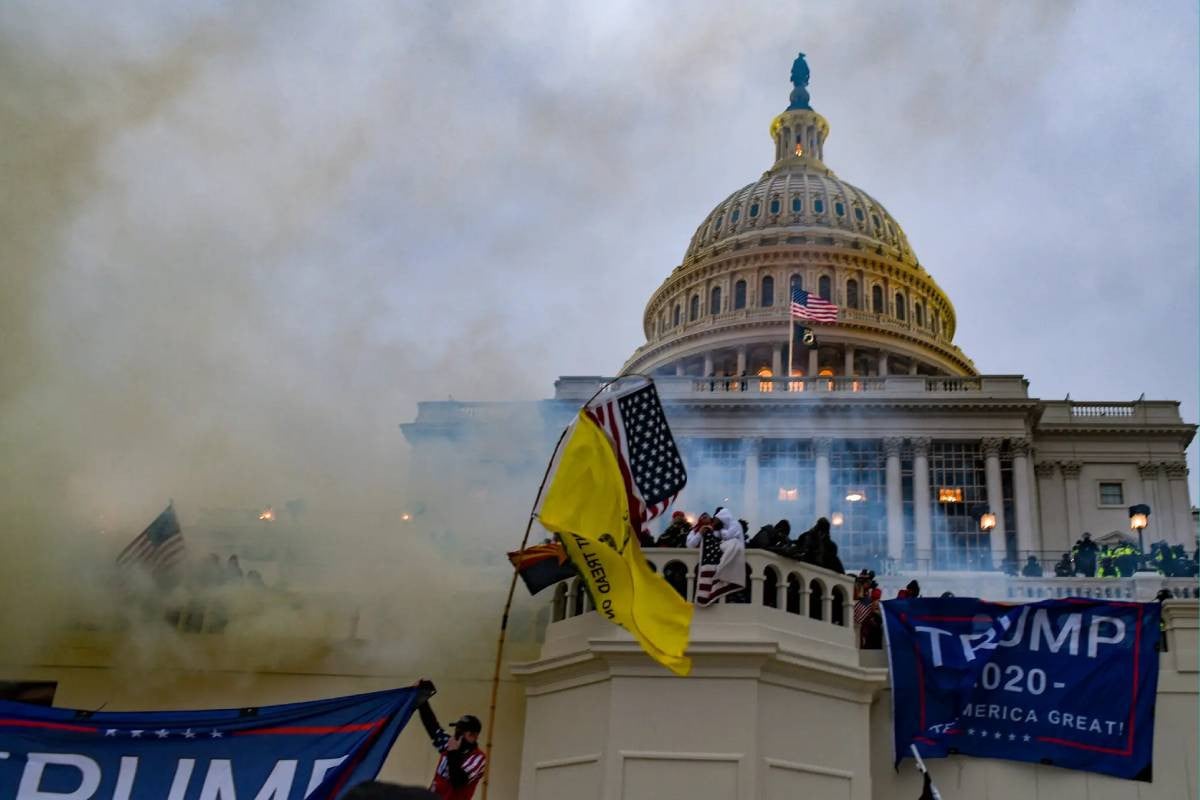
YouTube has agreed to pay $24.5 million to settle a lawsuit filed by former U.S. President Donald J. Trump and other plaintiffs over the suspension of their accounts following the January 6, 2021 Capitol riot, reads an NY Times report.
Filed in the U.S. District Court for the Northern District of California, the settlement ends one of several high-profile legal battles between Trump and major tech platforms. Trump, who sued Alphabet Inc., YouTube’s parent company, in October 2021, claimed he was wrongfully censored and that the platform had suppressed political speech.
According to court documents, Trump will receive $22 million of the settlement. He plans to donate the funds to the Trust for the National Mall and to support the construction of a new White House ballroom. The remaining $2.5 million will be divided among other plaintiffs, including author Naomi Wolf and the American Conservative Union.
YouTube suspended Trump’s account days after the riot, citing concerns that his videos could incite additional violence. His ban was lifted in 2023, alongside similar reinstatements by Meta and X (formerly Twitter).
“This would’ve dragged on forever if he hadn’t been re-elected,” said Trump’s lawyer John Coale. “Now the outlook is different.”
A YouTube spokesperson declined to comment on the settlement, which was first reported by The Wall Street Journal.
The payout follows other recent legal resolutions involving Trump and tech or media firms. Meta settled a related lawsuit in January for $25 million, and X agreed to a $10 million settlement in February. In the media sector, Paramount and ABC News have paid Trump $16 million and $15 million, respectively, over separate disputes.
The financial impact of the YouTube settlement is minimal for Alphabet, whose Q2 2025 report showed $9.7 billion in ad revenue from YouTube alone.
YouTube also recently announced that it would relax some content moderation rules, including reinstating users banned over misinformation related to COVID-19 and the 2020 election. Though discussed during the Trump settlement talks, these policy shifts were not part of the formal agreement, according to Coale.
Legal experts see the settlements as part of a larger shift. “These companies aren’t just resolving lawsuits — they’re repositioning,” said Carl Tobias, a law professor at the University of Richmond. “They’re likely trying to reestablish ties with a returning administration.”
As Trump increases legal and political pressure on tech firms and media outlets, companies appear to be opting for settlements over extended court battles — even if the law appears to favor them.
Bd-pratidin English/ Jisan