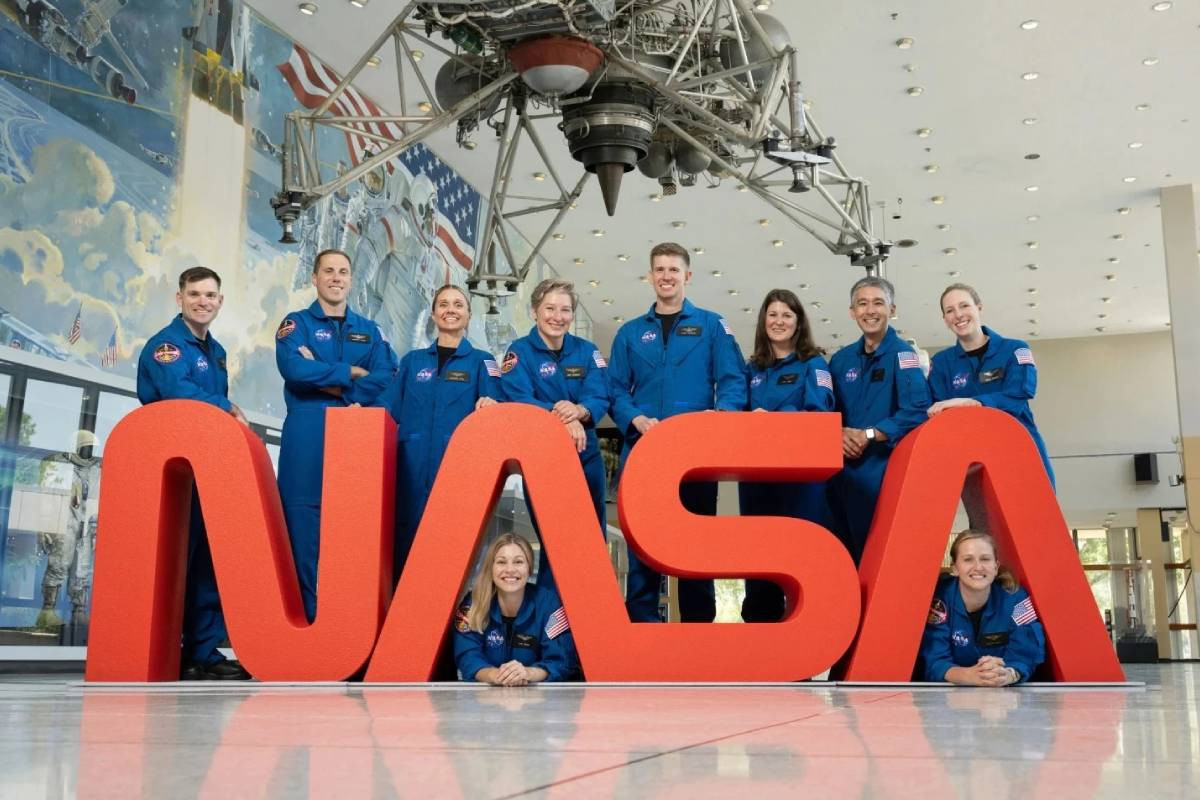
For the first time in its 67-year history, NASA has introduced an astronaut class with more women than men—a groundbreaking moment in the evolution of space exploration. Announced on Monday at the Johnson Space Center in Houston, the new class includes ten astronaut candidates: six women and four men, selected from over 8,000 applicants, reports AP.
This class is expected to take part in future missions to the Moon under NASA’s Artemis program and, eventually, journeys to Mars. The group includes engineers, scientists, military pilots, and a SpaceX veteran who already participated in a private spaceflight, including the world’s first private spacewalk.
NASA’s Acting Administrator Sean Duffy praised the selection as reflective of “America’s best and brightest” and emphasized the agency’s commitment to leading the renewed global race to the Moon. “Some are challenging our leadership in space, like the Chinese,” Duffy said. “We are going to win.”
This milestone marks a cultural and operational shift in NASA's approach to recruitment. Historically dominated by men, NASA’s astronaut corps now moves toward greater gender equity and professional diversity. Norm Knight, NASA’s flight operations director, described the class as “exceptional,” noting the rigorous selection process and varied expertise the candidates bring.
Notably, Anna Menon, who flew on a SpaceX mission last year, became the first NASA astronaut candidate to have already orbited Earth. Also joining the class is Lauren Edgar, a geologist who worked on the Curiosity Mars rover and contributed to lunar mission planning.
Their selection underscores a strategic emphasis on deep scientific experience and commercial space collaboration—an alignment with NASA’s broader ambitions beyond Earth orbit. Each astronaut will undergo two years of intensive training, with some expected to be on the front lines of humanity’s return to the Moon and first steps on Mars.
NASA’s 24th astronaut class represents more than just a staffing update; it signals a shift in how the agency—and spacefaring nations more broadly—define leadership, capability, and readiness in the modern space era.
Bd-pratidin English/ Jisan