A team of researchers from Imperial College London and Imperial College Healthcare NHS Trust has developed an AI-powered stethoscope that can diagnose three serious heart conditions in just 15 seconds, according to The Guardian.
First invented in 1816, the traditional stethoscope has been an essential medical tool for over 200 years, used to listen to internal body sounds. Now, researchers have developed a high-tech version enhanced with AI that can rapidly detect heart failure, valve disease, and irregular heart rhythms.
The new stethoscope can analyse tiny differences in heartbeat and blood flow undetectable to the human ear, and take a rapid ECG at the same time.
The breakthrough, which could enhance early diagnosis of the three heart conditions, was unveiled to thousands of doctors at the European Society of Cardiology’s annual congress in Madrid, the largest heart conference in the world.
A UK study involving 12,000 patients from 200 GP surgeries tested the AI stethoscope on those with symptoms like breathlessness or fatigue. Patients examined with the device were twice as likely to be diagnosed with heart failure, three times more likely to be diagnosed with atrial fibrillation, and nearly twice as likely to be diagnosed with heart valve disease compared to those assessed without it.
Dr Patrik Bächtiger, of Imperial College London’s National Heart and Lung Institute and Imperial College healthcare NHS trust, said: “The design of the stethoscope has been unchanged for 200 years – until now.
“So it is incredible that a smart stethoscope can be used for a 15-second examination, and then AI can quickly deliver a test result indicating whether someone has heart failure, atrial fibrillation or heart valve disease.”
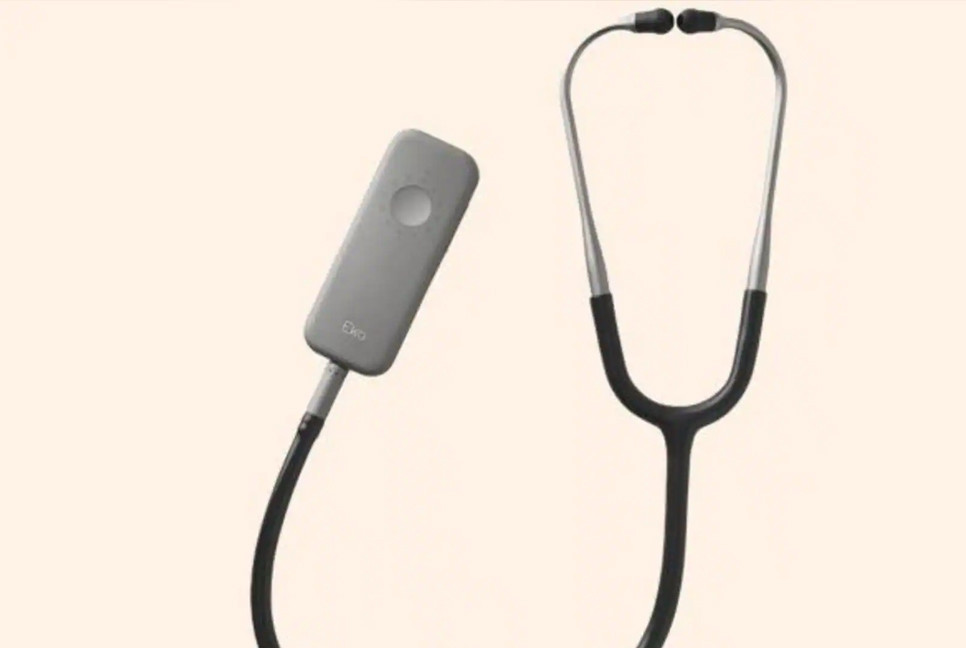
The device, manufactured by California company Eko Health, is about the size of a playing card. It is placed on a patient’s chest to take an ECG recording of the electrical signals from their heart, while its microphone records the sound of blood flowing through the heart.
This information is sent to the cloud – a secure online data storage area – to be analysed by AI algorithms that can detect subtle heart problems a human would miss.
The test result, indicating whether the patient should be flagged as at-risk for one of the three conditions or not, is sent back to a smartphone.
The researchers stressed the AI stethoscope should be used for patients with symptoms of suspected heart problems, and not for routine checks in healthy people.
But it could also save lives and money by diagnosing people much earlier.
Dr Mihir Kelshiker, also at Imperial College, said: “Most people with heart failure are only diagnosed when they arrive in A&E seriously ill.
“This trial shows that AI-enabled stethoscopes could change that – giving GPs a quick, simple tool to spot problems earlier, so patients can get the right treatment sooner.”
Dr Sonya Babu-Narayan, the clinical director of the British Heart Foundation, which part-funded the research alongside the National Institute for Health and Care Research (NIHR), said: “Given an earlier diagnosis, people can access the treatment they need to help them live well for longer.”
Bd-pratidin English/ ANI