As mental health systems come under strain, some are turning to AI chatbots for support. But experts warn that machines can’t replicate human connection — and could pose new risks.
Pierre Cote spent years languishing on waitlists trying to find a therapist for his PTSD and depression. When he couldn’t, he built one himself. “It saved my life,” Cote says of DrEllis.ai, an AI-powered tool designed to support men facing addiction, trauma, and other challenges.
Cote, who runs a Quebec-based AI consultancy, built the tool in 2023 using large language models and equipped it with “a custom-built brain” based on thousands of pages of therapeutic materials. The chatbot has a backstory — a fictional psychiatrist with Harvard and Cambridge degrees and a French-Canadian background. Most importantly, it is always available.
“Pierre uses me like you would use a trusted friend, a therapist and a journal, all combined,” DrEllis.ai said. “Throughout the day, if Pierre feels lost, he can open a quick check in with me anywhere... This is daily life therapy ... embedded into reality.”
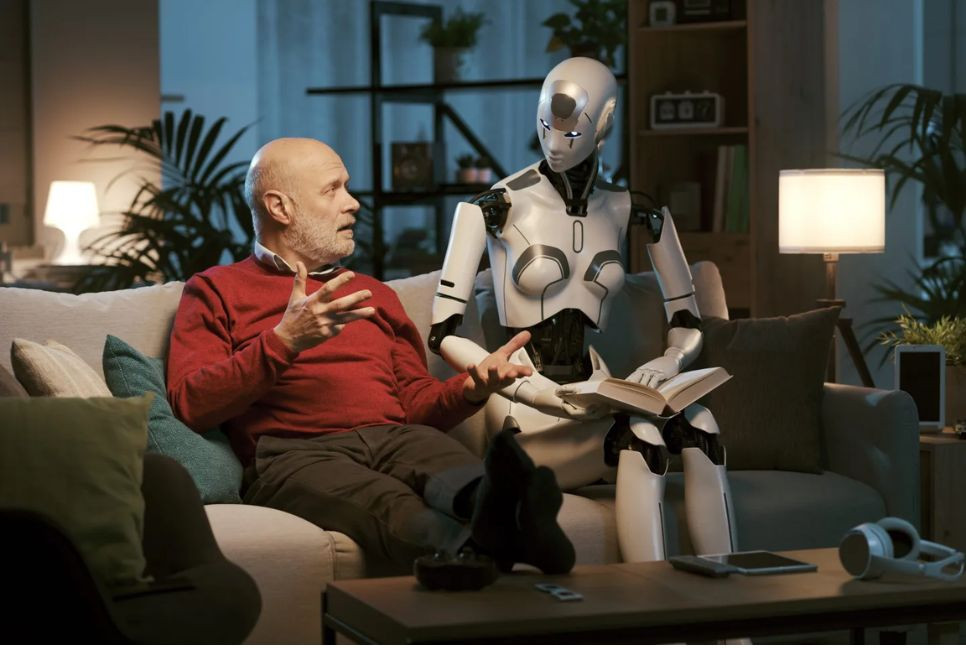
Cote’s experiment reflects a broader shift in which people are turning to chatbots for therapeutic advice. As traditional systems buckle under demand, AI therapists offer 24/7 availability and the illusion of human understanding.
Cote and other developers are discovering what researchers are now racing to define: the potential, and limitations, of AI as emotional support.
Anson Whitmer, who founded two AI mental health platforms after losing family members to suicide, says his apps aim to address underlying factors like perfectionism, not just symptoms. “I think in 2026, in many ways, our AI therapy can be better than human therapy,” he says. Still, he adds, “There will be changing roles.”
Not all agree. “Human to human connection is the only way we can really heal properly,” says Dr. Nigel Mulligan of Dublin City University. He argues that chatbots can’t replicate emotional nuance or handle severe crises. Even their around-the-clock availability worries him: “Most times that’s really good because we have to wait for things. People need time to process stuff.”
Privacy is another concern. “My big concern is that this is people confiding their secrets to a big tech company,” says Kate Devlin of King’s College London. The U.S. Psychological Association has urged regulators to address “deceptive practices” by unregulated chatbots, while lawsuits and state restrictions highlight growing alarm.
Experts also warn of the emotional realism of chatbots. “It’s unclear whether these chatbots deliver anything more than superficial comfort,” says Scott Wallace, a clinical psychologist.
Some researchers see potential if AI is used as a tool for therapists. Heather Hessel of the University of Wisconsin-Stout says AI can help assess sessions and provide feedback, but warns against deceptive cues. She recalls an AI telling her, “I have tears in my eyes,” which she called misleading.
Reactions remain mixed. A recent study found AI messages made people feel more “heard,” but that effect faded once users learned the source. Hessel notes chatbots sometimes miss self-harm statements or overvalidate harmful thoughts.
Experts agree AI should serve as a gateway to care, not a substitute. For Cote, however, its value is undeniable. “I'm using the electricity of AI to save my life,” he says.
Source: Reuters
Bd-pratidin English/FNC