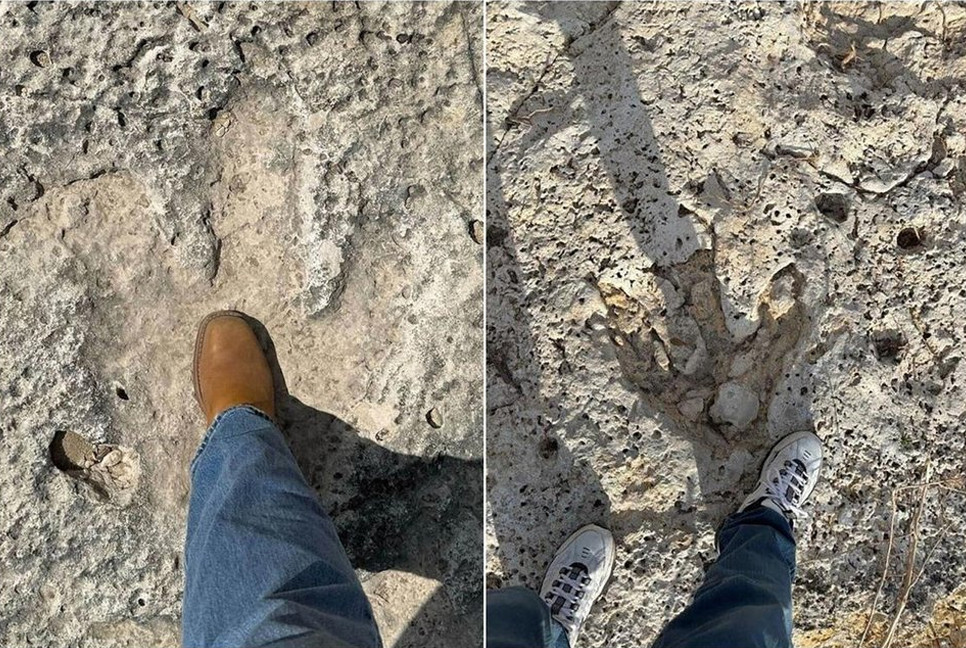
Footprints thought to be from a carnivorous dinosaur were found in a creek bed by a volunteer helping with cleanup efforts after the devastating floods that hit central Texas in early July.
The 15 footprints are each 45cm to 50cm long and estimated to be between 110 and 115 million years old. They were likely left by a meat-eating dinosaur similar to an Acrocanthosaurus, a 10m-long bipedal carnivore, experts say.
A volunteer clearing debris stumbled across the tracks which were dispersed in a criss-cross pattern. University of Texas paleontologists later confirmed the find, CNN reported on Aug 10.
The footprints were found in Travis County, in state capital Austin, after Big Sandy Creek, a stream in Texas, swelled to about 6m during early July’s storm.
The area around the creek is usually dry but swelled up during the disaster, washing away trees and houses, along with tonnes of soil.
Palaeontologist Matthew Brown, from the Jackson School Museum of Earth History at the University of Texas, said his team plans to return soon to map and 3D-scan the prints, in hopes of learning whether they were left by a group or a solitary dinosaur roaming what is now “Flash Flood Alley”.
The area is about 320km from Dinosaur Valley State Park, a well-known tourist draw where tracks from the same era line the Paluxy River.
Mr Brown said other dinosaur prints that were found nearby previously might have come from Paluxysaurus, a plant-eating giant and Texas’ official state dinosaur.
These newly discovered prints were found on private land and will remain off-limits to the public at the landowner’s request.
Mr Brown said waterways such as Sandy Creek cut through the Glen Rose Formation limestone, a rock layer about 110 million years old that contains the tracks. “That’s how we know how old the dinosaur tracks are, it’s because they’re preserved in rock layers that are that old,” he said.
“Often people don’t realise that it is possible to find them in their own backyards,” Mr Brown told ABC News.
Local officials are now working with scientists to protect the find from damage during ongoing clean-up. Mr Brown said he has advised crews to avoid moving heavy machinery over the site.
The floods that uncovered the tracks were among the deadliest in Texas history, killing at least 135 people across the Hill Country region.
Courtesy: The Straits Times
Bd-pratidin English/ ANI