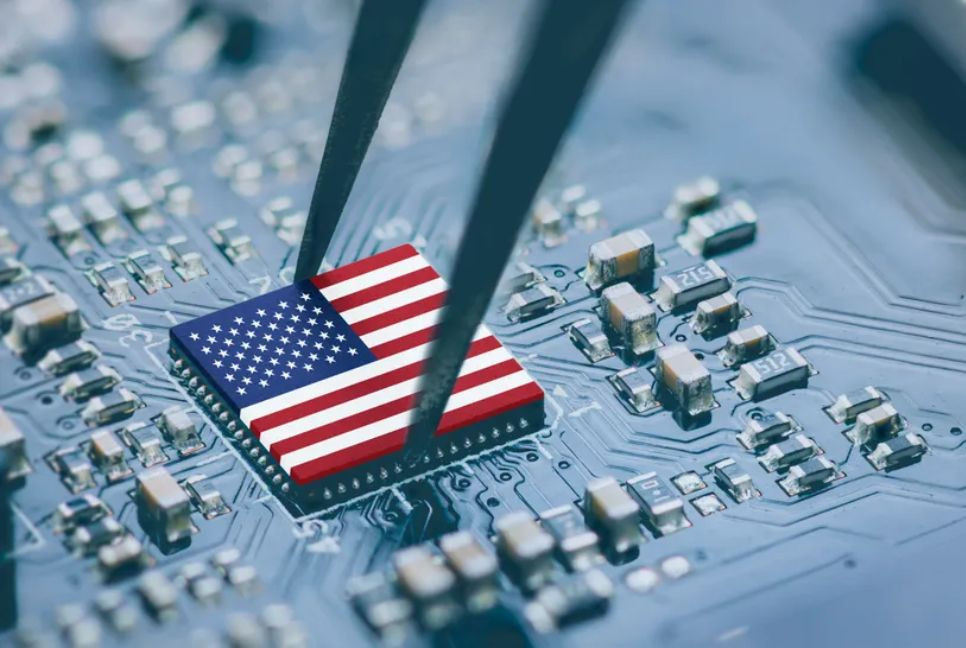
US President Donald Trump’s announcement of a proposed 100% tariff on imported computer chips that are not made in the US has caused confusion among businesses and trading partners. While stocks for leading semiconductor companies have surged, smaller producers are struggling to understand the full implications.
“We are still waiting for official guidance,” said Limor Fried, founder and engineer at Adafruit Industries, a small electronics maker in New York.
The chips used by Adafruit come through US distributors and directly from companies in the Philippines and Taiwan. Fried noted, “If those chips aren’t exempt from tariffs, it would increase the costs that go into our designs as the semiconductors are the most expensive component in our assemblies. For many of these tariffs, we often have to wait until we get a bill to know our exposure, and then we adjust our pricing to account for the increases.”
The US imports relatively few chips, as most foreign-made chips arrive already assembled in products like phones and cars. Martin Chorzempa, a senior fellow at the Peterson Institute for International Economics, said, “The real question everybody in the industry is asking is whether there will be a component tariff, where the chips in a device would require some sort of separate tariff calculation.”
Trump clarified that companies “that made a commitment to build” in the US would be spared the tariff, even if production hasn’t yet begun. He said, “We’ll be putting a tariff of approximately 100% on chips and semiconductors. But if you’re building in the United States of America, there’s no charge.”
This was welcomed by Wall Street investors, benefiting US firms like Intel and Nvidia, as well as Asian chipmakers such as Samsung and TSMC, which are investing in US factories. However, smaller chipmakers in Europe and Asia face uncertainty, especially those producing semiconductors for products like cars and washing machines.
German chipmaker Infineon Technologies said it “can’t speculate about potential semiconductor tariffs” since no official documents have been released. Chorzempa added these smaller producers “probably aren’t large enough to get on the map for an exemption.”
It is also unclear how tariffs will interact with existing trade deals with the EU, Japan, and South Korea. The Semiconductor Industry Association expressed eagerness to learn more about the scope and exemptions of the tariffs.
Chip shortages during the COVID-19 pandemic led to higher prices and inflation, and tariffs could again increase costs for vehicles. Chorzempa said, “There’s a chip that allows you to open and close the window... chips, especially in EVs, that are doing power management.”
The bipartisan CHIPS and Science Act signed by President Biden in 2022 provided over $50 billion to build US chip factories and fund research. Trump opposes these incentives, favoring tariffs to push domestic production despite risks to profits and consumer prices.
Long Le, a business professor, said Trump’s move might encourage investments like Samsung’s but also increase leverage against China, with companies like SMIC and Huawei unlikely to be exempted.
Source: AP
Bd-pratidin English/FNC