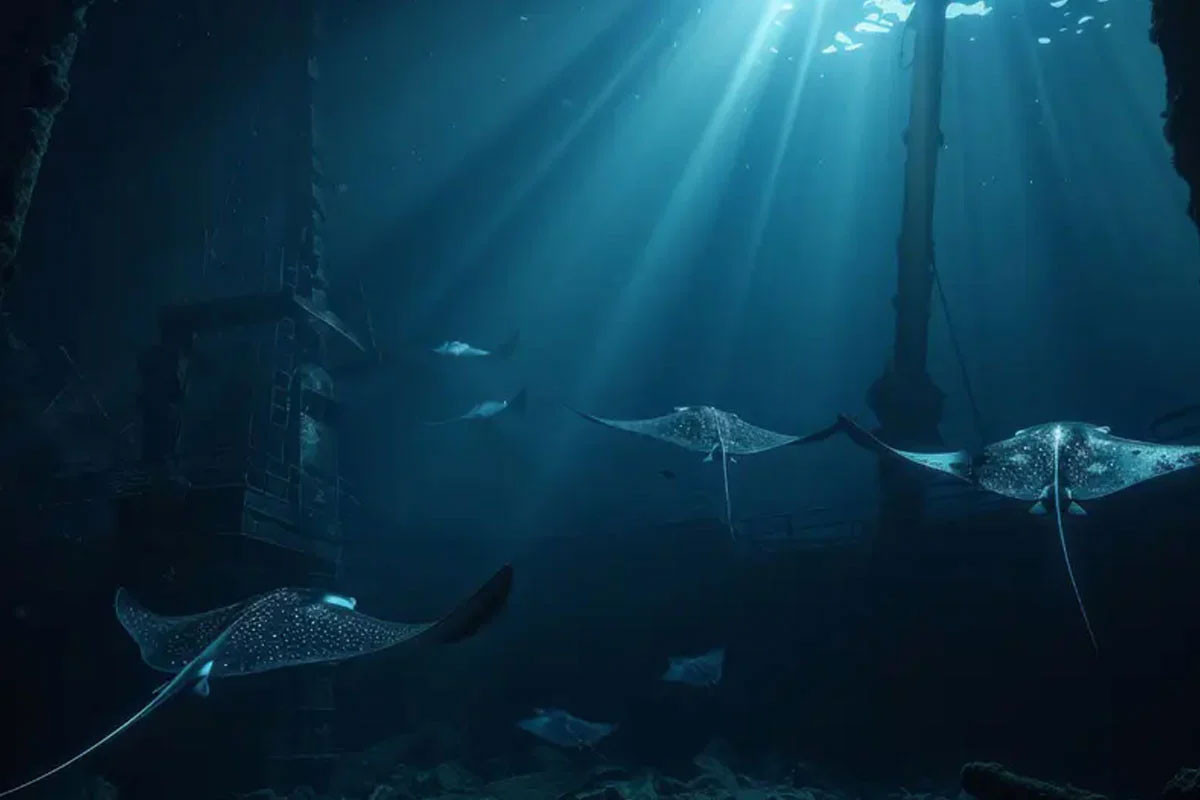
Despite decades of ocean exploration, much of the deep sea remains a mystery. Now, a research team led by the Chinese Academy of Sciences has revealed life thriving at a depth of more than 31,000 feet (9,500 meters) in the Pacific Northwest—far beyond the reach of sunlight.
The discovery, made in collaboration with international scientists, has generated significant attention in the global scientific community. Researchers found that various microorganisms and deep-sea life forms survive in total darkness using chemosynthesis—a process that converts chemicals like methane and hydrogen sulfide into energy, enabling life without sunlight.
“This is the deepest chemosynthetic ecosystem ever recorded,” said a lead scientist involved in the project. The environment—extremely cold, under immense pressure, and completely dark—hosts a unique food chain independent of photosynthesis.
The expedition was conducted using China’s deep-diving submersible Fendouzhe, equipped with high-resolution imaging tools and specialized equipment to collect samples. The findings were recently published in the prestigious journal Nature.
According to experts, this discovery is reshaping scientific understanding of the limits of life on Earth. It also boosts interest in astrobiology, as it suggests that life could potentially exist in similarly extreme environments beyond our planet.
Bd-pratidin English/ Jisan