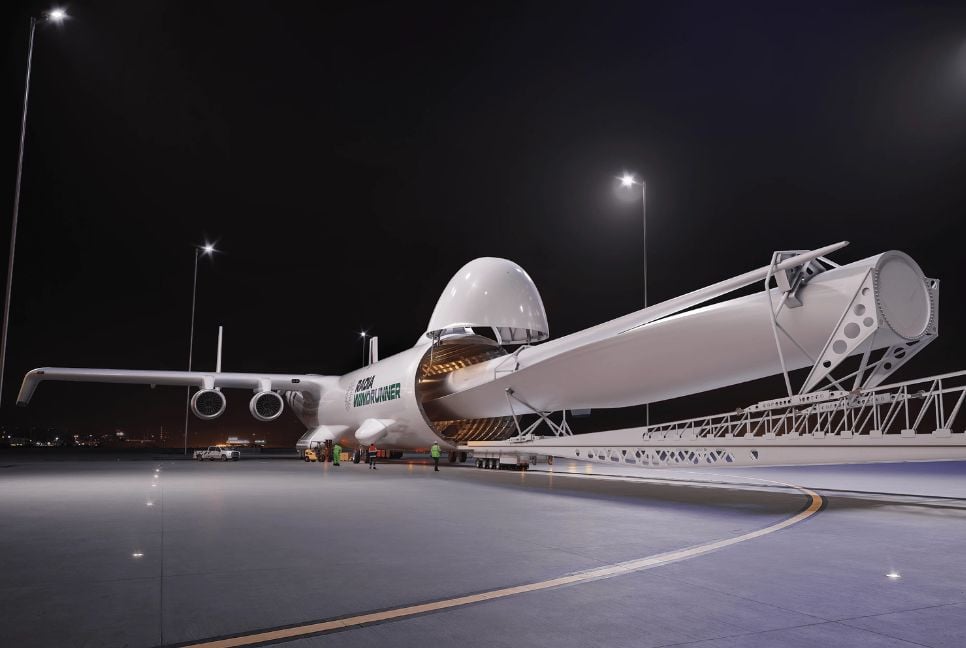
The WindRunner — a proposed cargo aircraft touted to be the largest in the world — aims to transform the wind power industry by enabling transport of massive turbine blades to onshore sites. But the company behind it, Radia, has never built a plane before.
Founded in 2016 by aerospace engineer Mark Lundstrom, Radia seeks to solve the logistical barrier limiting onshore wind turbines to shorter blades. Offshore blades can exceed 100m, but those used inland are restricted to around 70m due to transport challenges. Lundstrom believes longer blades could double or triple viable land for wind farms globally by 2050.
“They can double or triple the economically viable land in the US for wind farms,” he says. This “GigaWind” vision has attracted over $150m in funding.
“We are building the world's largest aircraft... there is no large cargo aircraft in production or planned to meet this need, except for the Radia WindRunner,” says Lundstrom. “It’s the inability to move big things that is basically the barrier that prevents us from super-sizing onshore wind turbines.”
Designed to fly huge components to remote wind farms, the WindRunner will be 108m long with an 80m wingspan and carry up to 74 tonnes. It can transport blades up to 105m long and land on unpaved 1,800m runways. Yet, its range is limited to 2,000km, restricting it to regional operations.
Radia explored other designs, including airships, but chose a fixed-wing aircraft using mostly off-the-shelf aerospace components. “Don’t do anything new, and develop the minimum viable aircraft,” says Lundstrom.
Suppliers include Leonardo (fuselage), Aernnova (wing), and AFuzion (safety). Radia has chosen an existing certified engine, to be announced soon. “The unit cost will be commensurate with the weight and size of the aircraft,” a spokesperson said.
Still, skeptics question viability. “I just don’t see how it is going to work unless they can get more capital investment,” says aviation analyst Chris Pocock.
Radia insists its core mission is wind energy, though it signed a study agreement with the US Department of Defense. “WindRunner's unique capabilities mean there are many additional applications, including defence.”
Only a small model has been wind-tested so far, and Radia hopes to bypass traditional prototyping with digital tools, aiming for test flights by decade’s end. But, as analyst Bill Sweetman notes, “It was still hard to certify” even less ambitious aircraft.
Source: BBC
Bd-pratidin English/FNC