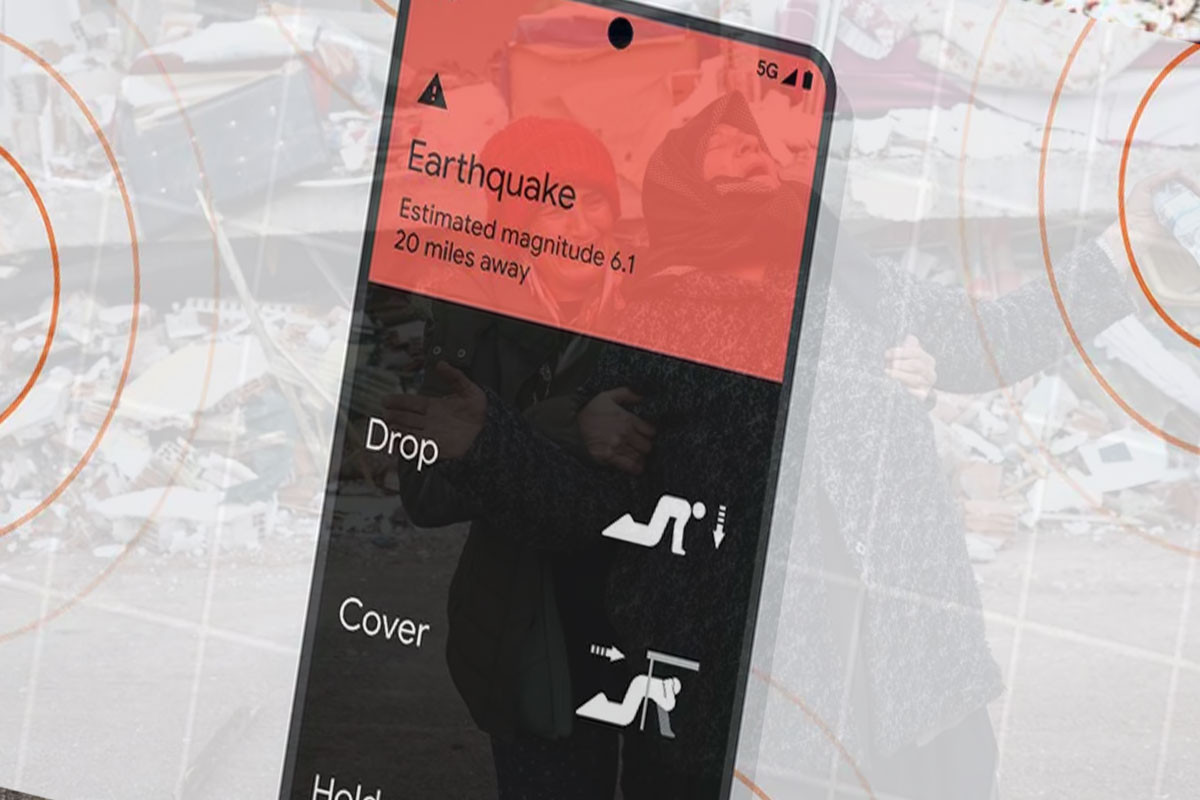
Google has admitted that its earthquake early warning system failed to send critical alerts to millions of people during the devastating earthquake that struck Turkey in 2023. Around 10 million people within 98 miles of the epicenter could have received Google’s highest-level "Take Action" alerts, giving them up to 35 seconds to find safety. However, only 469 such alerts were sent for the initial 7.8 magnitude tremor, reads a BBC report.
While Google sent out a lower-level warning to half a million people, designed for lighter shaking, it failed to issue timely notifications to those most at risk, especially as the quake hit while many people were asleep.
More than 55,000 people died, and over 100,000 were injured when two major earthquakes struck Southeast Turkey on February 6, 2023. Google’s Android-based early warning system, which operates on more than 70% of phones in the country, was in place but underestimated the earthquake's strength.
Months after the quake, the BBC interviewed several residents in the affected regions but found no one who received a “Take Action” alert before the tremor.
Google’s researchers later acknowledged flaws in the detection algorithms. The system initially underestimated the first earthquake’s magnitude, estimating it at 4.5 to 4.9 when it was actually a 7.8. A recalibrated system would have sent 10 million high-priority alerts and 67 million lower-priority ones, offering better coverage for those at risk.
Elizabeth Reddy, Assistant Professor at Colorado School of Mines, criticized the delayed response: "It’s concerning that it took so long to address these issues. People died, and the system didn’t work as expected."
While Google emphasizes that its alert system is supplementary and not a replacement for national systems, experts warn about overreliance on untested technology. "Transparency about system effectiveness is critical," said Harold Tobin, Director of the Pacific Northwest Seismic Network.
Despite the flaws, Google’s Earthquake Alerts system has since been improved and expanded to 98 countries. The BBC’s request for data on the system’s performance during the 2025 earthquake in Myanmar remains unanswered.
Bd-pratidin English/ Jisan