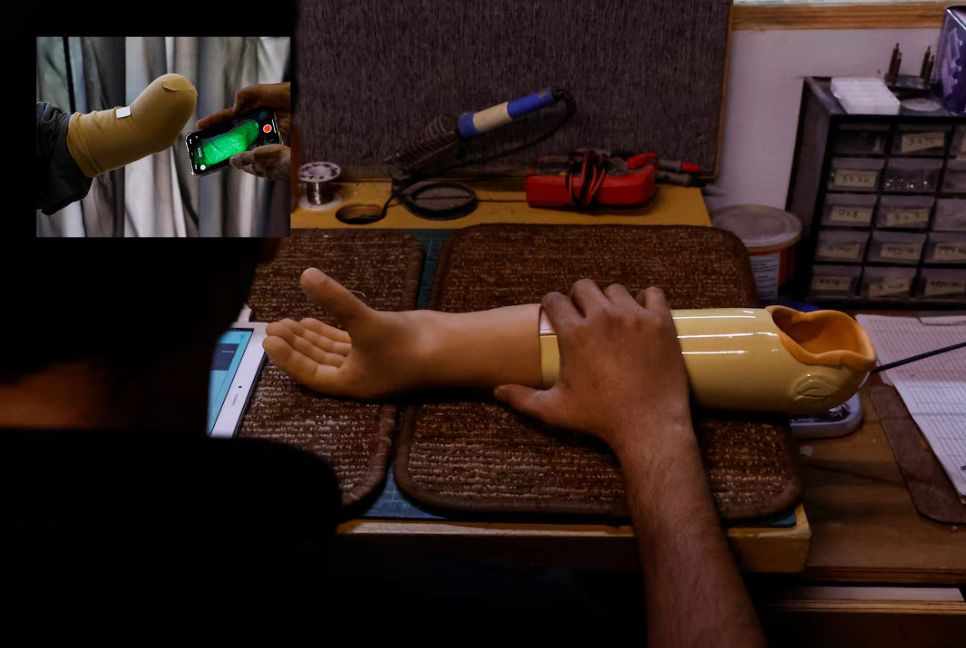
As soon as eight-year-old Sidra Al Bordeeni returned from the clinic with her prosthetic arm, she jumped on a bicycle in the Jordanian refugee camp where she lives, riding for the first time since a missile strike in Gaza took her arm a year ago.
Her mother, Sabreen Al Bordeeni, said Gaza's collapsed health services and the family's inability to leave at the time made it impossible to save her hand. "She's out playing, and all her friends and siblings are fascinated by her arm," Al Bordeeni said on the phone, repeatedly thanking God for this day.
The arm was built over 4,000 kilometres away in Karachi by Bioniks, a Pakistani company that uses a smartphone app to take pictures from different angles and create a 3D model for custom prosthetics.
CEO Anas Niaz said the social enterprise startup had fit more than 1,000 custom-designed arms inside Pakistan since 2021 - funded through a mix of patient payments, corporate sponsorship, and donations - but this was its first time providing prosthetics to those impacted in conflict.
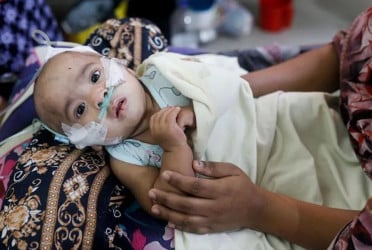
Sidra and three-year-old Habebat Allah, who lost both her arms and a leg in Gaza, went through days of remote consultations and virtual fittings. Then Niaz flew from Karachi to Amman to meet the girls and make his company's first overseas delivery.
Sidra's device was funded by Mafaz Clinic in Amman, while donations from Pakistanis paid for Habebat's. Mafaz CEO Entesar Asaker said the clinic partnered with Bioniks for its low costs, remote solutions and ability to troubleshoot virtually.
Niaz said each prosthetic arm costs about $2,500, significantly less than the $10,000 to $20,000 for alternatives made in the United States.
While Bioniks' arms are less sophisticated than U.S. versions, they provide a high level of functionality for children and their remote process makes them more accessible than options from other countries such as Turkey and South Korea.
"We plan on providing limbs for people in other conflict zones too, like Ukraine, and become a global company," Niaz said.
Globally, most advanced prosthetics are designed for adults and rarely reach children in war zones, who need lighter limbs and replacements every 12–18 months as they grow.
Niaz said they were exploring funding options for Sidra and Habebat's future replacements, adding the cost wouldn't be too high.
"Only a few components would need to be changed," he said, "the rest can be reused to help another child."
Bioniks occasionally incorporates popular fictional characters into its children's prosthetics such as Marvel's Iron Man or Disney's Elsa, a feature Niaz said helps with emotional acceptance and daily use.
An April study by the Palestinian Bureau of Statistics found at least 7,000 children have been injured since Israel's war in Gaza began in October 2023. Local health authorities say more than 50,000 Palestinians have been killed, nearly one-third of them children.
Source: Reuters
Bd-pratidin English/FNC