Artificial intelligence is rapidly transforming the filmmaking industry—and a young film festival is spotlighting its creative potential.
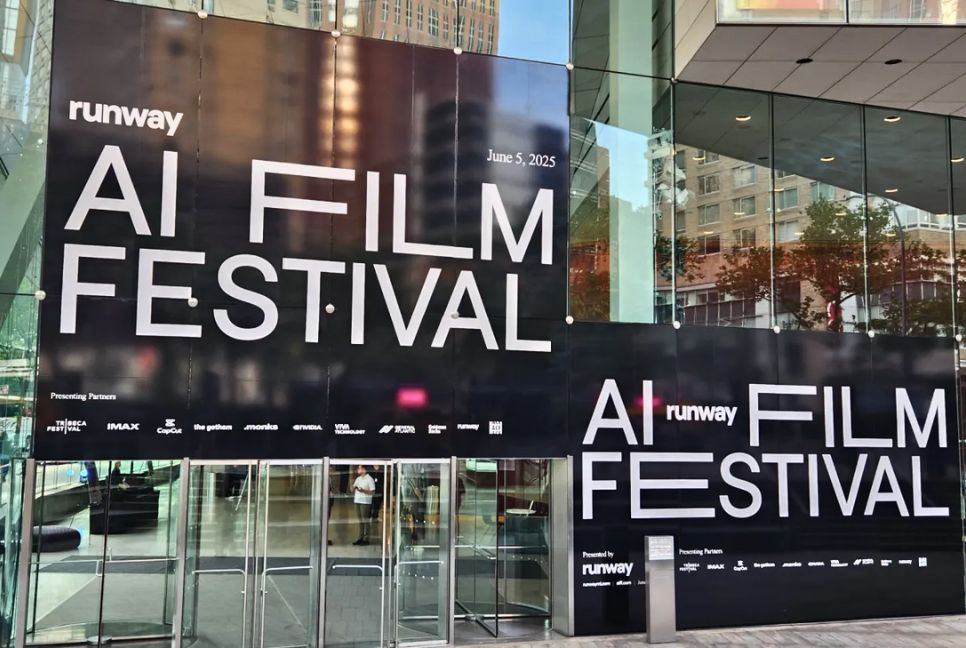
The annual AI Film Festival, organized by AI video platform Runway, opened Thursday night in New York, premiering ten short films from around the world. The event highlights how AI tools are being used to tell stories in bold, experimental ways, reports AP.
“Three years ago, this was such a crazy idea,” said Runway CEO Cristóbal Valenzuela. “Today, millions of people are making billions of videos using tools we only dreamed of.”
The festival, now in its second year, has seen exponential growth. About 300 films were submitted for its debut edition, while this year attracted around 6,000 entries.
The lineup featured a mix of styles and themes. Jacob Alder’s Total Pixel Space won the top prize for its visually rich meditation on the vast digital image universe, combining math and imagination in a 9-minute journey. Second place went to Jailbird by Andrew Salter, a whimsical story told from a chicken’s perspective as it joins a UK prison rehabilitation program. One by Ricardo Villavicencio and Edward Saatchi—a futuristic tale of interplanetary travel—placed third.
All ten finalists were selected from thousands of entries and will also be screened in Los Angeles and Paris next week.
Judges considered how AI was used in each submission, though full AI generation wasn’t required. Many creators opted for a mixed-media approach, blending live-action footage and real-world audio with AI-generated visuals.
“We’re trying to encourage people to explore and experiment with it,” Valenzuela said ahead of the screening.
Creating coherent AI-generated films remains a challenge. It requires detailed prompts and numerous iterations to craft a visually consistent and logical narrative. Still, advances in generative AI since the festival’s 2023 launch are clear, Valenzuela said, noting the increased realism and sophistication in this year’s entries.
While Runway encourages the use of its own tools, filmmakers can utilize any available AI platforms. Across the industry, tools that turn text, images, and audio into videos have seen rapid development and growing adoption.
“The way (this technology) has lived within film and media culture, and pop culture, has really accelerated,” said Bard College film professor Joshua Glick.
He noted the festival aligns with broader industry efforts to gain legitimacy for AI tools—and forge stronger ties with Hollywood.
Yet, AI’s rise has sparked concerns over job security. “AI must not be used to undermine workers’ rights or livelihoods,” said IATSE’s international vice president Vanessa Holtgrewe. Unions continue to negotiate AI protections with studios.
“It’s natural to fear change ... (But) it’s important to understand what you can do with it,” Valenzuela said. “Even filmmaking… was born because of scientific breakthroughs that at the time were very uncomfortable for many people.”
Bd-pratidin English/FNC