Japan’s private space firm ispace Inc. has confirmed the failure of its Resilience lunar lander, which crashed on the moon early Friday morning after communication was lost during its final descent. This was the company’s second attempt to achieve a commercial lunar landing, following a previous failure in 2023, reads a Japan News post.
The touchdown was scheduled for 4:17 a.m. Japan time, targeting the unexplored northern lunar region of Mare Frigoris. However, no signal was received from the lander after the expected landing time. Engineers concluded that Resilience likely impacted the lunar surface and was destroyed.
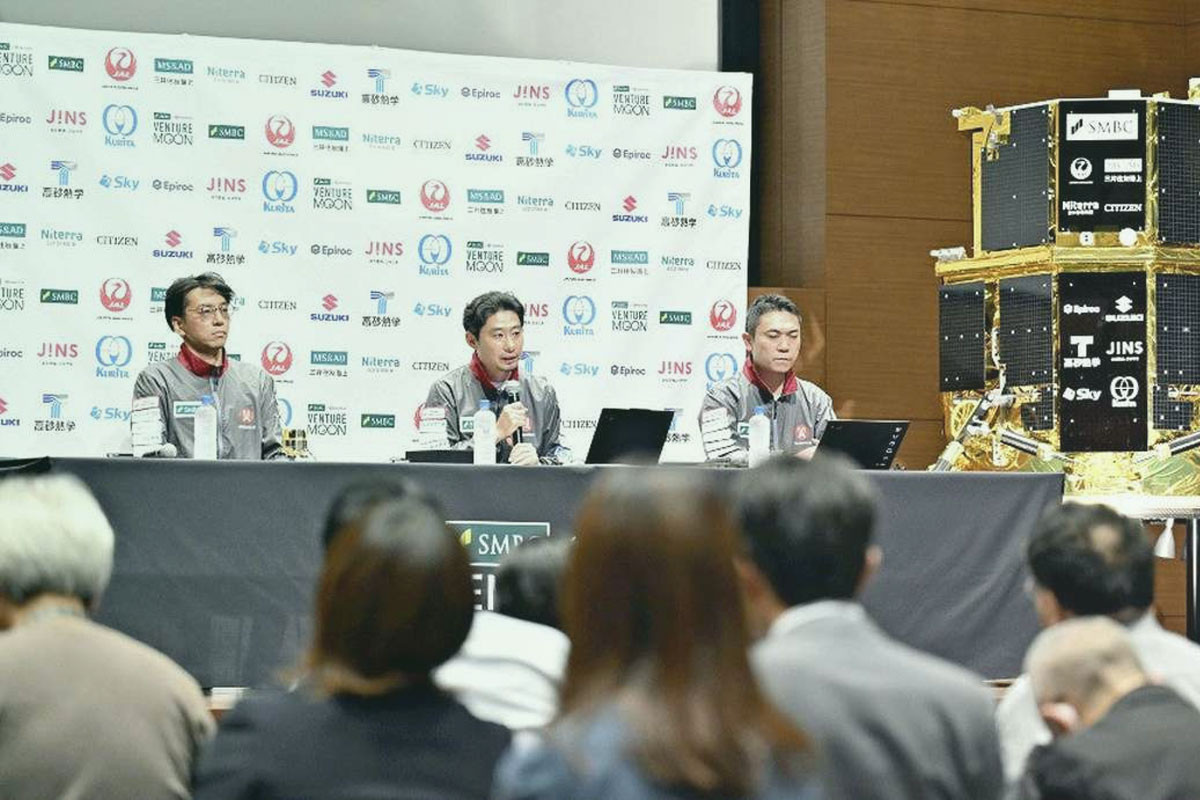
“We have given up on accomplishing the mission,” said ispace CEO Takeshi Hakamada during a press conference in Tokyo. “Despite our best efforts, we could not establish contact after the planned landing, indicating a probable crash.”
Resilience carried several scientific and symbolic payloads, including a 5-kilogram rover named Tenacious designed to collect lunar soil samples, and Moonhouse, a miniature red cottage artwork by Swedish artist Mikael Genberg. Neither was deployed due to the failure.
The lander launched in January aboard a SpaceX Falcon 9 and entered lunar orbit last month. The mission had aimed to demonstrate Japan’s capabilities in commercial space technology and establish a foothold in the growing lunar economy.
The selected landing site, Mare Frigoris—Latin for “Sea of Cold”—was chosen for its relatively smooth terrain, intended to provide a safer descent path compared to the moon’s hazardous south pole, where other private missions have recently failed.
ispace had described the mission as a steppingstone toward larger goals, including a NASA-backed lander planned for 2027. Chief engineer Jeremy Fix previously highlighted the company's financial limitations, stating, “We don’t have infinite funds and can’t afford repeated failures.”
The loss of Resilience underscores the challenges faced by private lunar missions. Since 2019, numerous commercial efforts have attempted moon landings, often ending in crash landings. Only five countries have successfully conducted robotic lunar missions to date.
Despite the setback, ispace remains committed to future lunar exploration. The company’s long-term vision involves building infrastructure for a sustainable lunar economy and supporting international partners, including NASA.
The failure serves as a sobering reminder of the high-risk nature of space exploration—but also of the determination fueling the new era of private-sector ambition beyond Earth.
Bd-pratidin English/ Jisan