A revolutionary physics breakthrough has emerged from Litlington, England, as Cheyney Design and Development backs a study that redefines the fundamental nature of light. Dr. Dhiraj Sinha, a faculty member at Plaksha University, has published a transformative theory in Annals of Physics, showing how Einstein’s photons emerge directly from Maxwell’s electromagnetic fields—bridging a century-old divide between classical and quantum physics, according to a Cheyney statement.
Supported by Cheyney, a leader in x-ray imaging technologies, Dr. Sinha’s research introduces a unified framework where photons, traditionally viewed as separate quantum entities, naturally arise from electromagnetic field behavior. This advancement builds upon his earlier work in Physical Review Letters, which proposed that radiation results from broken symmetries in electromagnetic fields.
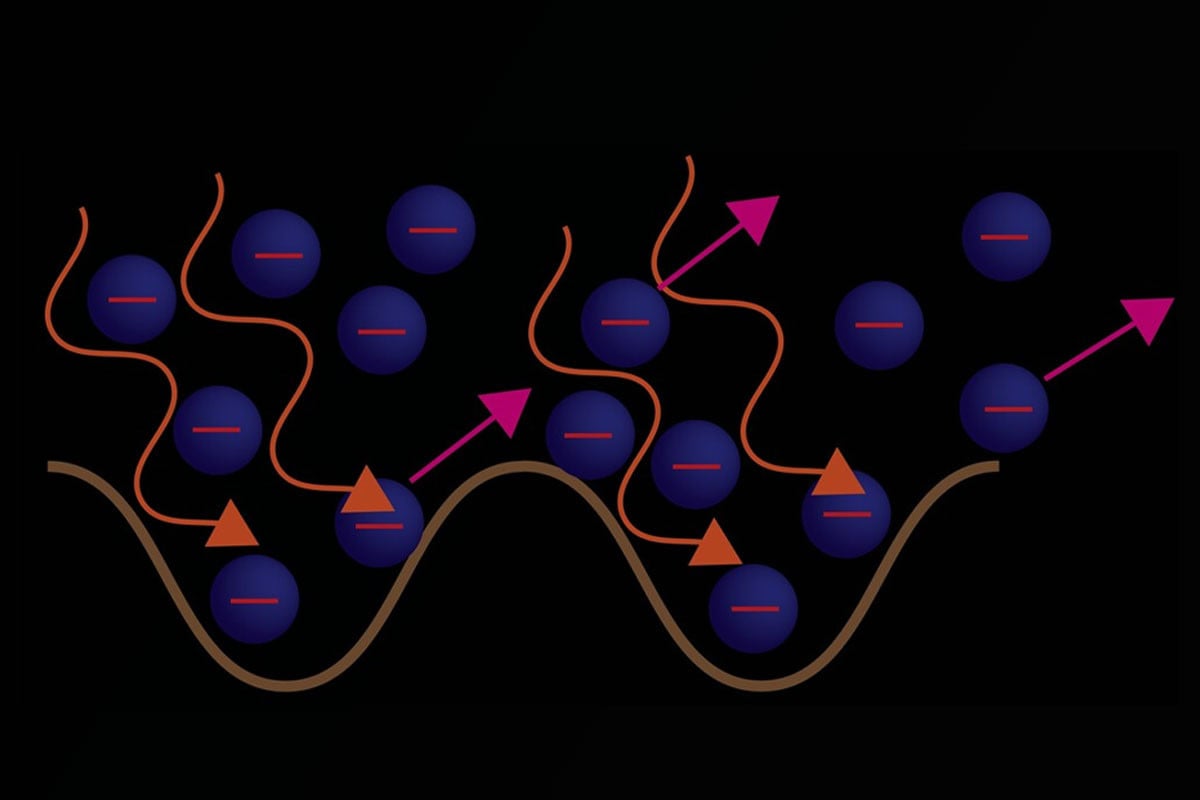
Historically, Maxwell's 19th-century equations described light as an electromagnetic wave, a view experimentally validated by Hertz. In contrast, Einstein’s 1905 photoelectric effect theory introduced the concept of photons—discrete energy packets—launching quantum physics. For decades, scientists have accepted light's dual nature: wave-like in transmission and particle-like in interaction. Dr. Sinha’s theory reconciles these views by mathematically showing that the time-varying magnetic fields in Maxwell’s equations generate an electric potential, expressed as W = e·(dj/dt), which energizes electrons, aligning seamlessly with Einstein’s photon energy formula E = ħω.
This novel insight suggests that light-matter interaction can be fully explained through classical electromagnetism when accounting for magnetic flux quantization—observed in phenomena such as superconductivity and two-dimensional electron gases. The approach removes the need for an artificial duality, offering a clearer, integrated understanding of light.
Leading physicists have praised the research. Professor Jorge Hirsch of the University of California, San Diego, endorsed the findings. Steven Verrall, formerly of the University of Wisconsin La Crosse, emphasized its potential for advancing semiclassical models. Professor Lawrence Horwitz of Tel Aviv University called it “a valuable contribution,” while UC Berkeley’s Richard Muller remarked that it addresses "the most fundamental unresolved questions of quantum physics."
The implications of this work are profound. Dr. Sinha's theory could enable a unified platform integrating devices like solar cells, lasers, LEDs, and antennas—transforming fields from renewable energy to telecommunications. By grounding light in Maxwell’s classical fields, the research opens new paths for innovation in both theoretical physics and practical technologies.
Cheyney founder Richard Parmee said, “We are proud to support this bold, boundary-pushing work. Dr. Sinha’s findings may not only redefine how we understand light but also how we apply it across industries.”
As science inches closer to unraveling the true essence of light, this breakthrough offers a pivotal leap—connecting the wisdom of Maxwell and Einstein into a single, elegant theory.
Bd-pratidin English/ Jisan