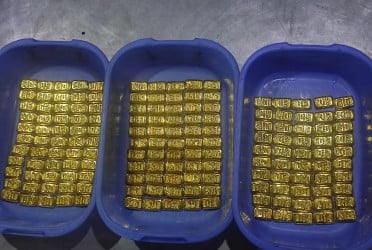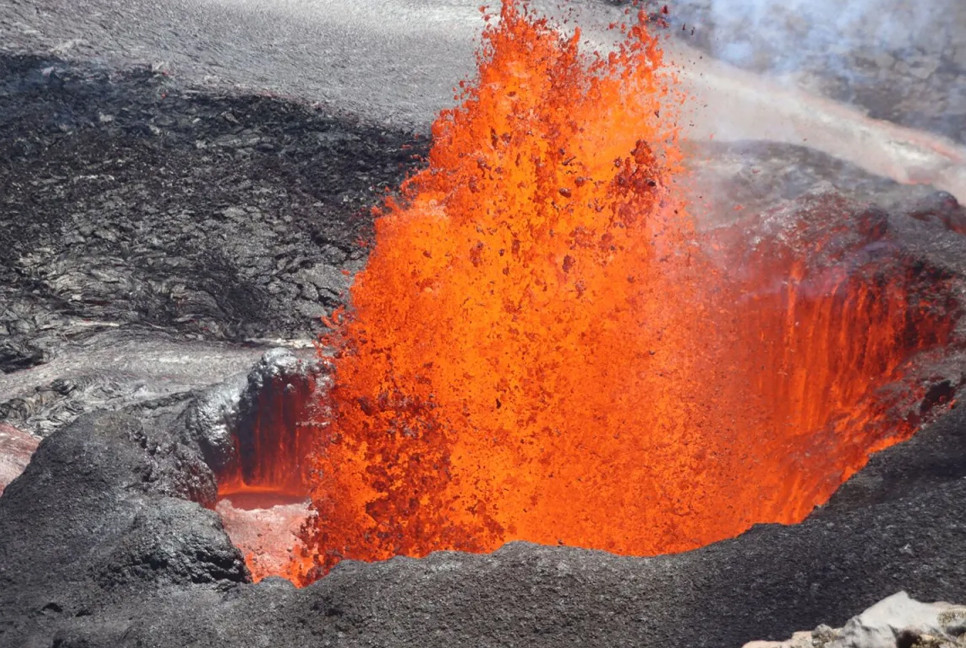
In a stunning scientific breakthrough, researchers have discovered that Earth's core may be leaking gold and other precious metals to the surface challenging long-held assumptions about the planet's inner structure.
According to a study published in the journal Nature, a team from the University of Göttingen in Germany analyzed volcanic rocks from Hawaii and found unusually high levels of a rare isotope of ruthenium, a precious metal typically concentrated in the Earth’s metallic core.
The Earth’s core, buried beneath 3,000 kilometers of solid rock, is believed to contain more than 99.99% of the planet’s gold and other valuable elements. These materials have been locked away since the Earth formed 4.5 billion years ago.
Using advanced isotopic analysis, the researchers detected core-specific signatures in the volcanic rocks, indicating that material from the planet’s deep interior had reached the surface during eruptions.
“When the first results came in, we realised that we had literally struck gold,” said Nils Messling, a geochemist at Göttingen University. “Our data confirmed that material from the core, including gold and other precious metals, is leaking into the Earth's mantle above.”
The findings suggest that Earth’s core is not as isolated as scientists previously believed. Instead, massive amounts of superheated rock amounting to hundreds of quadrillion metric tonnes — rise from the core-mantle boundary to form volcanic island chains like Hawaii.
“This discovery opens a new chapter in our understanding of Earth’s internal dynamics,” said Professor Matthias Willbold, co-author of the study. “We now have evidence that not only is the core actively interacting with the mantle, but it may also be contributing to the planet’s surface resources, including precious metals.”
The team also proposed that ruthenium isotopes could be used as tracers to study core-mantle interactions in the future potentially revolutionizing our ability to map the inner workings of the planet.
However, researchers note that more studies are needed to determine whether this leakage has been a constant process throughout Earth’s history.
“Our findings open up an entirely new perspective on the evolution of the inner dynamics of our home planet,” the study concluded.
Source: NDTV
Bd-pratidin Egnlish/ Afia