Japan is prepared to assist the United States with its lower-cost lunar missions, according to the head of its space agency, following the U.S. administration's proposal to reduce NASA's budget by $6 billion, which could disrupt the Artemis program designed to return humans to the moon.
The U.S.-led Artemis program, launched during President Donald Trump's first term, has become a multibillion-dollar initiative with international partners, including Japan, the European Space Agency (ESA), and Canada, aiming to send astronauts back to the moon for the first time since 1972.
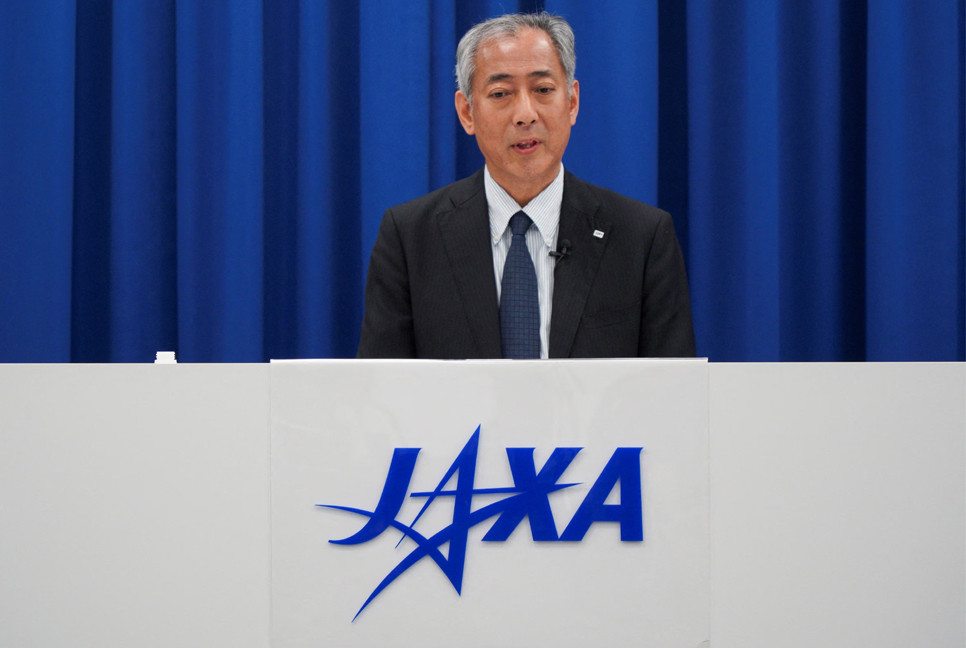
"If the U.S. were considering a better alternative in terms of budget or economics, we must respond to it," Hiroshi Yamakawa, President of Japan Aerospace Exploration Agency (JAXA), told a monthly briefing.
Trump unveiled his 2026 budget proposal for NASA earlier this month. It would almost halve the agency's space science budget and reshape its exploration programmes to focus on Mars with "cost-effective" rockets and spaceships.
Japan signed an agreement with NASA last year to include two Japanese astronauts and a Toyota-made rover in future missions to the lunar surface.
While Trump and Japan's Prime Minister Shigeru Ishiba reaffirmed a partnership on Artemis missions in February, the budget proposal suggested NASA could cancel the Gateway, an internationally planned space station that was due for initial deployment near the moon in the fourth Artemis mission.
NASA said Gateway components already built could be repurposed for other missions and "international partners will be invited to join these renewed efforts".
JAXA has jointly built a Gateway human habitation module with ESA and intended to use its cargo spacecraft HTV-X to resupply the station.
ESA Director General Josef Aschbacher said in a statement last week that "some questions still remain about the full repercussions" of Trump's budget proposal and ESA was holding follow-up meetings with the U.S. space agency.
JAXA's Yamakawa declined to evaluate the NASA budget proposal and said it and the Japanese government would seek dialogues with the U.S. counterparts to keep strengthening mutually-beneficial space cooperation.
"Even under a name different from 'Gateway', similar infrastructure is needed for lunar activities, and we continue to provide it," Yamakawa said. Japan could offer resupply capabilities, high-precision landing technology, rover or the lunar water data obtained from an upcoming joint mission with India, to the U.S. and other international partners, he added.
The United States and China have become intensifying rivals in space and are courting partner countries and leaning on private companies for their moon exploration, space station and satellite programmes.
"It's hard to imagine the U.S. would deliberately discard its advantage of having partners with space capabilities above a certain level ... which is one of America's biggest assets in the wake of its rivalry against China," said Kota Umeda, Research Fellow at the Institute of Geoeconomics in Tokyo.
"Even if the U.S. were to scale back the Artemis programme, they would likely work together with Japan and Europe to find a solution that allows all parties to save face."
Source: Reuters
Bd-pratidin English/ Afia