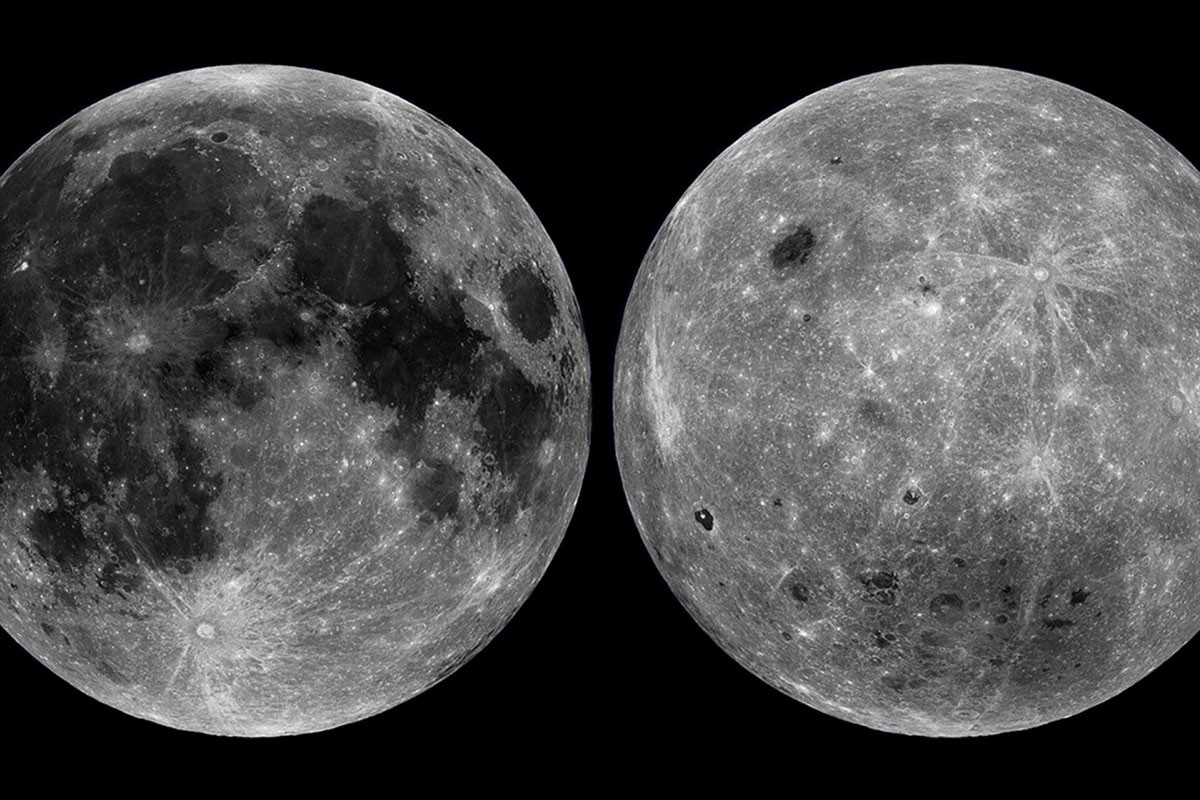
NASA scientists have released the most detailed gravity map of the Moon ever created, revealing a striking asymmetry between the side of the Moon that faces Earth and the one that doesn’t. The findings, published in Nature, are based on data from the agency’s Gravity Recovery and Interior Laboratory (GRAIL) mission.
The study shows that the Moon’s nearside—visible from Earth—is geologically warmer and more active deep beneath the surface compared to its farside, which is cooler and far more rugged. Researchers say this difference is likely due to intense ancient volcanism on the nearside, which caused heat-producing elements like thorium and titanium to accumulate there billions of years ago.
“Our study shows that the Moon's interior is not uniform,” said Ryan Park, lead author and supervisor at NASA’s Jet Propulsion Laboratory. “The nearside is structurally and thermally distinct from the farside.”
The Moon’s mantle, a layer beneath the crust, spans between 22 and 870 miles deep and makes up about 80% of the Moon’s mass. The researchers estimate that the nearside mantle is between 100–200°C (180–360°F) hotter than the farside, a difference that explains the smoother, lava-filled plains of the nearside known as mare.
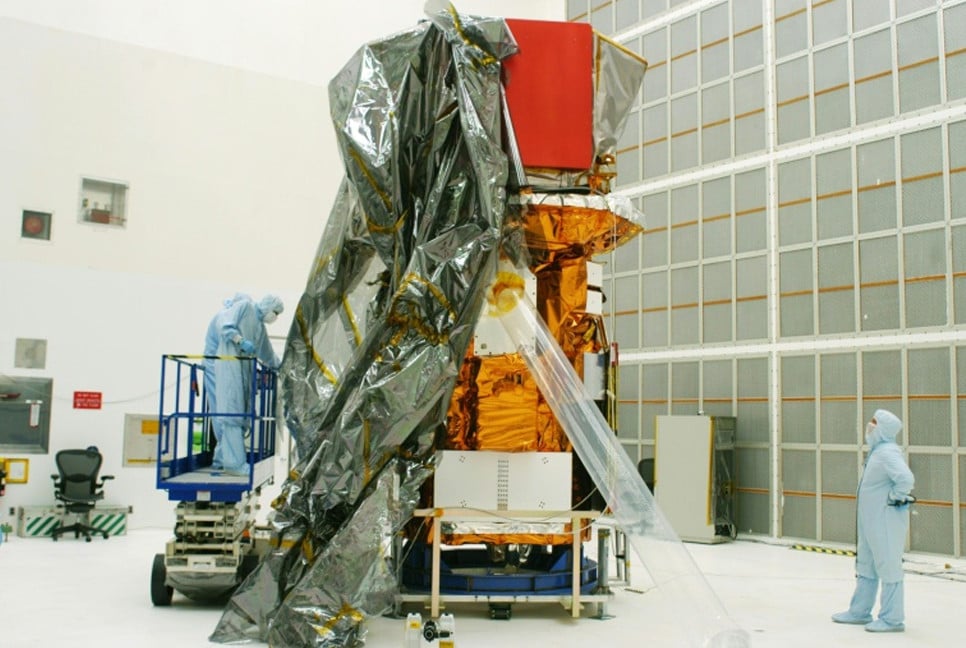
The GRAIL mission’s twin spacecraft, Ebb and Flow, orbited the Moon from 2011 to 2012, gathering the gravity data that led to these revelations. The data also helps scientists better understand tidal deformation—how the Moon flexes slightly due to Earth’s gravitational pull—further highlighting differences in internal structure.
Beyond improving scientific knowledge, the enhanced gravity map will support the development of lunar Positioning, Navigation, and Timing (PNT) systems, vital for future Moon missions.
“Our gravity map contributes to building a precise lunar reference frame,” Park said. “It’s crucial for ensuring safe and reliable operations on the lunar surface.”
The same methods used in this study may also be applied to explore other celestial bodies such as Jupiter’s moon Ganymede or Saturn’s Enceladus, both considered potential homes for extraterrestrial life.
As our understanding of the Moon deepens, it continues to play a vital role in Earth’s natural systems—from stabilizing planetary rotation to driving ocean tides—while inspiring future exploration.
Source: Reuters/ DS
Bd-pratidin English/ Jisan