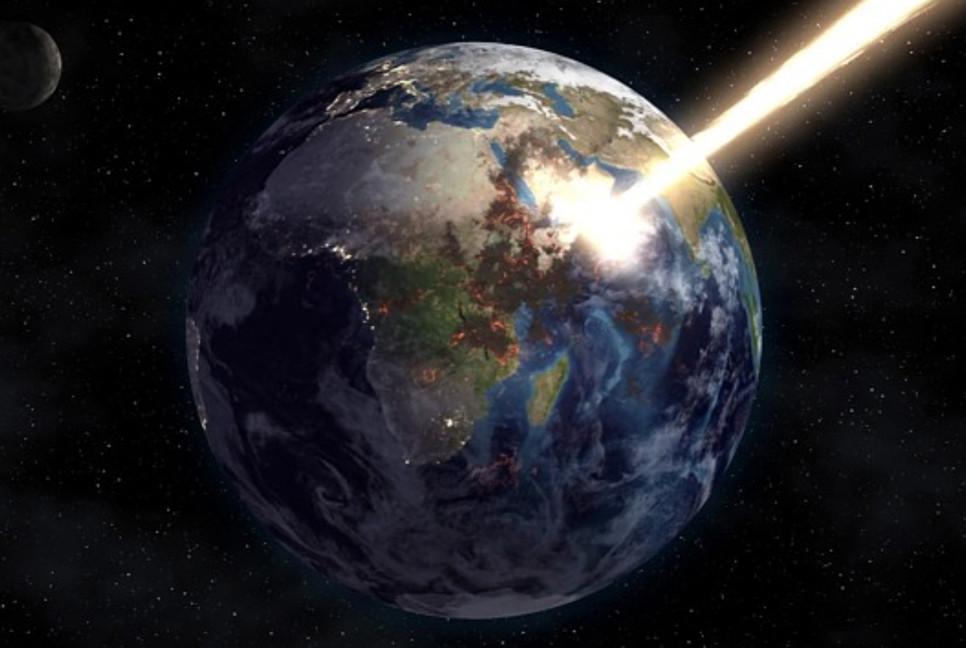
A supercomputer simulation conducted by researchers at Toho University, using NASA’s planetary models, suggests that Earth’s oxygen levels will vanish in about one billion years, rendering the planet uninhabitable. The study analyzed the future of Earth’s atmosphere through 400,000 simulation runs.
As the sun ages, it will become hotter and brighter, affecting Earth's climate. Water will evaporate, surface temperatures will rise, and the carbon cycle will weaken, killing plants and halting oxygen production.
The atmosphere will revert to a state of high methane, reminiscent of early Earth before the Great Oxidation Event.
The study, published in Nature Geoscience, titled 'The future lifespan of Earth's oxygenated atmosphere', found the future lifespan of Earth's oxygen-rich atmosphere is 1 billion years.
"For many years, the lifespan of Earth's biosphere has been discussed based on scientific knowledge about the steady brightening of the Sun and global carbonate-silicate geochemical cycle," Kazumi Ozaki, Assistant Professor at Toho University in Tokyo, Japan, said in a news release.
"One of the corollaries of such a theoretical framework is a continuous decline in atmospheric CO2 levels and global warming on geological timescales."
"It's generally thought Earth's biosphere will come to an end in 2 billion years due to the combination of overheating and CO2 scarcity for photosynthesis."
"If true, one can expect atmospheric O2 levels will also eventually decrease in the distant future. However, it remains unclear exactly when and how this will occur."
While life could potentially survive in such an atmosphere, it would be vastly different from today. Kazumi Ozaki pointed out that earlier predictions estimated Earth's biosphere would collapse in two billion years due to overheating and a lack of CO2. However, this new study shortens that timeline, forecasting rapid de-oxygenation in just one billion years.
Source: NDTV
Bd-pratidin English/ Afia