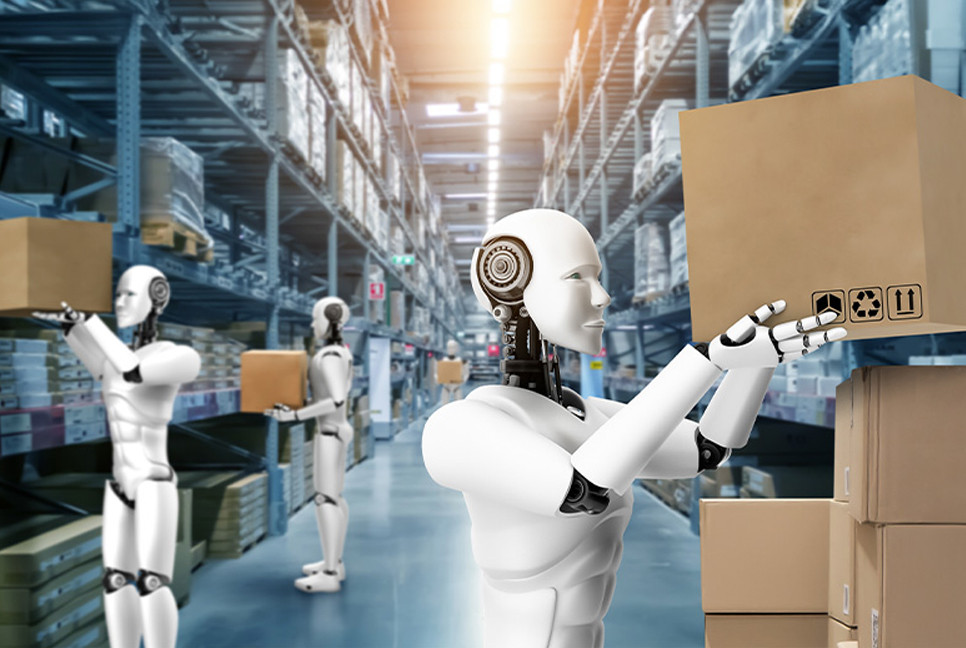
In a warehouse on the outskirts of Shanghai, dozens of humanoid robots repeatedly perform tasks like folding clothes, making sandwiches, and opening doors.
Operating 17 hours a day, the facility run by Chinese startup AgiBot is part of a bold national push to make humanoid robots mainstream, transforming not just factories but everyday life.
This warehouse is one of several data-generation hubs fueling the development of "embodied AI"—artificial intelligence designed for physical tasks.
“Just imagine that one day in our own robot factory, our robots are assembling themselves,” said Yao Maoqing, a partner at AgiBot.
The strategic significance of humanoid robots for China is growing, especially amid rising trade tensions with the U.S., a declining population, and slower economic growth.
Chinese President Xi Jinping recently inspected AgiBot’s robots, even joking they could one day play football. He has encouraged private firms, including another major developer, Unitree, to accelerate innovation in AI and robotics.
Government support is massive. Over $20 billion has been poured into the sector in the past year, with a 1 trillion yuan ($137 billion) startup fund on the way.
Shenzhen has launched its own 10 billion yuan AI and robotics fund, while cities like Wuhan and Beijing offer subsidies, rent-free facilities, and financial grants to qualifying companies.
In 2024, state procurement of humanoid robots and related technologies surged to 214 million yuan, up from just 4.7 million yuan in 2023, according to a Reuters review of tender documents.
Chinese firms are racing ahead. In 2024 alone, 31 companies introduced 36 new humanoid models, far outpacing the U.S. Only eight American models were unveiled in the same timeframe. Mass production is underway for several major players including Unitree and UBTech.
Hardware is another area where China dominates. The country produces up to 90% of humanoid robot components, enabling rapid development and slashing costs. Some startups are already offering robots for as little as 88,000 yuan ($12,178). Bank of America projects that average humanoid production costs could fall from $35,000 today to $17,000 by 2030—thanks to China’s supply chain efficiency.
Yet hardware is only part of the story. Chinese advances in AI—driven by homegrown firms like DeepSeek and backed by vast government support—are helping turn robots into adaptive, task-performing machines. These developments aim to bridge the gap between impressive robotic hardware and the sophisticated software needed for real-world utility.
AgiBot’s data center, aided by the Shanghai government, is just one example. Similar facilities are planned in Shenzhen and Beijing to scale up embodied AI training.
Startups like MagicLab are already deploying robots for industrial tasks like quality inspection and assembly, using AI from DeepSeek, Alibaba’s Qwen, and ByteDance’s Doubao.
While the promise is high, so is the risk. With 123 million Chinese employed in manufacturing, lawmakers are already debating the social impact. Proposals for AI unemployment insurance are emerging, while state media suggests long-term job creation could balance out short-term disruption.
Despite these concerns, China is betting that humanoid robots—especially in sectors like elderly care—will be essential in addressing its labor shortfalls and sustaining economic growth in the decades ahead.
Source: Reuters
Bd-pratidin English/ Afia