The government is going to set an ambitious investment target in the national budget for fiscal year 2026-27 (FY27) to revive economic activity, but economists and business leaders warn that persistent structural weaknesses, high borrowing costs and energy shortages could undermine the plan.
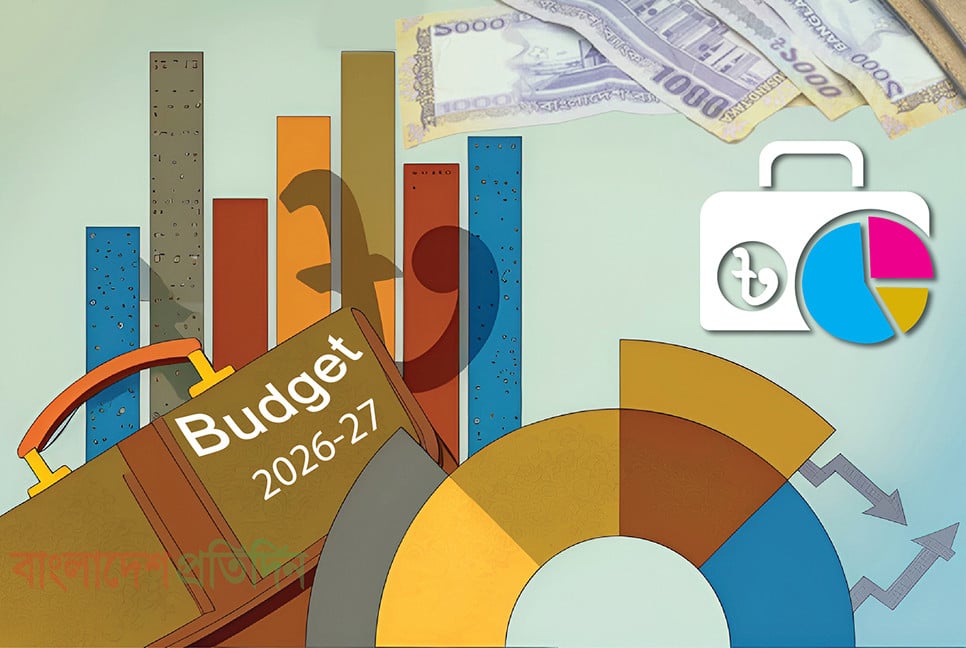
According to the draft budget obtained through Finance Division sources, the government aims to raise total investment to 31.4% of GDP in FY27, up sharply from 25.21% in the current fiscal year – the lowest rate recorded in a decade.
Analysts said that restoring investor confidence will be crucial if the target is to be achieved.
According to the finance ministry, the proposed budget for FY27 stands at Tk9.38 lakh crore, while GDP has been estimated at Tk68.32 lakh crore.
The government expects public investment to reach 6.5% of GDP and private investment 24.9%.
Finance Division officials said the strategy is intended to restore economic momentum, generate employment and boost production and exports.
However, economists remain sceptical.
Bangladesh’s investment rate has not sustainably exceeded 32% of GDP over the past decade, and recent trends point in the opposite direction.
The GDP estimate for FY26 was revised downwards from Tk62.45 lakh crore to Tk60.80 lakh crore. Against this, total investment stood at Tk15.74 lakh crore, equivalent to 25.21% of GDP.
Investment had already fallen to 28.54% of GDP in FY25 from 30.70% in FY24.
Even during the COVID-19 pandemic, investment rates were higher. Bangladesh recorded its highest-ever investment rate of 32.21% of GDP in FY19.
Analysts attribute the prolonged slowdown to high interest rates, banking sector weaknesses, energy uncertainty and policy instability.
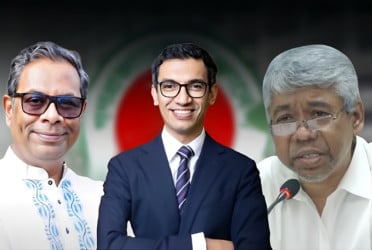
Dr Zahid Hussain, former lead economist of the World Bank’s Dhaka office, told the media, “Although the target to increase investment is positive, restoring confidence is crucial for implementation. Without addressing weaknesses in the banking sector, slow project implementation, and policy uncertainty, achieving this goal will be difficult.”
He added, “Although political stability has sent positive signals, pressure remains in the real economy. Unless the country overcomes banking sector weaknesses, the dollar crisis, energy uncertainty, and global instability, the investment drought will not ease easily.”
Referring to recent policy support, he said, “Bangladesh Bank has already announced a Tk60,000 crore stimulus package. Now it remains to be seen how effective it will be in practice.”
To stimulate investment, the government plans to expand economic zones, introduce incentives for local and foreign investors, strengthen public-private partnerships, expand digital services, support start-ups through dedicated funds, provide low-interest financing for SMEs and simplify duty drawback facilities for export-oriented industries.
Zahid Hussain said sustaining growth would require investment to rise to between 32% and 34% of GDP, but warned that this would demand structural reforms, a business-friendly environment and renewed investor confidence.
Fahmida Khatun, executive director of the Centre for Policy Dialogue (CPD), said lower interest rates alone would not be enough to boost investment because of deep-rooted structural barriers. She also cautioned that increased government borrowing to finance the budget deficit could place additional pressure on the money market and worsen investment conditions.
Fahmida further warned against excessive reliance on central bank financing, saying it could add to inflationary pressures.
Business leaders say high lending rates remain the biggest obstacle to new investment. Bangladesh Bank’s contractionary monetary policy, introduced to curb inflation, has pushed average lending rates to 11.76% as of April, compared with around 7% to 8% just two to three years ago.
Energy sector uncertainty is another major concern. Geopolitical tensions involving Iran, Israel and the United States have fuelled volatility in global energy markets, increasing LNG import costs and worsening gas supply shortages.
Showkat Aziz Russell, president of the Bangladesh Textile Mills Association (BTMA), said “Irregular gas and electricity supply, lack of long-term financing, and policy instability have created immense pressure on the industrial sector.
“Many factories have already shut down due to the energy crisis. New investment in the textile sector has nearly come to a halt, while production capacity continues to decline. To increase investment, a stable policy environment must first be ensured. Large-scale investment will not come without uninterrupted gas and electricity supply.”
Courtesy: Daily Sun.
Bd-pratidin English/TR