The government has turned to high-cost foreign borrowing to manage mounting fiscal pressure as revenue shortfalls widen and spending continues to rise.
Officials say the government struggles to balance the current budget while meeting political commitments and absorbing higher fuel costs. It also carries the burden of economic stagnation left by the previous interim administration.
To bridge the gap, the government has approved five foreign loan proposals worth $1.9 billion from development partners. About $1.6 billion of the total comes as non-concessional loans with higher interest rates, shorter grace periods and stricter conditions.
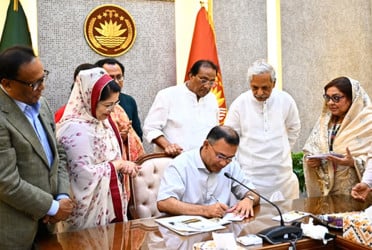
A standing committee on non-concessional loans approved the proposals at a meeting held at the Planning Ministry in Sher-e-Bangla Nagar on Tuesday.
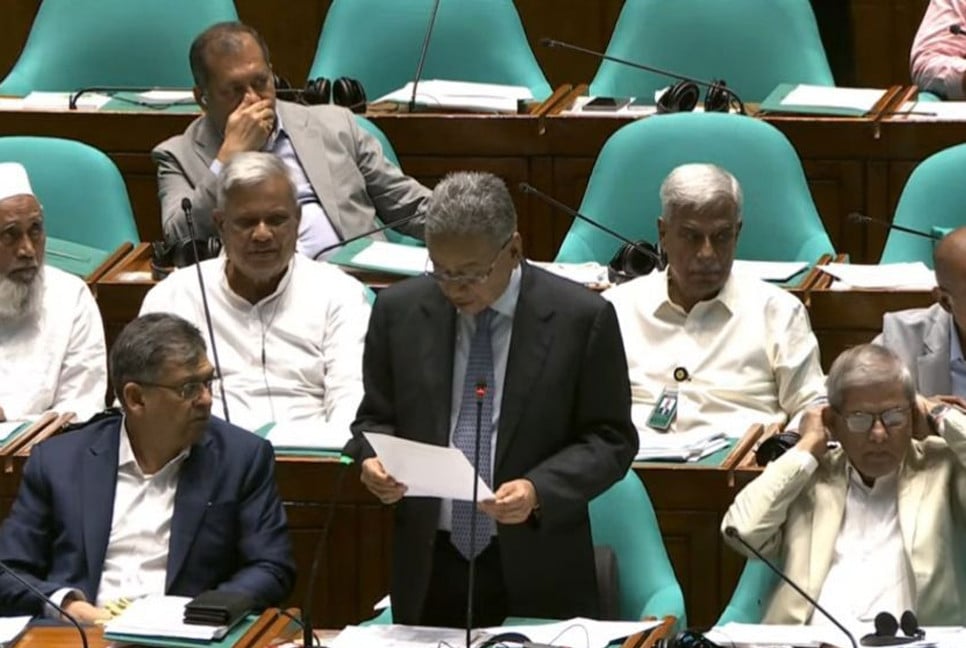
Finance and Planning Minister Amir Khasru Mahmud Chowdhury chaired the meeting. Officials said the government will use around $1.3 billion of the loans as budget support to ease pressure on foreign exchange reserves and address revenue deficits.
The package includes $450 million from the Asian Development Bank, $500 million from the Japan International Cooperation Agency, $250 million from the Asian Infrastructure Investment Bank and $100 million from the OPEC Fund for International Development.
Interest rates on these loans range between 3% and 5%, significantly higher than concessional financing. The ADB loan under its economic management and governance programme carries an interest rate of about 4.13% with a low grant element, making it relatively costly. The AIIB loan comes with an interest rate of around 5.08% and a negative grant element, further increasing its burden. The JICA loan offers comparatively lower rates but does not qualify as low-cost financing.
Alongside budget support, the government has approved a $300 million ADB loan for the Dhaka–Sylhet corridor development project. The project, worth about Tk169.18 billion, plans to expand the highway to four lanes and build service lanes. However, its effective interest rate exceeds 4%, which may increase future liabilities.
The government has set limits on such borrowing. It plans to keep annual repayments of non-concessional loans within 10% of export earnings or 15% of government revenue, and to cap total non-concessional debt below 10% of GDP. Authorities have also directed agencies to seek such loans only when concessional financing remains unavailable.
Despite these measures, reliance on budget support loans has grown sharply. Bangladesh secured a record $3.41 billion in budget support in the 2024-25 fiscal year, pushing total external debt to $74.34 billion, an 8% increase from the previous year and nearly 46% higher than five years ago.
Data from the Economic Relations Division show that the country disbursed $8.11 billion in foreign assistance during the fiscal year, while it repaid $2.6 billion in principal, increasing net debt. Large infrastructure projects and strong inflows of budget support loans have driven this trend.
Economists say post-pandemic economic pressure, rising global energy prices and a dollar shortage have intensified the government’s reliance on external borrowing.
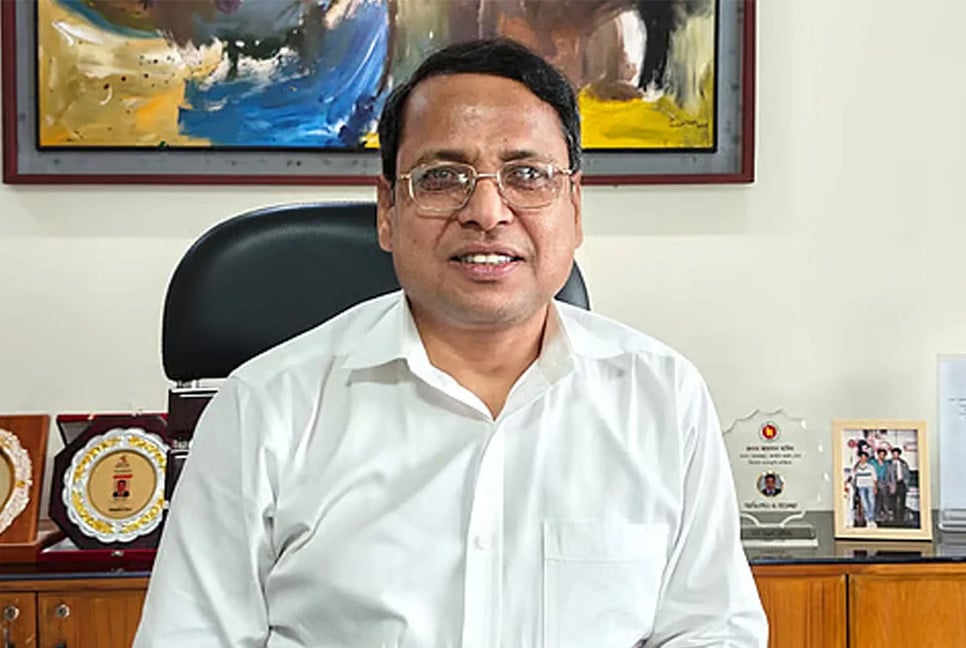
Former World Bank Dhaka office chief economist Zahid Hussain said such loans usually carry commercial interest rates of around 5% to 6% and remain expensive. He stressed the need to ensure that projects funded by these loans generate sufficient returns to avoid future financial risks.
Policy Exchange Bangladesh Chairman and CEO Masrur Riaz said large-scale budget support from global lenders has helped stabilise foreign exchange reserves and the balance of payments. However, he warned that debt servicing pressure may rise by up to 65% in the coming years and urged cautious debt management.
According to ERD projections, Bangladesh will need to repay about $25.99 billion in external debt between fiscal years 2025-26 and 2029-30, including $18.38 billion in principal and $7.6 billion in interest. The fiscal year 2029-30 may see the highest repayment burden at around $5.5 billion.
Grace periods for several major projects, including the Rooppur Nuclear Power Plant, are nearing an end, which will increase repayment obligations. Delays in project implementation and lower-than-expected returns may further complicate the situation.
Economists recommend boosting export earnings and remittance inflows, improving the investment climate and strengthening revenue collection to manage the growing debt burden. Without these measures, high-interest foreign loans may pose significant financial risks in the future.
Courtesy:Kaler Kantho
Bd-pratidin English/ ANI