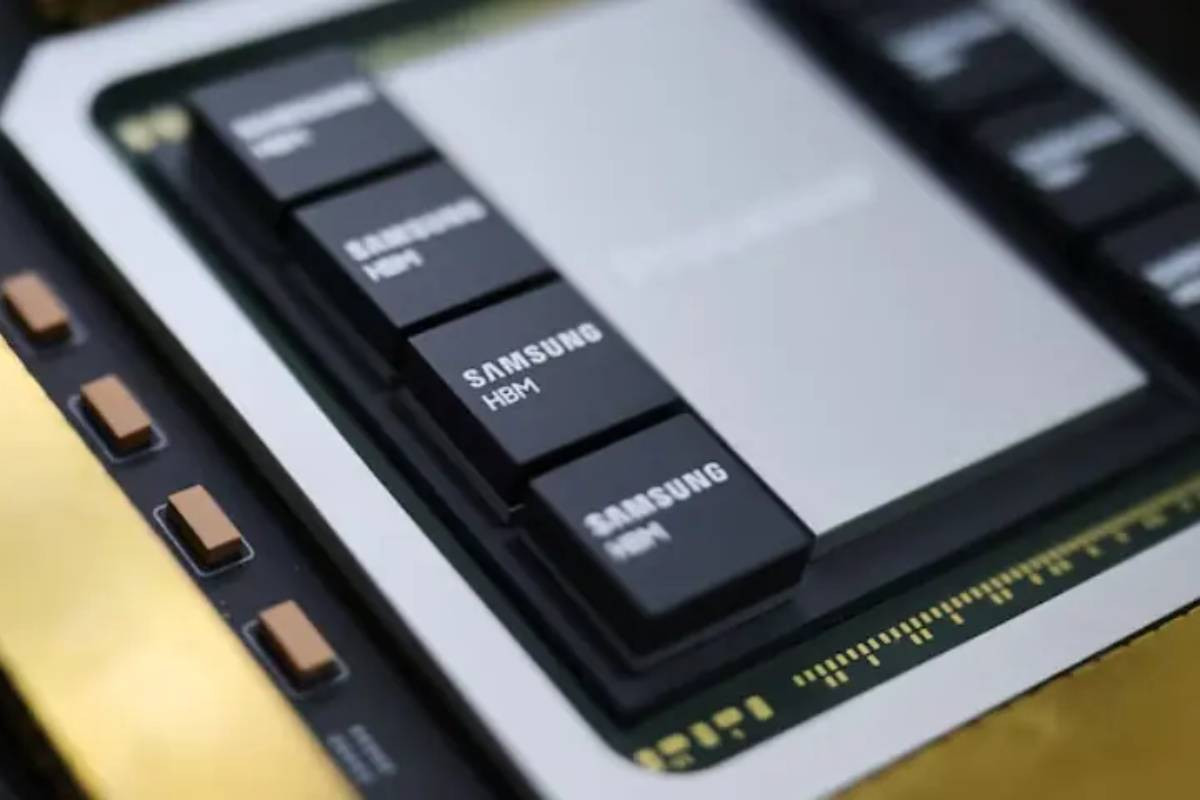
Samsung Electronics said customers have praised the differentiated competitiveness of its next-generation high-bandwidth memory chips, known as HBM4, with some remarking that “Samsung is back,” co-CEO and semiconductor chief Jun Young-hyun said in a New Year address, reports Reuters.
In October, Samsung said it was in “close discussions” to supply its HBM4 chips to US artificial intelligence leader Nvidia, as the South Korean chipmaker races to catch up with rivals, including domestic competitor SK Hynix, in the fast-growing AI chip market.
“On HBM4 in particular, customers have even stated that ‘Samsung is back’,” Jun said in remarks reviewed by Reuters, while adding that the company still had work to do to further strengthen its competitiveness.
SK Hynix CEO Kwak Noh-jung said in separate New Year remarks reviewed by Reuters that the company had benefited from favourable external conditions as demand for AI chips materialised faster than expected, but warned that competition was intensifying rapidly.
“AI demand is now a given rather than an upside surprise,” Kwak said, adding that the business environment in 2026 would be tougher than last year. He stressed the need for continued, bolder investment to prepare for future challenges.
SK Hynix was the leading player in the high-bandwidth memory market in the third quarter of 2025, with a 53 percent share, followed by Samsung at 35 percent and Micron at 11 percent, according to Counterpoint Research.
Shares of Samsung Electronics and SK Hynix rose 7.2 percent and 4 percent respectively on the first trading day of the year, both hitting record highs and outperforming the benchmark KOSPI’s 2.3 percent gain.
Turning to Samsung’s foundry business, which manufactures chips designed by customers, Jun said recent supply agreements with major global clients had left the unit “primed for a great leap forward.” In July, Samsung signed a $16.5 billion chip supply deal with Tesla.
In a separate address, Samsung co-CEO TM Roh, who also heads the company’s device experience division overseeing smartphones, televisions and home appliances, warned that 2026 was likely to bring heightened uncertainty and risks due to rising component prices and global tariff barriers.
“To maintain a competitive advantage under any circumstances, we will reinforce our core competitiveness through proactive supply chain diversification and optimisation of global operations,” Roh said, citing challenges including component sourcing, pricing pressures and tariff risks.
Bd-pratidin English/ Jisan