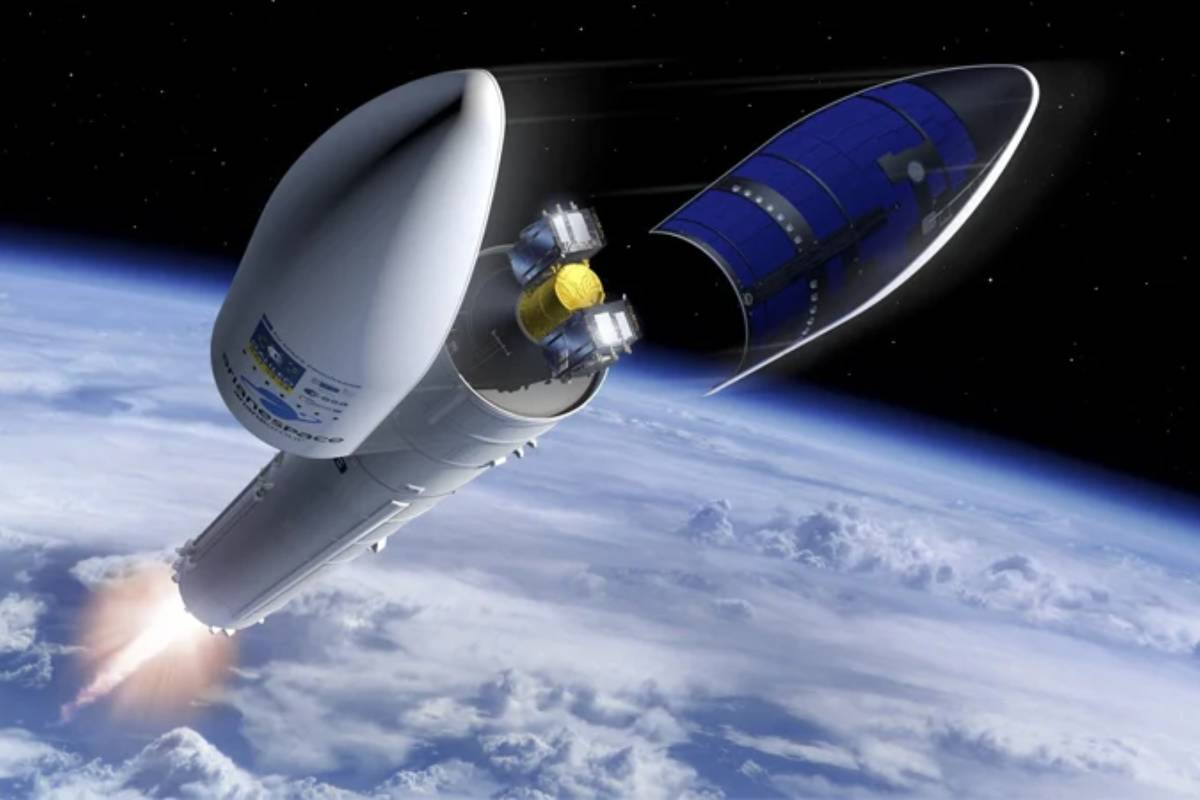
A European Ariane 6 rocket successfully lifted off from France's Kourou spaceport in French Guiana early Wednesday, carrying two Galileo global navigation satellites, according to an AFP correspondent, reports AFP.
The rocket launched at 2:01 AM local time (0501 GMT), marking its fourth commercial flight since the Ariane 6 system became operational in July 2024. The mission was another milestone for Europe’s growing space ambitions.
The two satellites, part of the European Union's Galileo programme, are designed to strengthen Europe's independent navigation capabilities and reduce its reliance on the United States' Global Positioning System (GPS).
Following lift-off, the satellites were expected to reach orbit nearly four hours later. This launch will increase the total number of Galileo satellites in orbit to 34, with the new additions enhancing the system’s robustness. According to the European Space Agency (ESA), which oversees the program, the satellites will "serve as spare components to guarantee 24/7 global navigation availability for billions of users."
The satellites will enter medium Earth orbit at an altitude of 23,222 km (14,429 miles) above the Earth’s surface, further cementing the Galileo system as a critical element of Europe's space infrastructure.
Prior to this launch, most Galileo satellites were deployed using Ariane 5 and Russian Soyuz rockets from Kourou. However, following Russia’s invasion of Ukraine, Europe ceased space cooperation with Moscow, prompting a shift toward other launch providers.
In a significant move, before Ariane 6’s entry into service in July 2024, the European Union contracted SpaceX for two Galileo satellite launches aboard Falcon 9 rockets. These launches are scheduled for September 2024 from the Kennedy Space Center in Florida.
Bd-pratidin English/ Jisan