Apple has introduced a new feature allowing iPhone and iPad users to set their preferred translation app as the default on their devices.
With the rollout of iOS 18.4 and iPadOS 18.4 on March 31, users in the United States can now choose third-party translation apps—such as Google Translate—for language translation, rather than being limited to Apple’s native Translate app.
Previously, Apple’s Translate app was the only option available for translating text or speech on iPhones and iPads. This meant that any translation request initiated through Siri or system features such as text selection popups was routed exclusively to Apple’s app.
The new update changes this by allowing users to set Google Translate or other compatible apps as the default translator on their devices.
How to set
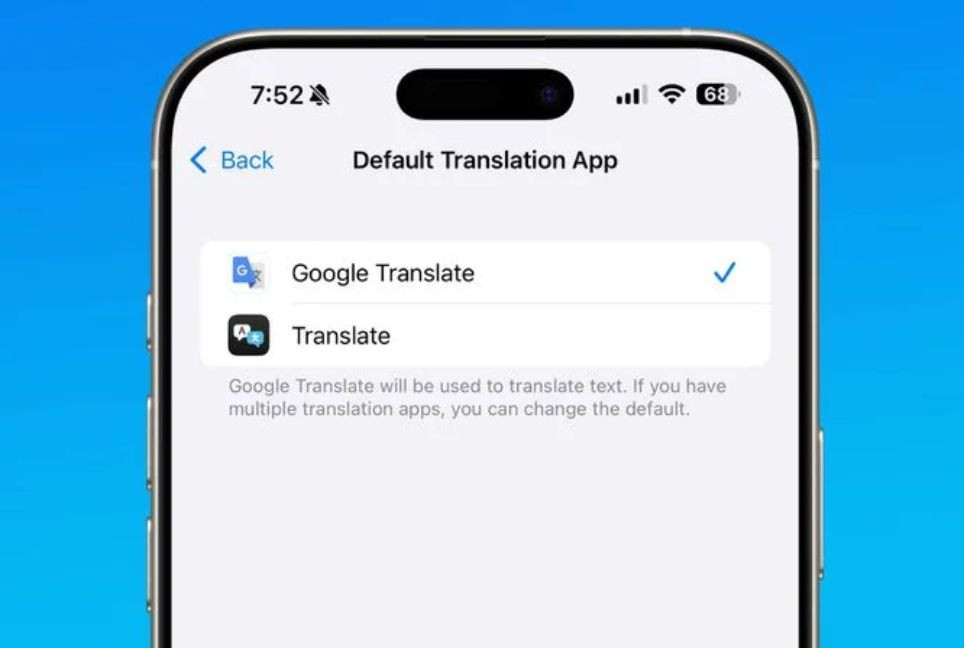
To set Google Translate as the default: Open the Settings app, navigate to Apps > Default Apps > Translation, and select Google Translate.
From there, Google Translate can be chosen as the preferred app for all translation requests initiated through the system. This means that translation commands from Siri, text selection popups, and other built-in features will now be directed to Google Translate if selected.
This update builds on Apple’s expanding list of default app categories that users can customise. Earlier, iOS 18.4 introduced the ability to select default apps for navigation and media playback. These additions complement existing options to set default apps for email and web browsing. The overall trend reflects Apple’s shift toward giving users more control over the apps that perform core functions on their devices.
Regulatory push leads to global change
The move also responds to growing regulatory pressure, particularly from the European Union. The EU’s Digital Markets Act (DMA) requires companies like Apple to open their systems to third-party developers and allow users to replace built-in apps with alternatives of their choice.
While the DMA focuses on Europe, Apple has implemented this default translation app feature globally, not limiting it to specific regions.
By expanding the range of default app settings, Apple aims to comply with new legal requirements and reduce the risk of further regulatory challenges. This approach signals a significant change in Apple’s policy, which has traditionally limited the ability of third-party apps to replace system defaults. Users now have more freedom to select translation apps that suit their preferences on iPhone and iPad devices running iOS 18.4 or later.
Courtesy: Hindustan Times
Bd-pratidin English/FNC