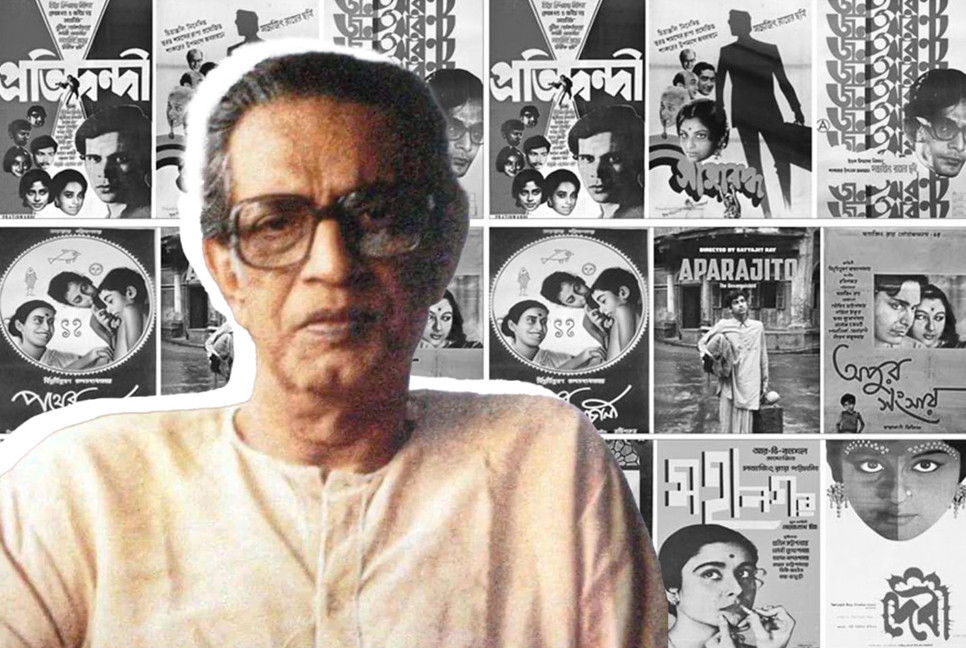
Today is the 34th death anniversary of legendary filmmaker, screenwriter, artist and author Satyajit Ray.
Born on 2 May 1921in Kolkata, the one of the greatest filmmakers of all time, started his career as a commercial artist and became an independent filmmaker after meeting French filmmaker Jean Renoir.
Satyajit directed 36 films, including feature films, documentaries and shorts. He authored several short stories and novels, primarily aimed at children and adolescents. “Feluda”, the sleuth, and “Professor Shonku”, the scientist in his science fiction stories, are popular fictional characters created by him. He was awarded a honourary degree by Oxford University.
Satyajit Ray’s first film, “Pather Panchali” (1955), won eleven international prizes, including the Best Human Document award at the 1956 Cannes Film Festival.
The maestro passed away in Kolkata on April 23, 1992. On this occasion, here’s a look at some of his timeless classics:
Pather Panchali (1955): Satyajit Ray’s debut masterpiece follows the lives of Apu and his sister Durga as they navigate poverty and hardship in rural Bengal. Their struggles deepen when their father leaves in search of work.
Aparajito (1957): The sequel to “Pather Panchali”, this film traces Apu’s journey to Calcutta for higher studies. Meanwhile, his ailing mother hides her deteriorating condition to avoid disrupting his education.
Apur Sansar (1959): The final part of the Apu Trilogy depicts Apu’s adult life, his marriage to Aparna, and the tragedy that follows her death, leading him into isolation.
Jalsaghar (1958): Initially met with a lukewarm response, this film later gained recognition and won the Presidential Award for Best Film. It portrays the decline of an aristocrat obsessed with music.
Mahanagar (1963): One of Satyajit Ray’s most acclaimed works, it tells the story of Arati, a housewife who takes up a job to support her family, unsettling traditional gender roles and her husband’s ego.
Charulata (1964): Often considered his finest film, it explores loneliness and emotional longing as Charulata develops feelings for her husband’s cousin.
Nayak (1966): Also known as The Hero, the film follows a matinee idol who, during a train journey, reflects on his past and confesses his insecurities to a journalist.
Bd-pratidin English/ ANI