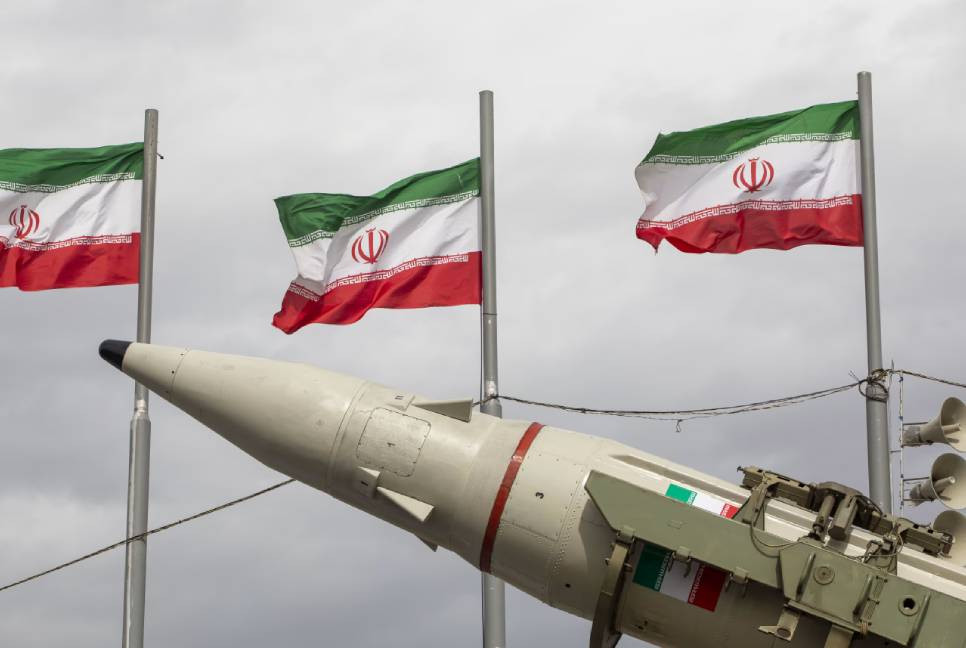
Claims that the Iranian ballistic missile threat has “significantly decreased,” as reported over the weekend by The Washington Post based on alleged CIA leaks, risk distorting the strategic rationale behind "Israel’s" war on Iran, according to Yona Jeremy Bob, a military affairs correspondent and security analyst at The Jerusalem Post, Al Mayadeen reported.
According to Bob, behind the story “lies a series of complete misunderstandings about what different parties are referring to when discussing ballistic missiles,” including the CIA’s interpretation of the threat, its nature, and what objectives could realistically have been achieved during the war.
From the Israeli perspective, he said, US President Donald Trump’s “unclear messaging and use of figures in these matters only increases confusion regarding what matters to the Israeli military,” adding that “the starting point is why this war was launched from an Israeli military perspective.”
Bob noted that Israeli and American political statements often “struggle to speak objectively and resort to simplified slogans,” such as the claim that “there was no choice but to attack Iran at that time due to imminent threats.” However, he argued that “the truth is more complex,” stating that the main reason for the war was “to reduce Iran’s ability to launch ballistic missiles.”
The Jerusalem Post reportedly learned that before key decisions were taken between "Israel" and the United States in February, Israeli Chief of Staff Eyal Zamir presented a detailed argument to US Joint Chiefs Chairman General Dan Caine and CENTCOM Commander Admiral Brad Cooper, among others, an argument that ultimately reached Trump.
The argument acknowledged that “Israel and the United States could, in theory, wait several months, as Iran had not yet crossed the red line threshold in terms of ballistic missile volume that the Israeli military could not handle.”
According to Bob, "Israel’s" original plan was not to strike Iran’s ballistic missile program until “sometime between June and November 2026.” However, Zamir warned that Iran was “advancing at an excessively rapid pace,” arguing that delaying action “would severely damage the war effort later.”
At the time, the report claims, Iran was “producing between 200 and 300 additional ballistic missiles per month” and had “replaced around half of its lost missiles and half of its lost launchers within just eight months, bringing its total arsenal to 2,500 missiles.”
In Zamir’s assessment, waiting six more months could have meant Iran possessing “around 4,000 missiles,” while a delay of one year “could mean Iran possessing more than 6,000 missiles.”
This, he warned, could have led to “far greater damage,” as well as a “severe shortage of interceptor missiles for Israel much earlier than expected,” potentially forcing "Israel" and the United States to “scale back their strikes on Iran’s missile and other capabilities much sooner than strategically desirable,” according to The Jerusalem Post’s understanding.
From the Israeli military perspective, this was the primary justification for launching the war: “reducing Iran’s current and future ability to fire ballistic missiles to avoid reaching an existential threat level.”
This meant the war was not primarily about the nuclear issue, as “the Israeli military barely struck nuclear sites, most of which had not been rebuilt after being destroyed in June 2025.”
Bob added that the objective was “not to eliminate the missile threat completely,” but to significantly reduce Iran’s arsenal and delay its ability to amass enough missiles over several years “to overwhelm Israeli air defenses.”
bd-pratidin/GR