OpenAI has unveiled GPT-5.4, its latest frontier artificial intelligence model, introducing significant improvements in reasoning, coding and automated task execution.
The company said the new system integrates several recent advances into a unified platform and will be available in multiple variants, including GPT-5.4 Thinking and GPT-5.4 Pro.
One of the model’s most notable upgrades is its one-million-token context window, enabling it to process and analyze extremely large datasets such as full software codebases, long research papers and extensive document archives.
OpenAI also announced that GPT-5.4 is the first mainline model with built-in computer-use capabilities, allowing AI agents to interact directly with software applications. The system can operate computers by interpreting screenshots and issuing mouse clicks and keyboard commands, enabling it to work across websites and applications to automate complex workflows.
According to the company, the model introduces several major improvements, including stronger coding performance, improved image perception and multimodal understanding, better handling of long-running tasks and multi-step agent workflows, enhanced token efficiency for tool-heavy workloads, more advanced web search capabilities and improved synthesis of information from multiple sources.
OpenAI also addressed a common criticism of AI systems—so-called “hallucinations,” where models generate inaccurate information. The company said GPT-5.4 is about 33 percent less likely to produce false information compared with earlier versions.
The model is designed primarily for professional and enterprise environments. OpenAI said GPT-5.4 performs strongly in tasks such as legal analysis, financial modelling, presentation design, and writing or debugging software code.
Developers can also use the system to build AI agents capable of planning tasks, executing them and adjusting their actions when obstacles arise.
The release reflects a broader shift in the evolution of modern AI systems. Early versions of ChatGPT focused mainly on answering questions. Later models such as GPT‑4 expanded capabilities to include advanced writing, coding and summarisation. With GPT‑5, models began demonstrating stronger reasoning abilities.
GPT-5.4 extends this progress by enabling AI systems not only to generate information but also to directly perform tasks on computers.
In practical workplace settings, the model can operate within common productivity tools such as spreadsheets and document editors. It can analyse financial data in programs like Microsoft Excel, automatically create dashboards, generate reports from raw datasets and process large legal or contractual documents.
For software development, GPT-5.4 can generate extensive codebases, detect and fix bugs, run automated tests and even control web browsers through automation tools.
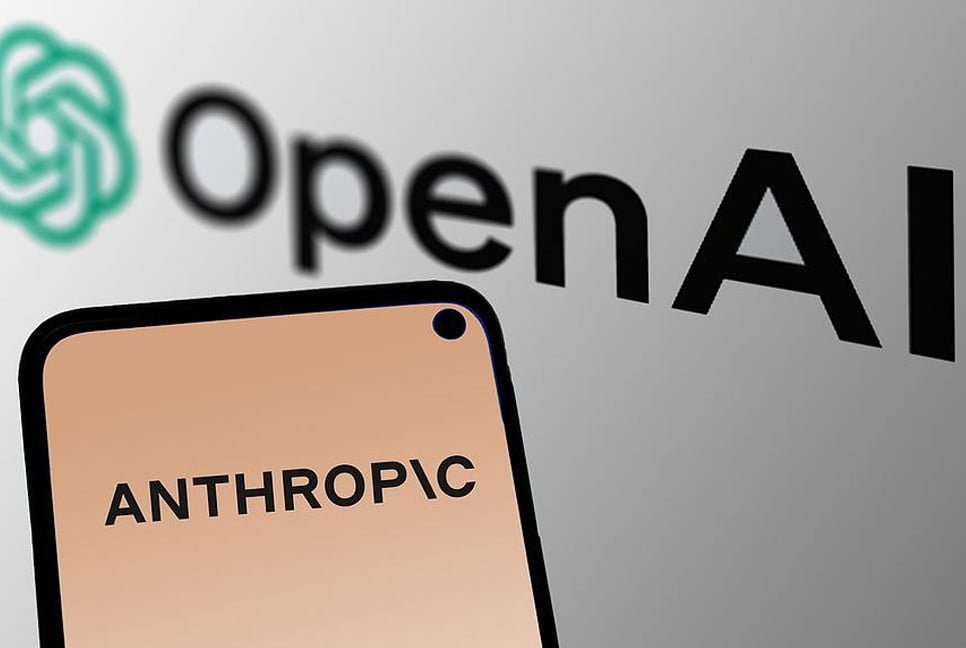
OpenAI’s latest release comes amid intensifying competition in the global AI industry. Rival company Anthropic, led by Dario Amodei, recently introduced its own advanced models, Claude Opus 4.6 and Claude Sonnet 4.6, which are designed to deliver faster and more efficient performance for enterprise tasks.
While different companies emphasize different strengths, the rapid pace of development underscores a growing race to build AI systems capable of functioning as practical digital workers across industries.
Bd-pratidin English/ Jisan