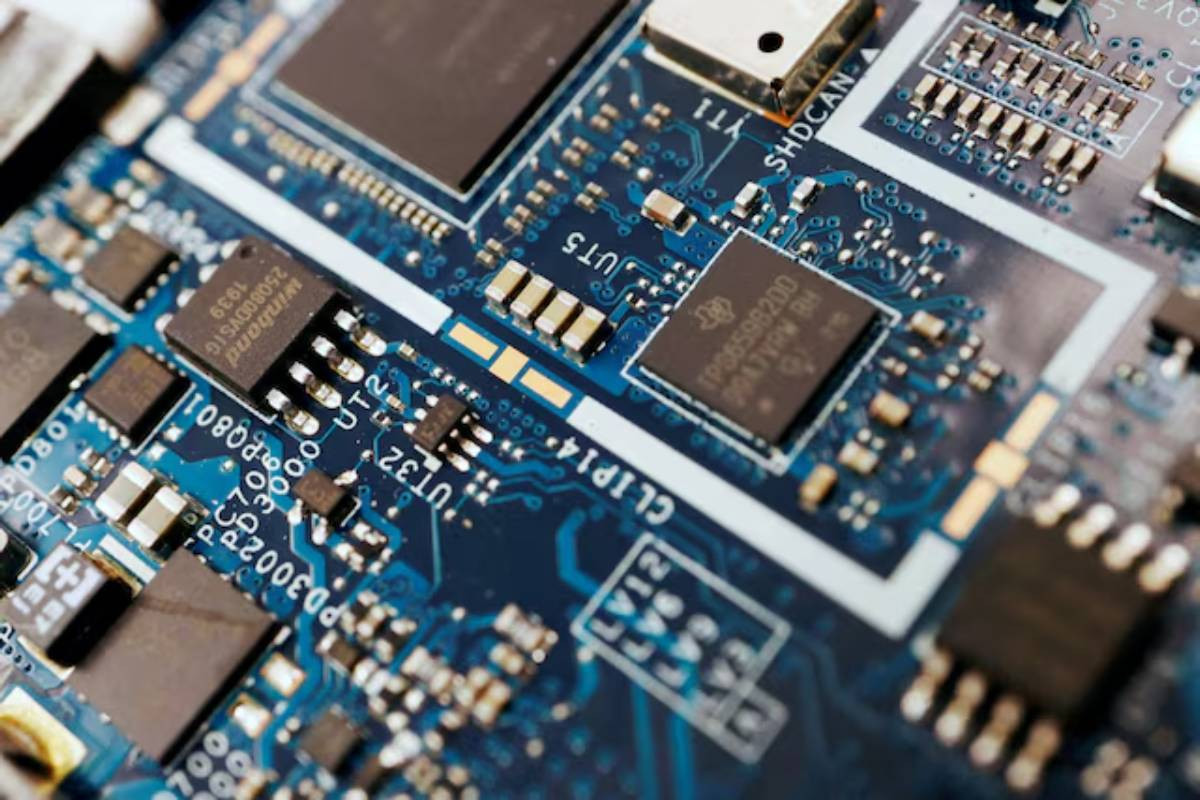
Taiwan’s vice premier and top tariff negotiator has said it would be “impossible” to move 40% of the island’s semiconductor manufacturing capacity to the United States, pushing back against recent remarks by US officials calling for a major production shift, reports Reuters.
In an interview with Taiwanese television channel CTS broadcast late Sunday, Vice Premier Cheng Li-chiun said she had clearly conveyed Taiwan’s position to Washington, stressing that the island’s semiconductor ecosystem, built over decades, cannot simply be relocated.
“I have made it very clear to the United States that this is impossible,” Cheng said, referring to the 40% target floated by US officials.
She said Taiwan’s semiconductor industry would continue to expand at home, with overall capacity on the island set to grow further. “Our overall capacity in Taiwan will only continue to grow,” she said, adding that Taiwan can expand its presence in the United States without weakening its domestic base.
“Our international expansion, including increased investment in the United States, is premised on remaining firmly rooted in Taiwan and continuing to expand investment at home,” Cheng said.
She also ruled out relocating Taiwan’s science parks, but said the island is willing to share its experience in building a successful semiconductor cluster and assist the US in developing a similar ecosystem.
Cheng said she was confident that Taiwan’s total semiconductor capacity—including existing, under-construction and planned projects across advanced manufacturing, advanced packaging and the broader supply chain—would far exceed its investment in the US or any other country.
Her comments follow statements by US Commerce Secretary Howard Lutnick, who said Washington needs to bring semiconductor manufacturing back to the United States for strategic reasons.
“You can’t have all semiconductor manufacturing 80 miles from China,” Lutnick said. “That’s just illogical.”
He said the administration’s goal is for the US to secure a 40% share of leading-edge semiconductor manufacturing by the end of its term.
Last month, Taiwan and the US reached an agreement to lower tariffs on Taiwanese exports to 15% from 20%, alongside a commitment by Taiwan to increase investment in the US.
However, in a CNBC interview last month, Lutnick said his aim was to bring 40% of Taiwan’s entire chip supply chain and production to the US, warning that tariffs on Taiwan could rise to 100% if that goal is not met.
In September, Lutnick told NewsNation that Washington had proposed a 50-50 split in chip production, an idea Taiwan rejected at the time.
Taiwan Semiconductor Manufacturing Company (TSMC), the world’s largest contract chipmaker, is currently investing $165 billion to build semiconductor manufacturing facilities in the US state of Arizona.
Bd-pratidin English/ Jisan