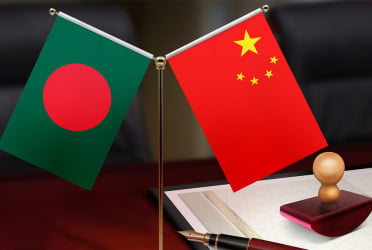
Bangladesh is getting ready to graduate from the Least Developed Countries (LDCs) category on November 24, 2026. Following this transition, the country’s exporters will lose the existing duty-free or preferential access to markets in developed nations. To minimize the possible negative effects of this change, the government is proactively working to secure Free Trade Agreements (FTAs), Economic Partnership Agreements (EPAs), and Comprehensive Economic Partnership Agreements (CEPAs).
Experts say that to remain competitive in the post-LDC global trade landscape, Bangladesh must rapidly and effectively sign free trade agreements with more countries. At the same time, the country needs to focus on creating an investment-friendly environment, improving infrastructure, and increasing productivity.
According to sources from the Ministry of Commerce, formal negotiations are currently ongoing between Bangladesh and Japan for an Economic Partnership Agreement. These discussions are expected to conclude by the first week of September, and if finalized, this will be Bangladesh’s first bilateral free trade agreement in history, likely to be signed by December.
The first round of FTA talks between Bangladesh and Singapore was held in Dhaka in March this year. The second round is scheduled to take place this month. Both countries have expressed interest in finalizing the agreement by 2026.
Formal negotiations for a Comprehensive Economic Partnership Agreement with the United Arab Emirates (UAE) are set to begin this July. The UAE Cabinet has already approved participation in these talks. Additionally, Malaysia and South Korea will begin firstformal FTA talks with Bangladesh next month. After years of informal discussions, Malaysia has finally agreed to start official talks. It is worth noting that Malaysia receives a significant number of Bangladeshi migrant workers every year, and Bangladesh imports various goods such as edible oil from the country.
Previously, Bangladesh attempted to join the Regional Comprehensive Economic Partnership (RCEP) agreement, but had to withdraw due to India’s influence, according to an official from the Ministry of Commerce. After the new interim government took office, Bangladesh reapplied for RCEP membership and has now been accepted. Formal negotiations for joining RCEP will begin soon.
With LDC graduation by late 2026, Bangladesh will lose duty-free access to major markets like Europe, Canada, and Japan, weakening the competitiveness of exports such as garments. To tackle this, the country is seeking new trade deals and economic partnerships to retain market benefits.
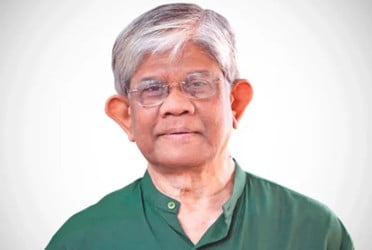
Dr. Debapriya Bhattacharya, Distinguished Fellow at the Centre for Policy Dialogue (CPD) and member of the UN Committee for Development Policy (CDP), said the 2026 timeline for graduation is appropriate and necessary. “The key issue now is how we prepare to face the post-graduation challenges,” he added.
He stated that a transition strategy has already been formulated, but its successful implementation will require through stronger administrative, institutional, and financial structures.
He also emphasized the need to focus on economic diversification, productivity enhancement, and social protection systems.
According to Dr. Debapriya, LDC graduation is not just an economic milestone but a national transformation process. Therefore, he believes this issue should be reflected meaningfully in the manifestos of political parties in the upcoming national elections.
“If political parties address the challenges and preparations related to the post-graduation period in their election commitments, the future government can integrate these priorities into its medium-term development strategy. This would help ensure a more structured, inclusive and sustainable transition,” he said.
(Translated by Afia Nanjiba Ibnat)
Bd-pratidin English