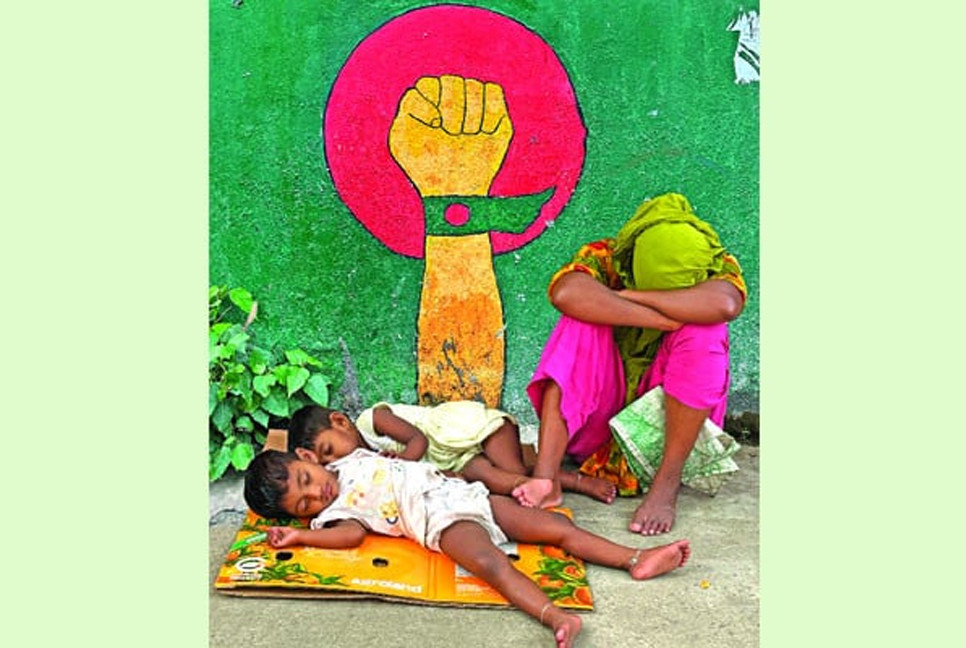
Bangladesh is facing a deepening economic and social crisis, with rising inflation, worsening law and order, and mounting political uncertainty sparking widespread anxiety across sectors and communities.
From urban centers to rural villages, citizens are struggling to cope with surging commodity prices that have eroded savings and diminished real income. The middle class, in particular, has been hit hard, with increasing numbers reporting financial distress.
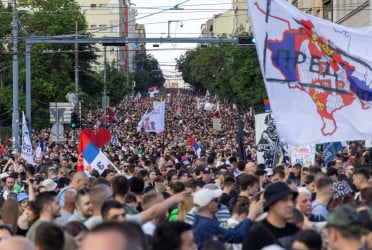
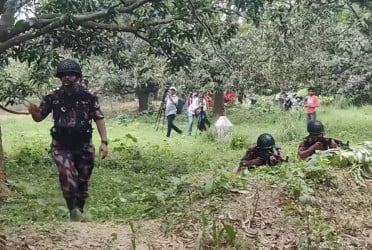
The situation has been exacerbated by a rise in crime, including theft, robbery, and extortion, according to business leaders and civil society representatives. Protests and road blockades have become a frequent occurrence, extending even to government institutions.
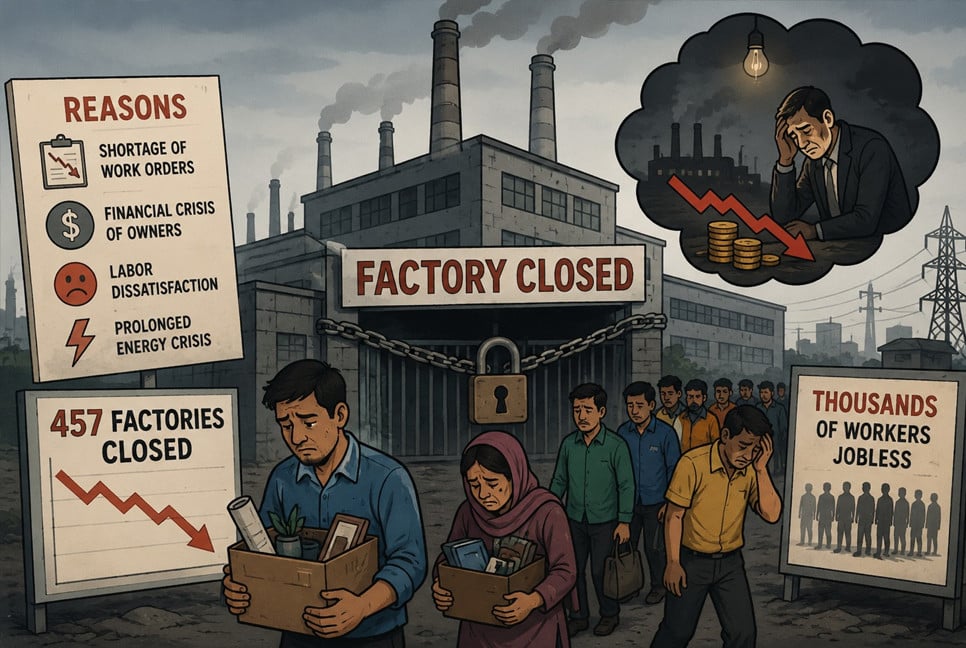
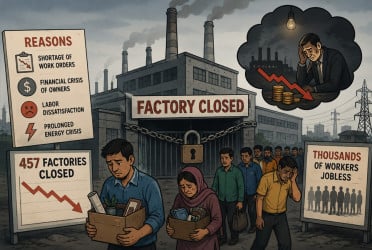
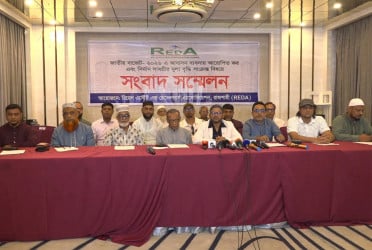
Small and big businessmen are also not well. The industries and factories are not working properly due to the gas and electricity crisis. Small businessmen are closing factories due to increasing business expenses. Unemployment is increasing. Thousands of workers are suddenly losing their jobs and becoming unemployed. Along with the internal crisis, one external crisis after another is coming. Neighboring countries have suspended export facilities by land after stopping transshipment.
The United States, the country's largest export market, has imposed tariffs. Industrialists are unable to take loans from banks due to high interest rates. The country's top businessmen are being harassed unnecessarily. Many are being accused of false murder cases in an unprecedented manner. Incidents of mob violence are also increasing day by day. Many businessmen are being threatened for extortion. If the extortion is not paid, offices, and even homes are being attacked. Many industrialists are even being harassed by the state. Big businessmen whose bank accounts are being frozen; All in all, a kind of anarchic situation has been created in business and commerce.
Those concerned said that there is no sector for which the government can claim the least praise.
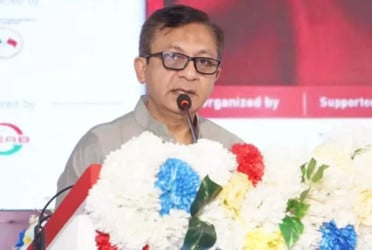
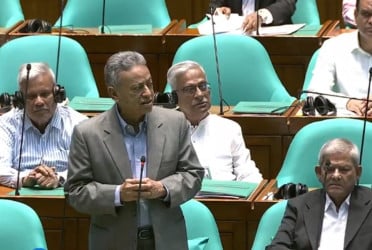
Former president of Bangladesh Chamber of Commerce and Industry (FBCCI) and BNP Vice Chairman Abdul Awal Mintoo said at an event that investment in the private sector is in the ICU through the movement and struggle. If the investment is in the ICU, then the investor is not able to withdraw the investment.
Stating that inequality still exists everywhere, he further said, income inequality, social inequality, wealth inequality, political inequality - all are increasing day by day in Bangladesh. The government's activities in Bangladesh have constantly created inequality in every field.
Renowned economist Dr. Hossain Zillur Rahman told Bangladesh Pratidin, “There is still a lack of trust among the common people in some matters. At the same time, there is uncertainty among the businessmen. Although the price hike of goods is quite bearable, there is still concern and anxiety among the common people about the law and order situation. We have to work on these. As much as people are still thinking about the elections, they are also thinking more about their own safety and security.”
Former President of BGMAE Anwar-Ul-Alam Chowdhury Parvez told Bangladesh Pratidin, “There is a standstill in the country's trade and commerce, industries and factories. The government is not able to ensure the most important gas and electricity for the industry. Political uncertainty is increasing. The law and order situation is deteriorating.”
“The interest rate on bank loans is high. There is no good news for the industry anywhere. Many owners of industries and factories are being harassed. They do not understand whether they can sustain business or not. In this situation, the government is inviting foreign industry with various incentives instead of protecting domestic industry. If the country's industries and factories are closed, millions of workers will become unemployed,” he added.
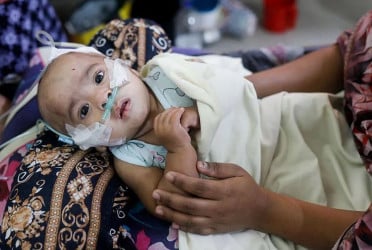
Mohammad Hatem, president of the Bangladesh Knitwear Manufacturers and Exporters Association (BKME), said that the entire industrial sector is now in the ICU. Without proper treatment, they will not survive. There is no consultation or guidance with the businessmen. Investors are scared of this, and businessmen are also in panic. There is extreme chaos in healthcare.
Even the injured in the July uprising are also not in good condition. There are allegations that proper treatment is not being ensured for those injured in the July uprising. Some of the injured have even attempted suicide.
The country's financial institutions such as banks and insurance companies are also not doing well. Many banks are suffering from liquidity crisis day after day. They are not able to repay deposits to depositors, let alone carry out lending activities.
Unable to keep up with the rise in commodity prices, ordinary people are burning through their savings. People's real income is decreasing as the inflation rate is higher than wages.
Rashed Al Titumir, a development studies teacher at Dhaka University (DU), said at a program that real wages are decreasing, inflation is increasing. There is no direction on how new employment will be created. The country's economy is heading towards uncertainty due to failure in revenue collection and lack of reforms.
The country's housing sector has also been negatively affected. Due to various uncertainties, the rate of buying new flats or building houses has decreased. There has been an extreme recession in the housing industry. Along with ADP activities, the demand for rod and cement has also decreased due to the closure of major projects. If this situation continues, businessmen associated with this industry will face extreme crisis.
Iqbal Hossain Chowdhury Jewel, former director of the Federation of Bangladesh Chambers of Commerce and Industry (FBCCI) and chairman of JCX Group, said, “In this situation in the country, there is uncertainty about investment. Fear and panic are working inside people. The spontaneous buying and selling and the flow of money in the market are in a frightening state. If this situation continues for a few more months, business will collapse.”
“To overcome this situation in the country, the Advisory Council and all political parties must create a national consensus and create a business-friendly environment. A normal situation must be created by ensuring the flow of money. Otherwise, the ability of the officials and employees of our institutions that we have built up bit by bit to continue their business with salaries and bonuses will be lost. Unemployment will increase,” he added.
Bangladesh Nationalist Workers' Party Central Committee President Anwar Hossain said, “The common people are under pressure due to the rise in commodity prices. This pressure has increased due to various types of uncertainty. Starting from the country's politics to industry and trade, there is no good news anywhere. Thousands of workers' jobs are in limbo in the name of outsourcing.”
Garments Workers' Unity Federation President Mosherefa Mishu said, “Many garment factories have closed in the last few months. More than 100,000 unemployed workers are now in a helpless state. They are unable to live a healthy life. The owners are unable to pay the workers' salaries properly. Eid is coming. The workers are not getting their May salaries. There is no guarantee whether they will get their salaries or not.”
(Translated by Tanvir Raihan)