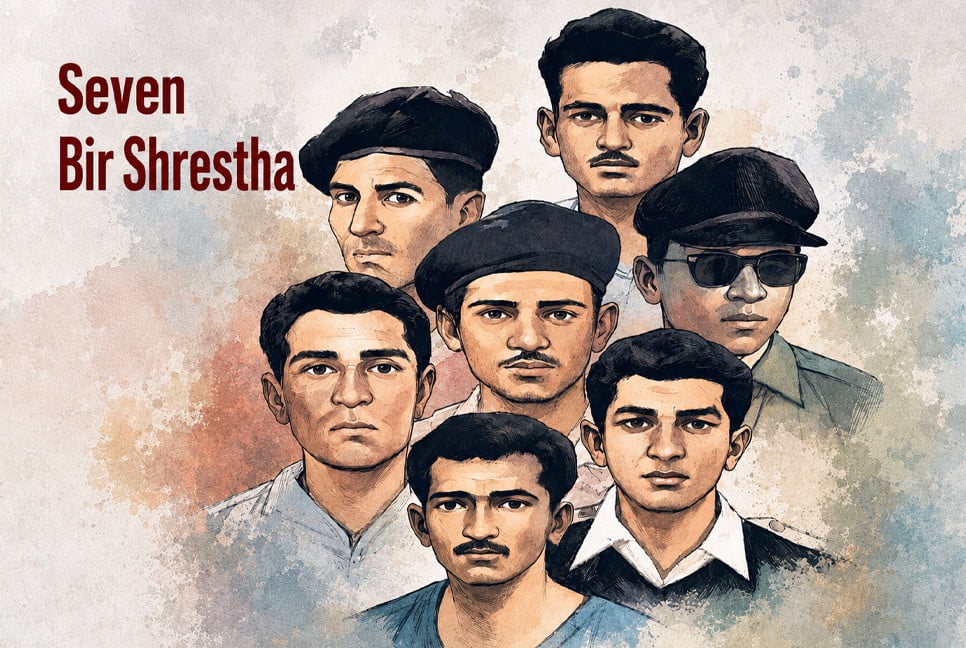
The events of 1971 are often recalled in different ways—and rightly so. It was a time of great peril. We were all in grave danger. Every day, every night, even every moment was filled with fear.
At the time, we were mostly worried about personal safety—ours and our loved ones'. Yet we remained active. We exchanged information, sought updates on unfolding events, listened to the radio, and thought about how we could assist the freedom fighters. For those on the battlefield, it was a life-or-death struggle. Everyone had a role to play.
Yes, danger loomed large—but so did our dreams. We carried a collective, immense dream: to drive out the invaders and secure our freedom. We worked tirelessly toward that vision, each in our own way.
That habit of reflection, of dreaming, of being shaken by nightmares—these persist to this day. But the collective dream has faded. We no longer think in terms of everyone’s freedom. We’re preoccupied with ourselves. What happened to me? What did I get? We’ve become obsessed with personal gains. Of course, we thought of ourselves in 1971 too, but even amidst the nightmare, we knew our personal freedom was tied to collective liberation. If the nation could not be freed, none of us could survive. That fight for survival became a fight for all.
What came after victory was a different experience altogether. We became fragmented. Our dreams turned inward. We no longer have time to think about the collective good. And yet so much collective work remains: eradicating poverty, investing in industry, improving education. These are not tasks one person can achieve alone; they require united effort. But that united effort never materialised. Instead, we each did what we could on our own.
Why can’t we work together? It’s worth contemplating. The answer seems endlessly complex. We often blame the political leadership. And it’s true—they failed to deliver the full measure of liberation. Yet it was the political leadership that won our independence. It was not bureaucrats, businessmen, or professionals who led the liberation struggle—it was politicians. They deserve credit for that. But they could not carry us further. They advanced to a point and stopped.
Yes, the state changed. But how much of it was really new? That’s the crux of the problem. Though we got a new country, the structure and character of the state remained as bureaucratic as it was under British or Pakistani rule. It did not change. The same laws, the same judiciary, the same systems and agencies still exist.
In a bureaucratic state, power lies with the officials. In colonial India, British bureaucrats held absolute power. Under Pakistan too, the bureaucrats ruled—and it was their military counterparts who carried out genocide in East Bengal. In Bangladesh, we have repeatedly experienced military rule, caretaker governments, and states of emergency. Even when politicians appeared to be in charge, real power lay with the bureaucracy.
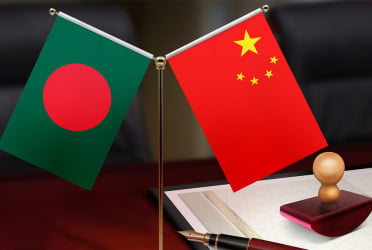
A bureaucratic government can never be democratic. It simply isn’t possible. Democracy requires accountability, and bureaucracy is devoid of it. In democracy, power is decentralised; in bureaucracy, it is concentrated. In democracy, elected representatives govern; in bureaucracy, civil servants do. Bureaucrats rarely act in the national interest; they serve their own. We see this clearly with the current interim government. Their remit is limited: carry out routine tasks and conduct an election swiftly. Yet they overstepped their mandate by attempting to secretly hand over national territory and ports to foreign powers. Only after public exposure did they pull back. Shockingly, it has come to light that 17 foreign nationals are directly involved with this government—something our constitution does not allow.
The real political failure lies in the inability to dismantle the old bureaucratic state and build a democratic one. Politicians attained power, but were content with that. Eventually, they discovered that actual control lay with bureaucrats. Yet they made no effort to return ownership of the state to the people. The leadership became a ruling class—self-serving and uninterested in collective progress.
A powerful ruling class has emerged in Bangladesh. It governs under different names, with support from bureaucrats. These ruling elites fight among themselves, sometimes in the ugliest of ways. But these conflicts are not ideological—they are quarrels over spoils. Their brand of politics is built on division and sharing of wealth and power.
We speak of ideals. But in truth, the dominant ideal today is capitalism—specifically, a predatory form of it. Capitalism, in theory, produces wealth. But the capitalism that has taken root in Bangladesh is not interested in production, only in looting. We endure all of capitalism’s flaws—greed, inequality, self-indulgence—without any of its supposed benefits. In 1971, this wasn’t the case. Back then, our interests were united, and there was no room for luxury. People were motivated by the desire to liberate the nation, and willing to sacrifice for it. That was the spirit of the Liberation War—democratic in nature, grounded in the belief in equal rights and opportunities for all. That sense of equality prevailed on the battlefield, which spanned the entire country—and beyond, through the diaspora’s contribution.
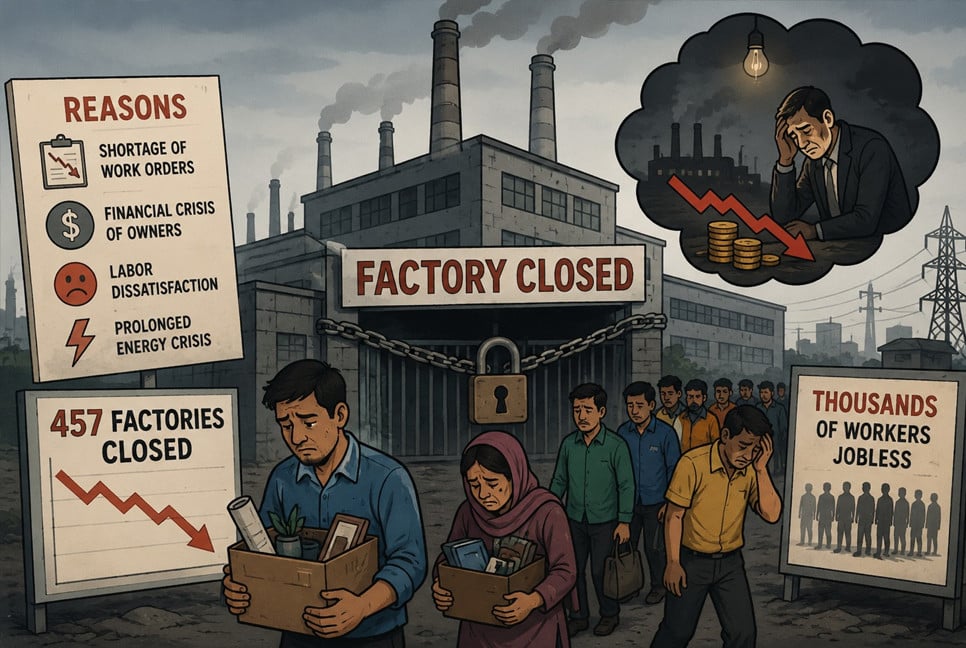
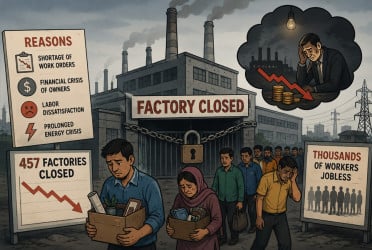
Today’s ruling class shows no interest in employment generation. Since the change of government on August 5, there has been a wholesale destruction of industries across the country. Countless workers have been rendered jobless and pushed into destitution. Mob violence is rampant. There is no semblance of law and order. Garment workers demanding their salaries and bonuses have faced brutal state repression, including killings. This government has remained unmoved, offering no support to vulnerable workers.
Capitalism creates inequality. It makes the rich richer and the poor poorer. Bangladesh’s 54-year history is a story of ever-widening disparity. The unity inspired by the Liberation War has been crushed under the weight of inequality. The gap between rich and poor has only grown.
Once, patriotism was our proudest value. Now, it has greatly diminished—thanks to the unchecked spread of capitalist values. If everyone thinks only of themselves, who will think of the country? But someone must. Without the nation, we are nothing. We’ll lose not only our identity but also our place to stand. We’ll drift like algae on water.
Thinking is not enough—we must act. Our greatest task is to democratise both state and society. Who will think, and who will act? The answer: those who love this country and believe in democracy. They are not few. The spirit of the Liberation War did not emerge overnight, and it has not disappeared—it lives on.
We must take a clear and purposeful stand. Otherwise, the crisis will deepen—as it already is. Our future depends on reviving that spirit. Many tasks are urgent, but the most urgent of all is to restore democratic order to this country. We cannot afford to forget that.
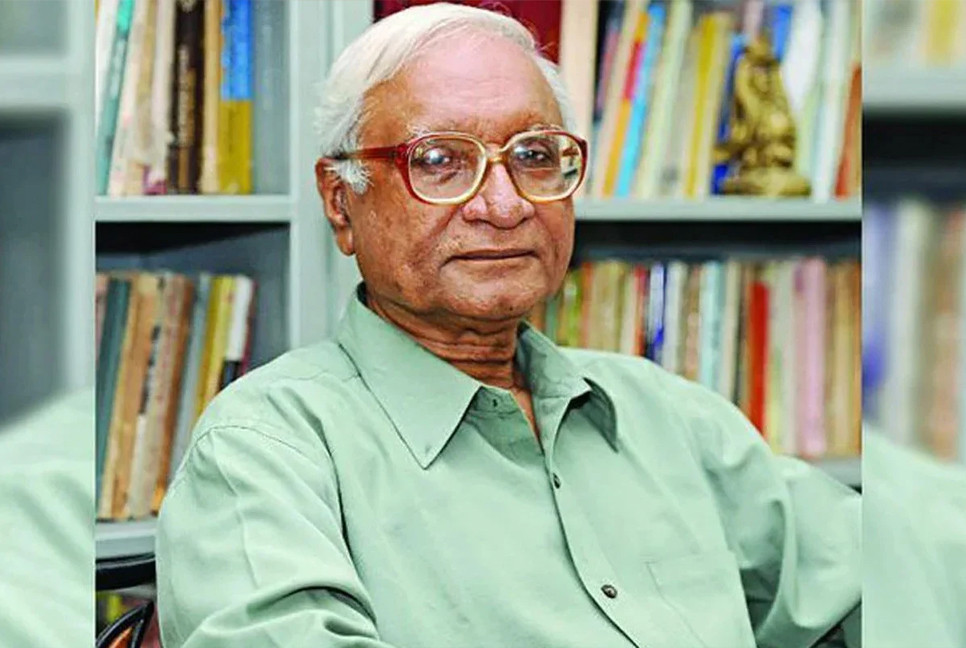
The writer is an Emeritus Professor, University of Dhaka.